
Being able to see, understand and deal effectively with others' perspectives is key to successful leadership (as well as personal life). That capacity, part of self-awareness, is empathy. Two recent studies show its crucial role.
How Do You Become a Great Manager When You’re Not Always OK Yourself?
What happens when the person responsible for supporting everyone else is struggling themselves? A personal reflection on living with depression while leading engineering teams, the emotional cost of projecting confidence, and learning to manage self-doubt, feedback, and mistakes. It explores why effective leadership doesn't require perfection and why seeking professional help shows self-awareness rather than weakness.

Self Awareness: Key to Sustainable Leadership
After in-depth interviews with 170 world leaders and classroom discussions with 6,000 executives and MBAs in Authentic Leadership Development (ALD) at Harvard Business School, we've learned three essential steps to building your self-awareness.
Can someone explain executive dysfunction to me?
Founders / CEOs — The Work
After 20 years of working alongside, coaching, advising and being a CEO, I wanted to take time to write down how I see the job in case…

Leadership Lessons: Five Insights from Directors Sharing Power
Can sharing executive leadership work in nonprofits? An interview with five leaders of progressive community organizations with shared leadership models.

CEOs Who Think AI Replaces Their Employees Are Just Bad CEOs
In the last three months I’ve had people forward me four separate examples of a CEO losing his or her mind over AI. What’s been striking to me is the similarity in each case: It would b…

Develop Strategic Thinkers Throughout Your Organization
It’s the single most important skill a leader needs.

Which Way Do You Run? | Andreessen Horowitz
The difference between a good CEO and a great one? Trusting your gut and confronting your fears head on.

Why CEOs are failing software engineers and other creative teams
Software engineering, the creative nature of the work

I Train CEOs—This 16-Minute Morning Habit Builds Muscle and Boosts Productivity
The neuroscience-backed session builds muscle while increasing your focus and executive function.

caroline stokes
CEOs have a fresh opportunity to create organizations designed for long-term value. This is the moment to re-evaluate how we operate within planetary boundaries, identify what’s holding us back, and chart where we need to go next.
Your Most Important Skill: Empathy
TL;DR — Empathy is the most important skill you can practice. It will lead to greater success personally and professionally and will allow…
The empathy paradox
There’s an image of empathy we all know that is beautiful: the fullness of completely understanding someone else, the symbolic walk in shoes that are not one’s own. The knowledge that someone else can share a pain so acute that would otherwise seem unbearably solitary. It’s an image inherent to empathy’s definition, an image many believe in wholeheartedly. Several studies conducted by Stanford researchers alone suggest people are motivated to feel empathy, that empathy is highly associated with social desirability, that it is as beneficial as it is admired.
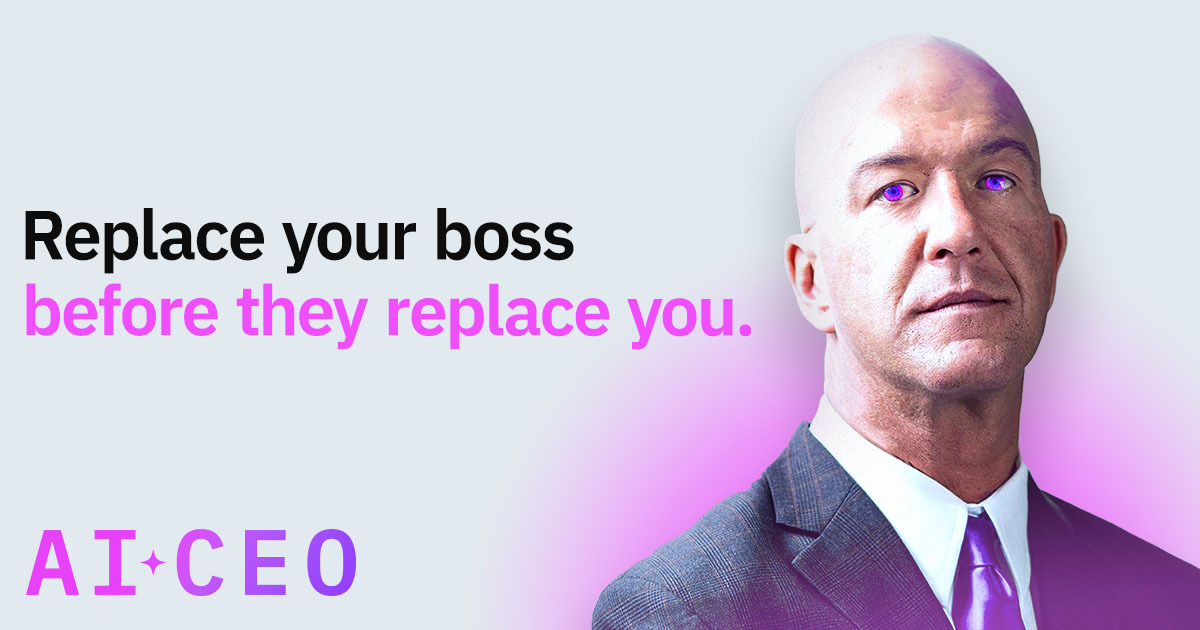
AI CEO – Replace Your Boss Before They Replace You
Stop working for humans. AI CEO delivers algorithmic thought leadership, with instant decisions, and zero ego. Replace your boss before they replace you.
What is ‘executive dysfunction’ and how do you overcome it?
Difficulty starting and getting overwhelmed by tasks are a few signs of it. We asked experts for tips on mitigating the effects

Replit’s CEO on building a company that can run itself
Amjad Masad on the "self-driving company," why a CEO is a glorified router, and what's left for humans when agents do the work