President Jimmy Carter says America, a once-free nation, is now an oligarchy, and that’s not just his opinion. It is provable, and backed up by the research of…
Billionaires Gone Wild
Understanding the oligarchs’ power grab and the dire threat to American democracy

Against the international oligarchy
The explosion of extreme wealth is the major social fact of our time. Against the international oligarchy, let us build a democratic international.
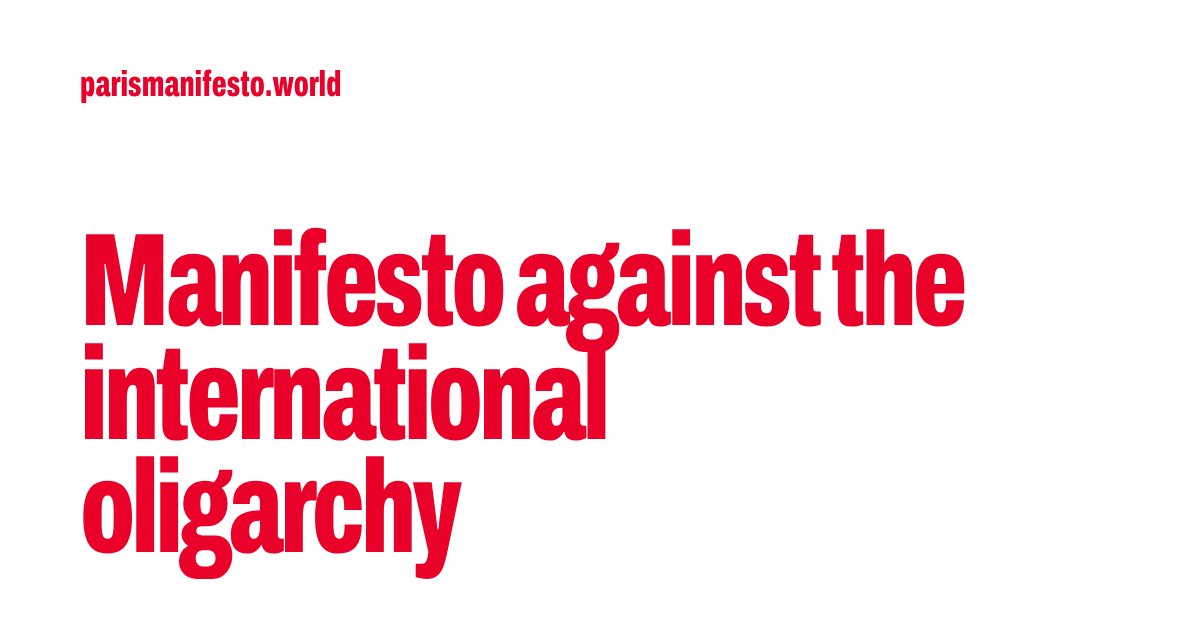
America’s new oligarchy
Under Trump an ultra-wealthy clique has infiltrated government, raising concerns about democratic integrity

The Oligarchs' Coup Against the Free Press Is Happening Now
The American information space is not merely changing; it is undergoing a hostile takeover. It is a deliberate, coordinated campaign by a new class of oligarchs out of Silicon Valley that includes Jeff Bezos, Elon Musk, Larry Ellison, and Mark Zuckerberg acting in concert with a Trump-led authoritarian political project.
Building on the Fight Oligarchy Tour: It’s Time to Reboot America
A Call for a Big-Tent Movement

The Game of Oligarchy | Brewster Kahle's Blog
I just invented and played a game today with my family, and it worked great– it was fun and we learned an important lesson. Similar to the game “Monopoly” which shows that one person ends up monopolizing even though you think the rules are “fair,” the game of Oligarchy shows that the “free market” leads inexorably to one person getting all the money and everyone else going broke. And fast.
The Failed Assumptions of Free Trade - The Sling
It is neoliberal economists who are wrong about the economics of trade. Economics textbooks and popular work by economists typically hide the unrealistic assumptions that are required to conclude that free trade as practiced by the United States is a beneficial policy overall, meaning that it is welfare-improving.

A quote from 1984
In the long run, a hierarchical society was only possible on a basis of poverty and ignorance.

Implicit Feudalism — Rushkoff Archive
Too many of us think it doesn’t matter when a platform like X/Twitter has a single, all-powerful owner. Most of our online worlds are simply run by what we hope are benevolent dictators. After all, we figure, if we don’t like what they’re doing or allowing, we can just leave, right? But in most cases we’re just jumping from one rich dude’s idea for how the world should be to another rich dude’s idea for how the world should be.
Pluralistic: America and “national capitalism” (18 Feb 2025) – Pluralistic: Daily links from Cory Doctorow
Thomas Piketty's 2013 unexpected bestseller (a 750 page economics book translated from French!) Capital in the 21st Century, offers a very convincing explanation of our political decay, and it continues to serve this purpose as the decay undergoes alarming acceleration:
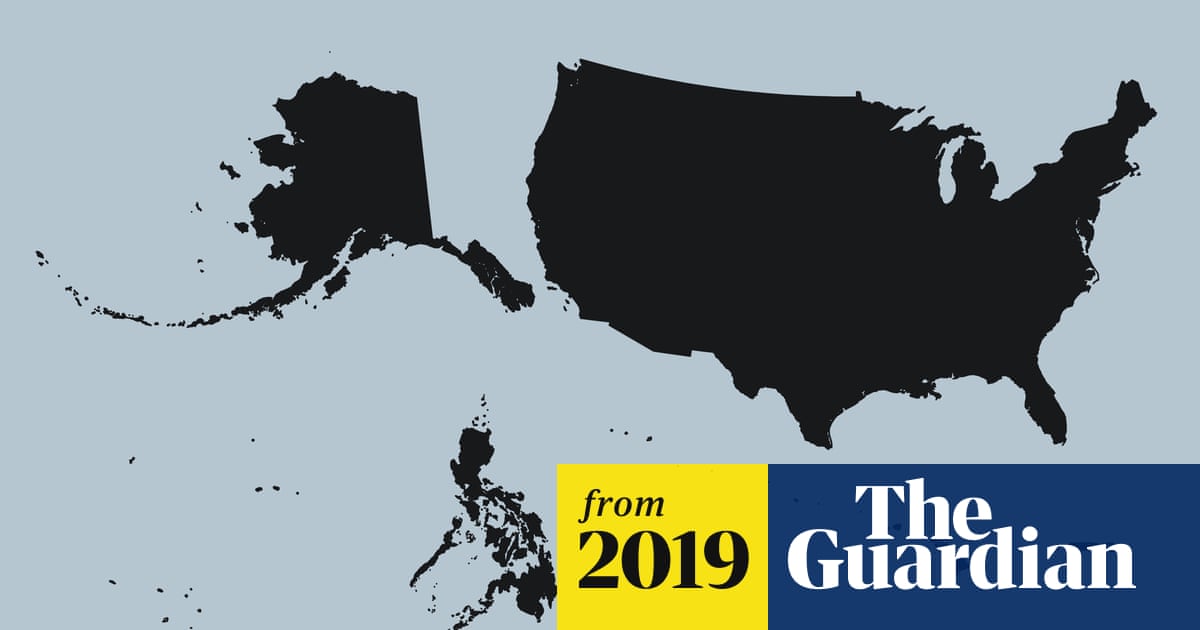
How the US has hidden its empire
The long read: The United States likes to think of itself as a republic, but it holds territories all over the world – the map you always see doesn’t tell the whole story
The Constitution of Knowledge
America has faced many challenges to its political culture, but this is the first time we have seen a national-level epistemic assault: a systematic attack, emanating from the very highest reaches of power, on our collective ability to distinguish tr...

Time and the Neo-Monarchist Turn
One of the classical arguments against democracy concerns its supposed short-termism. Early-modern political thought contrasted the pitfalls of elected authority, whose timebound character was seen to invite inconstancy, instability and plunder, with the merits of indefinite rule on the model of kingship. Such reasoning has seen two revivals in recent years, first in a neo-liberal form as an argument for technocracy (see independent central banking), second in a neo-reactionary form as an argument for an all-powerful executive or ‘monarch’ (see the contemporary international far Right). This article looks at the structure of these political arguments and the work they do. Having reconstructed their historical background, it charts how the neo-monarchist turn marks a radicalisation in democracy-scepticism, guided by a patrimonial logic of authority as property ownership. The article goes on to examine the political-economic factors to which this responds, as well as the contradictions to which neo-monarchism is prone. As the article concludes, temporal arguments for authoritarian politics may be dubious in substance but merit careful observation in a context of widespread disaffection with existing institutions.

How’s That Open Source Governance Working for You? | HackerNoon
Isn’t it weird that the radically democratic miracle of open-source collaboration is so full of monarchical dictatorships?
The Myth of Authoritarian Efficiency
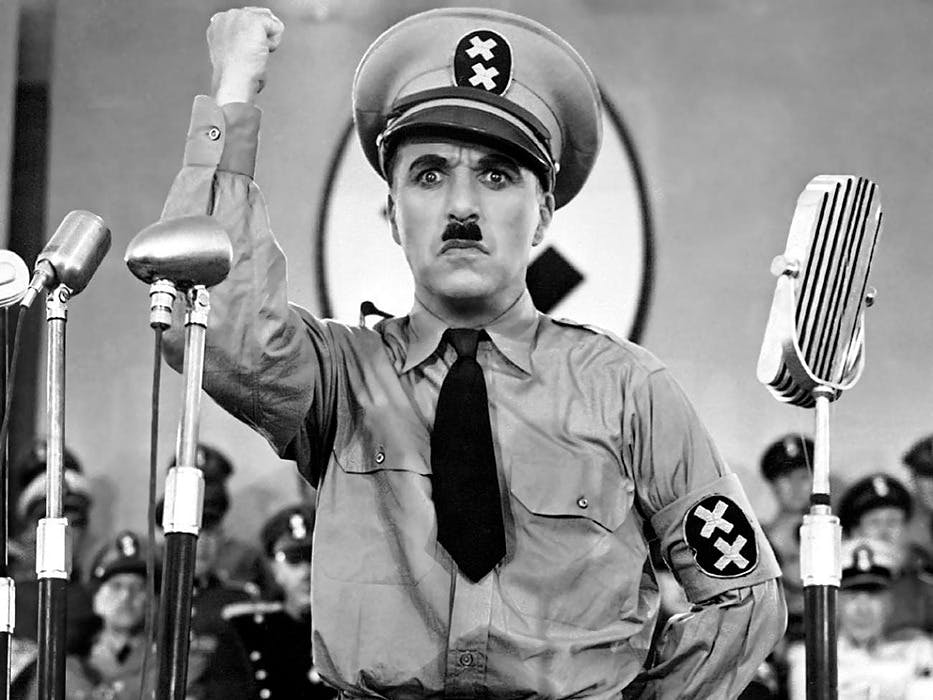
When it comes to getting stuff done, democracies win every time.