


The Embroidered Computer uses historic gold embroidery materials to craft a programmable 8 bit computer.
GLITCHWEAR
Experience the future of fashion with woven glitch sweaters – where traditional craftsmanship meets digital disruption, creating a mesmerizing blend of art and innovation that challenges the very fabric of style.

Persist, resist, stitch
What does knitting have to do with espionage? Can embroidery help your mental health? This talk shows how the skills to create textile ar...


charlota on Twitter / X
I built a multiplayer embroidery sampler for the internet. It's called Common Thread. 🪡Built the entire thing in @Figma Make, first thing I've ever vibecoded with it.Every visitor gets a patch on a shared canvas. You pick a thread color, choose a stitch type, and craft your… pic.twitter.com/5W5ejE0y4G— charlota (@0xCharlota) February 27, 2026

Computer: A History of the Information Machine
Computer: A History of the Information Machine is a history of computing written by Martin Campbell-Kelly and William Aspray first published in 1996. It follows the history of "information machines" from Charles Babbage's difference engine through Herman Hollerith's tabulating machines to the invention of the modern electronic digital computer. A revised 2nd edition published in 2004 included new material on the Internet and World Wide Web, while the updated 3rd edition published in 2013 includes contributions from historians Nathan Ensmenger and Jeffrey Yost. The 3rd edition extends the story to include recent phenomena such as social networking and revises the discussion of early history to reflect new insights from the literature.

William Latham - Art and the Computer (1990)
The Making of Cursor's Icons
A year of drawing, testing, and shipping a complete icon system for the world's favourite coding agent.

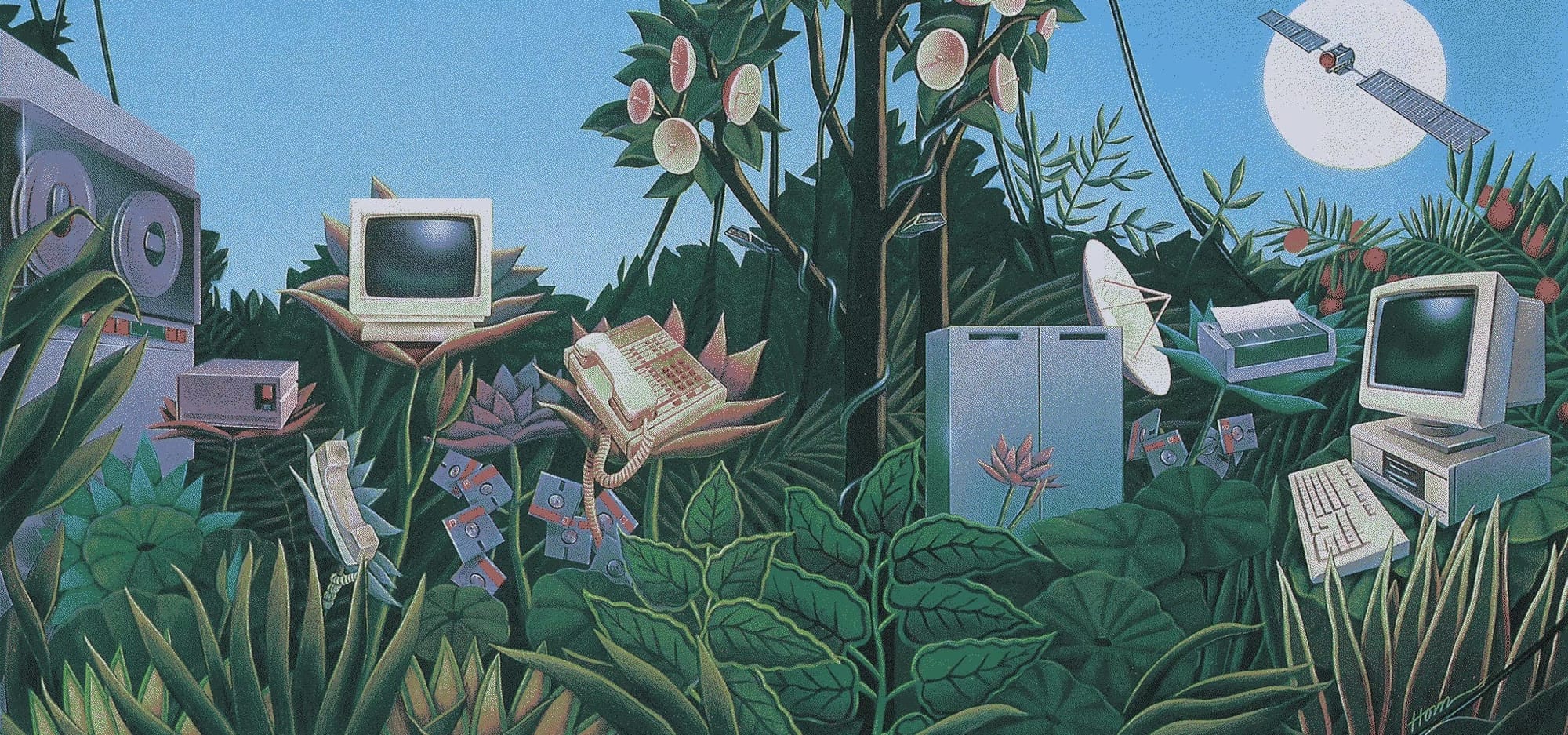
Computer Plant Life
"Thе Commodore РЕТ offers you а safe passage through the primeval swamр of computerization," says the ad copy accompanying this uncredited illustration in a June 1981 issue of Personal Computer World: That image and ad copy offers a perfect example of how most retro tech illustration works: Visualize the hell
Intertwingler
The central premise of Intertwingler is that the computer is underutilized as an expressive medium. That may seem wild at first to say, but if you look around, you can find copious examples of the computer as a tool for preparing media, or as a vehicle for transporting or rendering media, but the actual content of the media in question would work just as well as if it had been made a hundred years ago:
Purple Computer: a calm computer you can feel good about
Transform your old laptop into an offline space for open-ended play. Designed for ages 3-10: learning letters to writing code. They explore, create, and put it down on their own.
triumph of the nerds

Universal Virtual Computer
The specification of an hypothetical computer designed to decode and preserve some form of computation over time.
migrating a did:web to a new pds
weaver.sh