In 2005, I decided to design my first geospatial database engine. PostGIS was unable to keep up with the modest volumes of sensor data I was working with and while I was new to geospatial data, I had skill designing database engines. It seemed simple enough to get the scale and performance I required. Nothing could have been further from the truth and the reasons were rarely obvious.

How we made geo joins 400× faster with H3 indexes
Using H3 indexes to greatly speed up geospatial SQL Queries. Orders of magnitude improvements can be gained with the right data structures
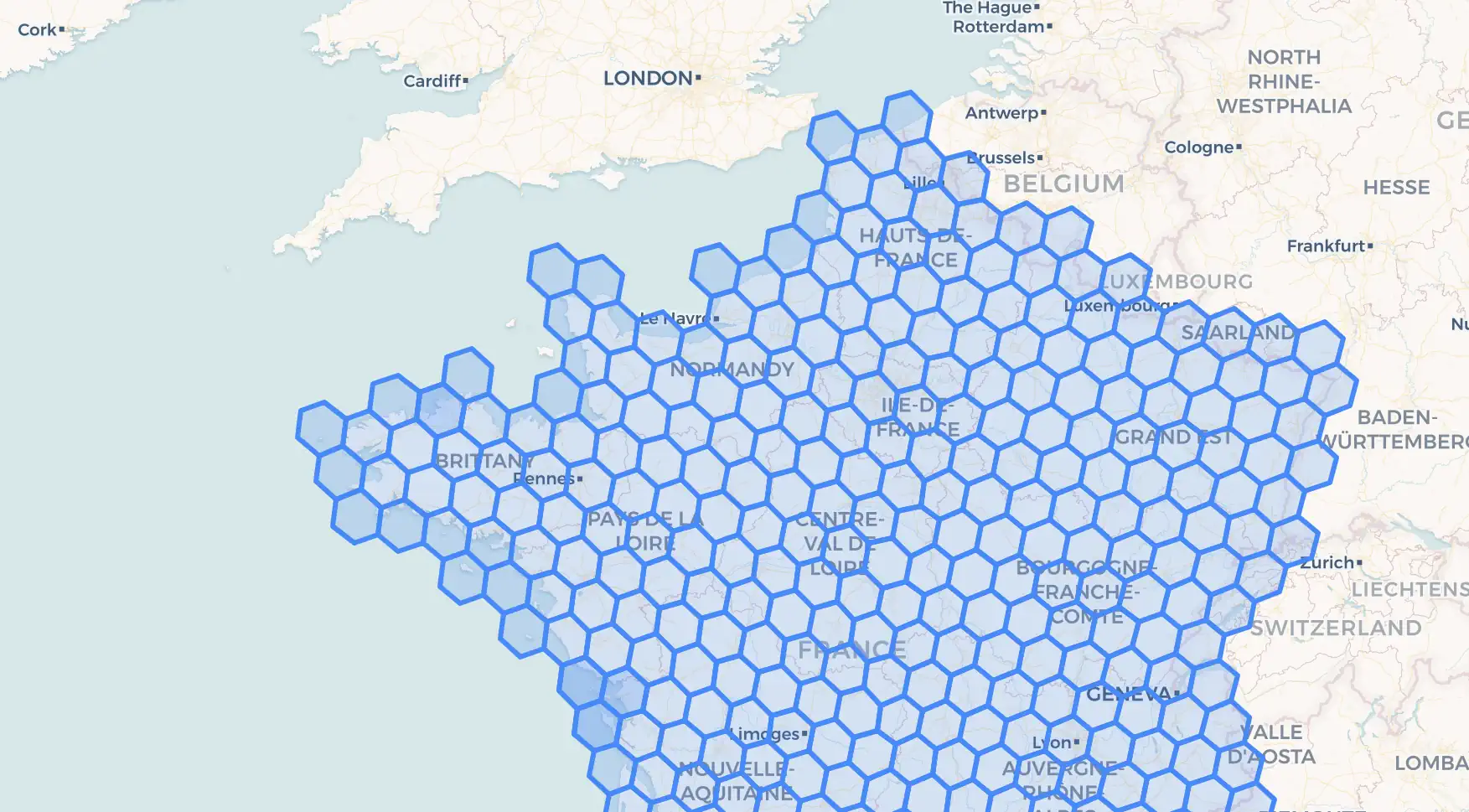
How we made geo joins 400× faster with H3 indexes
Using H3 indexes to greatly speed up geospatial SQL Queries. Orders of magnitude improvements can be gained with the right data structures
22. Introduction — Spatial Data Management with Earth Engine
A database management system (DBMS) allows users to store, insert, delete, and update information in a database. Spatial databases go a step further because they record data with geographic coordinates.
Mastering PostGIS
PostGIS is open source extension onf PostgreSQL object-relational database system that allows GIS objects to be stored and allows querying for information and location services. The aim of this book is to help you master the functionalities offered by PostGIS- from data creation, analysis and output, to ETL and live edits. The book begins with an overview of the key concepts related to spatial database systems and how it applies to Spatial RMDS. You will learn to load different formats into your Postgres instance, investigate the spatial nature of your raster data, and finally export it using built-in functionalities or 3th party tools for backup or representational purposes. Through the course of this book, you will be presented with many examples on how to interact with the database using JavaScript and Node.js. Sample web-based applications interacting with backend PostGIS will also be presented throughout the book, so you can get comfortable with the modern ways of consuming and modifying your spatial data.

GitHub - clarisma/geodesk: Fast and storage-efficient spatial database engine for OpenStreetMap data
Fast and storage-efficient spatial database engine for OpenStreetMap data - clarisma/geodesk
NoSQL: The Baby and the Bathwater - Marc's Blog
This is a bit of an introduction to a long series of posts I’ve been writing about what, fundamentally, it is that makes databases scale. The whole series is going to take me a long time, but hopefully there’s something here folks will enjoy.
The Marketing Behind MongoDB
Countless NoSQL databases competed to be the database of choice. MongoDB's marketing strategy helped it become the winner.

Designing Data-Intensive Applications
Data is at the center of many challenges in system design today. Difficult issues need to be figured out, such as scalability, consistency, reliability, efficiency, and... - Selection from Designing Data-Intensive Applications [Book]
dataset 2.0.0 documentation
Although managing data in relational databases has plenty of benefits, they’re rarely used in day-to-day work with small to medium scale datasets. But why is that? Why do we see an awful lot of data stored in static files in CSV or JSON format, even though they are hard to query and update incrementally?
Designing Data-Intensive Applications
Data is at the center of many challenges in system desi…
Out of the box
The open-data revolution has not lived up to expectations. But it is only getting started

Spatial Data Science
Data science is concerned with finding answers to questions on the basis of available data, and communicating that effort. Besides showing the results, this communication involves sharing the data used, but also exposing the path that led to the answers in a comprehensive and reproducible way. It also acknowledges the fact that available data may not be sufficient to answer questions, and that any answers are conditional on the data collection or sampling protocols employed.
Semantic Data Modeling, Graph Query, and SQL, Together at Last?
Our teams advance the state of the art through research, systems engineering, and collaboration across Google.