

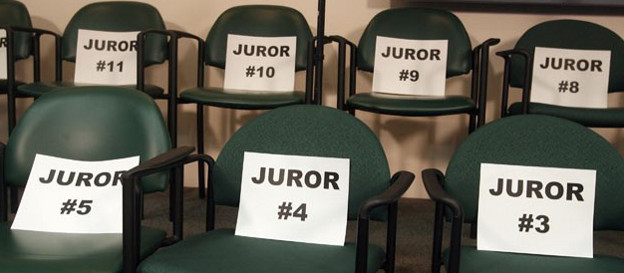
Though jurors are sworn to uphold the law during their deliberation, they still have the power to decide that a defendant is innocent even when all signs point to their guilt. Prosecutor Paul Butler traces the ways this hidden process was a boon for abolitionists in the 1800’s, and a curse to contem
After the leak, the Supreme Court seethes with resentment and fear behind the scenes
The court is riven with distrust among the law clerks, staff and, most of all, the justices themselves.

I was sentenced as a terrorist. Now my barrister is on trial for defending me
My lawyer faces jail over a speech to jurors – a first in English history – as state seeks to silence Palestine solidarity

From Haymarket to Prairieland: How dissent has unleashed the long arm of the law
The Prairieland sentencing has dark historical parallels, Kim Kelly writes. But we can change the end of the current story.
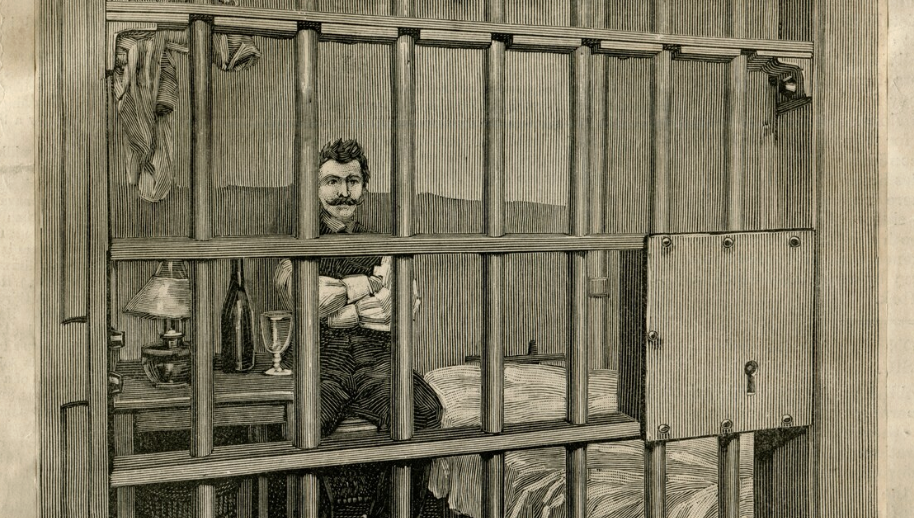
Ordeals
AbstractI argue that medieval judicial ordeals accurately assigned accused criminals’ guilt and innocence. They did this by leveraging a medieval superstition called iudicium Dei (judgments of God). According to that superstition, God condemned the guilty and exonerated the innocent through clergy-conducted physical tests. Medieval citizens’ belief in iudicium Dei created a separating equilibrium in which only innocent defendants were willing to undergo ordeals. Conditional on observing a defendant’s willingness to do so, the administering priest knew he or she was innocent and manipulated the ordeal to find this. My theory explains the peculiar puzzle of ordeals: trials of fire and water that should have condemned most persons who underwent them did the reverse. They exonerated these persons instead. Boiling water rarely boiled persons who plunged their arms in it. Burning iron rarely burned persons who carried it. Ordeal outcomes were miraculous, but they were miracles of mechanism design.

A prosecutor says no to a rape charge, so a college student calls her own grand jury
Kansas is among six states with century-old laws allowing citizens to pursue indictments on their own.

Judges and Grand Juries Reject Trump's Efforts to Investigate
A detailed record of federal courts and grand juries rejecting the Trump administration’s use of subpoenas, search warrants, and indictments.
In Trump’s Washington, Prosecutors Can’t Count on Grand Juries to Take Their Side
In the past two weeks, prosecutors in the capital have failed to secure indictments in at least three cases, an acceleration of the problems the Justice Department has had with grand juries.

New evidence, new challenges: ICC judges’ perspectives on user-generated evidence and judging in an age of artificial intelligence
Evidence recorded on personal digital devices, or “user-generated evidence” (UGE), has profoundly shaped our ways of knowing about international crimes. UGE can be expected to play an important role in future cases before the International Criminal Court (ICC), yet few trials to date have relied extensively on UGE.. This research provides important insights into how ICC judges define UGE and perceive its strengths and weaknesses, and on the readiness of the Court to adapt to judging in an age of Artificial Intelligence. Using grounded theory to analyse interviews with ICC judges, we identified several key themes, including concerns about the perceived importance and potential bias of evidence sources; the practical challenges of employing UGE; the burden placed on the parties to ensure the reliability of the evidence, to rigorously challenge the opposing party’s evidence, and the importance of preparing legal professionals to address the risks associated with misinformation and disinformation.
Judge Learns Lawyers on Both Sides of Case Used AI, Cancels Trial, Kicks Everyone Off the Case
When two AIs argue against each other, the legal system loses.
TV: The Shame of Wisconsin
One cannot watch Making a Murderer without thinking of the adage that law is to justice what medicine is to immortality. The path of each is a little crooked and always winds up wide of the mark. Moreover, nothing is as vain and self-regarding as the law.

Editor's Notes: Can We Defy Courts While Believing In Rule of Law?
Do our tactics throw out democracy and rule of law while purportedly aiming at saving them?
The custom justice of ‘problem-solving courts’ - The Boston Globe
“Problem-solving courts”—in which defendants who plead guilty to crimes stemming from drug addiction, mental health, homelessness, veterans’ issues, or other special circumstances can get help for those underlying problems instead of jail time--have enjoyed a rapid rise nationwide over the past 20 years. There are more than two dozen in Massachusetts alone, with eight more currently proposed. Studies on drug courts have shown that they significantly reduce repeat offenses, as well as leaving defendants more motivated and more positive toward the justice system. But specialty courts’ rapid adoption has caught the attention of legal experts who worry that an immense shift has taken place ad hoc, with relatively little consideration of what it means to introduce such variability into the justice system.

Why Mississippi Courts Must Produce Public Defense Plans
The state Supreme Court wants to know how local courts provide lawyers, if any, to poor people after their arrest.
Many Mississippi Courts Unprepared to Give All Poor Defendants Lawyers
A rule requiring poor criminal defendants to have a lawyer throughout the criminal process took effect Saturday.
The Prairieland Sentences Are a National Emergency
A federal court has punished Texas ICE demonstrators with decades in prison. This is dark news, not just for them but for anyone who may want to register political dissent.

Wearing All Black at Protests Makes You Guilty of Terrorism, Prosecutors Tell Jury
The case is a major test of the Trump administration's push to label "antifa" protesters as terrorists.
