

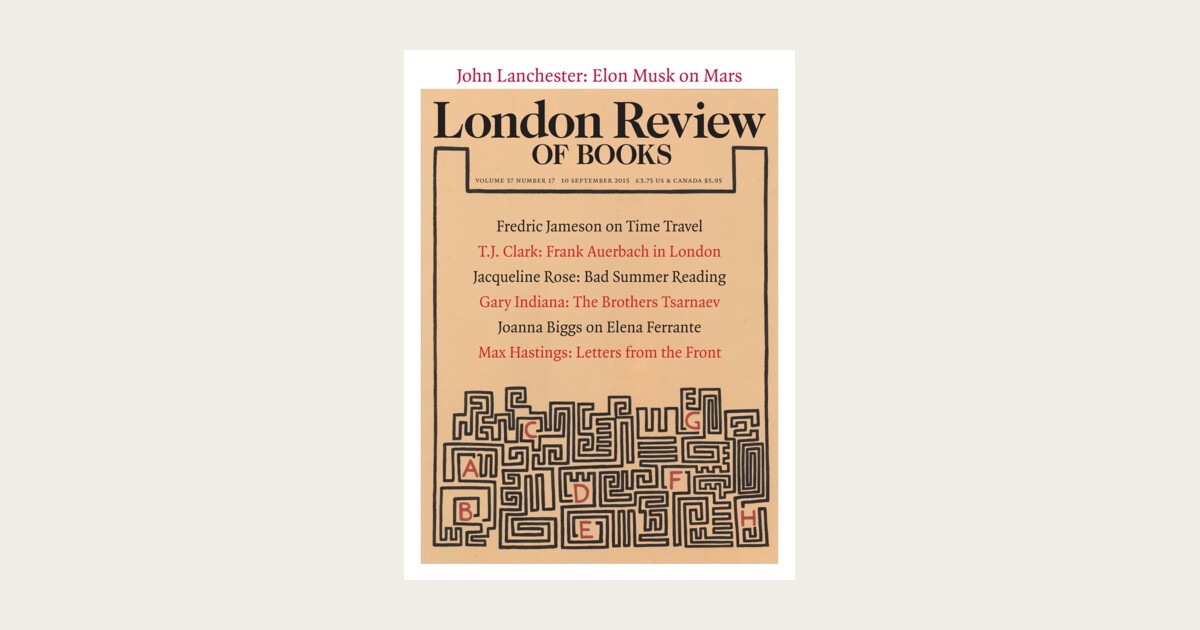
Job gone, I sat around trying to write, managing bits and pieces, but earning very little. And then my marriage drifted away too, leaving me, in Alan Partridge’s phrase, clinically fed-up boo-hoo. My wife, having said she would leave, took two and a half years to find a way of doing it – there is a small consolation in not being the only procrastinator in the relationship. While this was going on the LRB commissioned me to write about Richard Hughes, who wrote A High Wind in Jamaica. I like Hughes and it seemed like a job I could get on with. I cheerfully settled to the research, reading the novels I hadn’t read, rereading the ones I had. Then I started writing, or that’s what I told myself: some paragraphs, some sentences, a sketch of a plan, then some rewriting, rearranging, scrubbing, more rewriting, more scrubbing, pauses to reconsider. Then I did some more research: the short stories, the children’s stories, the poems and plays, the journalism, Richard Perceval Graves’s biography, then back to the rewriting …
The best writing advice I’ve ever read comes from Robert Frost.
I write prose, not poetry, but the most helpful piece of advice I’ve ever read was written by a poet: Robert Frost, who was born 147 years ago today. In the second, expanded edition of his Co…
Authorship, division of labour, material and digital form; thoughts on Samuel A. Moore's Publishing Beyond the Market
On Christmas day, we had a quiet time this year. One of the things I did was to read Moore, Samuel A., Publishing Beyond the Market: Open Access, Care, and the Commons (University of Michigan Press, 2025). This is a most enjoyable book that outlines a project and worldview that I know Sam has been cultivating and refining for many years. I should stress that I am not writing a “review” here. I would be conflicted anyway as I am thanked in the acknowledgements. But it did, like all good books, make me think and I wanted to jot down some thoughts. These thoughts are not necessarily novel – sometimes Sam even explores some of them in the book – but I thought it would be enjoyable to express them nonetheless.

Working Through the Fear of Being Seen
A personal essay about returning to writing, navigating visibility, and rebuilding confidence after years of second-guessing.
How I draft stories
I discovered that trying to write one big blob does not work for me. I can get as far as 2000 words before the volume overwhelms. As with many things in life, breaking it down into pieces helps a lot! This is where most outlining writers suggest a big bulleted
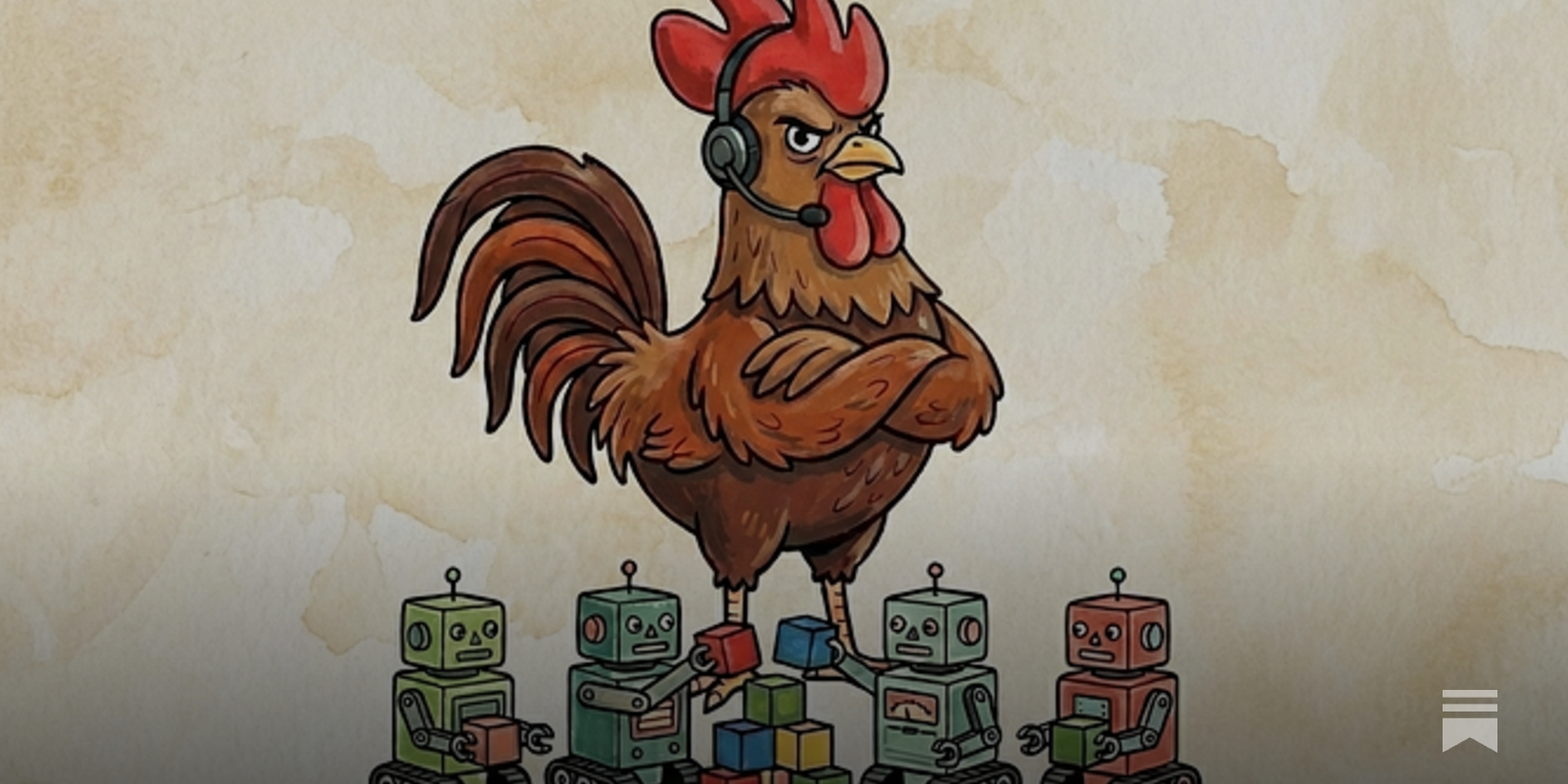
help! my husband is addicted to Claude Code.
the first, and possibly last, writerbuilder advice column
The Golden Rule for Becoming a Better Writer - T.R Napper
I’m obsessed with the craft of writing. I write every day, I read about the craft often, and in my...

A heartbreaking work of staggering genius
A book that redefines both family and narrative for the…

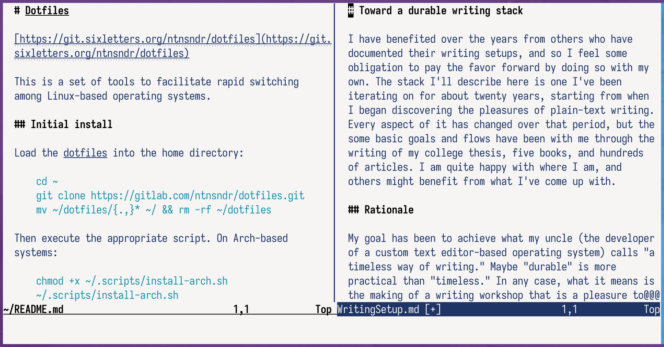
Toward a durable writing stack – Writings and rehearsals by Nathan Schneider
I have benefited over the years from others who have documented their writing setups, and so I feel some obligation to pay the favor forward by doing so with my own. The stack I’ll describe here is one I’ve been iterating on for about twenty years, starting from when I began discovering the pleasures of plain-text writing. Every aspect of it has changed over that period, but the some basic goals and flows have been with me through the writing of my college thesis, five books, and hundreds of articles. I am quite happy with where I am, and others might benefit from what I’ve come up with.
Everything is In-Between — Douglas Rushkoff
I’ve begun this piece maybe twenty times in the past three weeks. By the time I’ve finished the first paragraph, some new thing happens that obsolesces whatever event I’m writing about. And I’m not even writing about the news, so much as using one shared moment as a “peg” for a piece about some larger phenomenon or strategy.
Writing Is Thinking
When you write about your work, it makes all of us smarter for the effort, including you. Done well, this kind of sharing means you’re contributing signal, instead of noise. But writers are made, n…

On Writing #3
Periodically I like to gather various observations about writing, and share my perspective.

The 'Paperwork Flood': How I Drowned a Bureaucrat before dinner., Sightless Scribbles
A fabulously gay blind author.
Creative Reading: Scaffolding Reading for Transformation
Reading augmentation systems increasingly help readers process text at scale. While these tools address real constraints of time and cognitive load, they often implicitly frame reading as information transmission, or "reading to discard," delegating interpretation and effort to the machine. Yet this delegation changes the outcome of reading. For example, in scholarly reading, deciding what a research text implies and why it matters is central to the work of scholarly production. We propose creative reading as an alternative goal: reading augmentation that supports readers in creating both readings and themselves as readers. By putting literary and narrative theories into conversation with scholarly sensemaking and creativity support, we present a provocation-oriented design space for valuing the process of reading as a way of preserving a plurality of readings and transforming readers over time.

Creative Reading: Scaffolding Reading for Transformation
Reading augmentation systems increasingly help readers process text at scale. While these tools address real constraints of time and cognitive load, they often implicitly frame reading as information transmission, or "reading to discard," delegating interpretation and effort to the machine. Yet this delegation changes the outcome of reading. For example, in scholarly reading, deciding what a research text implies and why it matters is central to the work of scholarly production. We propose creative reading as an alternative goal: reading augmentation that supports readers in creating both readings and themselves as readers. By putting literary and narrative theories into conversation with scholarly sensemaking and creativity support, we present a provocation-oriented design space for valuing the process of reading as a way of preserving a plurality of readings and transforming readers over time.
