


What knowledge of science, culture and civilization would you most want to pass on to the surviving humans as they faced the prospect of adapting to a new environment and rebuilding their lives over many generations?
Rebooting Civilization: Survivors’ How-to Guide for Restoring Technology after the Apocalypse [Excerpt]
In his new book, astrobiologist Lewis Dartnell compiles the knowledge necessary for society to recover after a devastating disaster, including the basics of taking photographs

Sustainability is not enough: we need regenerative cultures
By Daniel C. Wahl

The Consilience Project
The Consilience Project is a publication of the Civilization Research Institute (CRI)

Metascience 2027
A global gathering for knowledge sharing, community building, and opportunities to define a roadmap of research and intervention priorities to improve science.

Deep Adaptation opens up a necessary conversation about the breakdown of civilisation
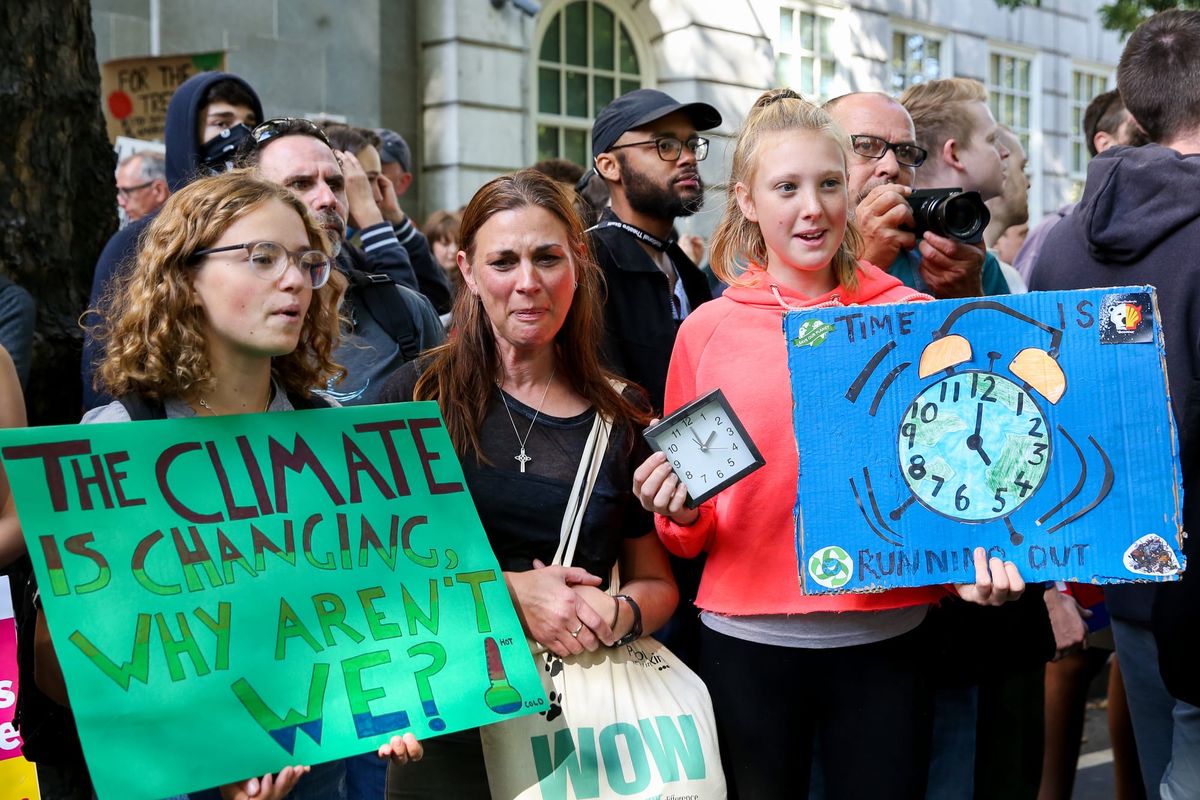
Many scientists say that societal collapse is now a likely outcome. We must prepare for this possibility and not deny its plausibility.
HOME - Daniel Schmachtenberger
EXPLORATIONS ON THE FUTURE OF CIVILIZATION Some of the central questions being explored here: With the first fully globalized civilization, how do we avoid the collapse fate that has befallen all previous civilizations? What are effective types of immune systems for identifying and correcting corruption in governance systems? How do we comprehensively disincentivize misinformation and harm to … HOME Read More »

Attention is All You Need
A report from the future on AI, attention, and the maintenance of civilization

Seven Generations Principle: Healing the Past & Shaping the Future — The Indigenous Foundation
This is adapted from an Unrooted podcast episode by Breanne Smith @breazieboozhoo What if I told you that the choices we make today could shape the lives of those who come seven generations after us? And that we are the bridge between our ancestors’ resilience & our descendants’ future.

The Secret of Our Success: How Culture Is Driving Human Evolution, Domesticating Our Species, and Making Us Smarter
How our collective intelligence has helped us to evolve and prosperHumans are a puzzling species. On the one hand, we struggle to survive on our own in the wild, often failing to overcome even basic challenges, like obtaining food, building shelters, or avoiding predators. On the other hand, human groups have produced ingenious technologies, sophisticated languages, and complex institutions that have permitted us to successfully expand into a vast range of diverse environments. What has enabled us to dominate the globe, more than any other species, while remaining virtually helpless as lone individuals? This book shows that the secret of our success lies not in our innate intelligence, but in our collective brains—on the ability of human groups to socially interconnect and learn from one another over generations.Drawing insights from lost European explorers, clever chimpanzees, mobile hunter-gatherers, neuroscientific findings, ancient bones, and the human genome, Joseph Henrich demonstrates how our collective brains have propelled our species' genetic evolution and shaped our biology. Our early capacities for learning from others produced many cultural innovations, such as fire, cooking, water containers, plant knowledge, and projectile weapons, which in turn drove the expansion of our brains and altered our physiology, anatomy, and psychology in crucial ways. Later on, some collective brains generated and recombined powerful concepts, such as the lever, wheel, screw, and writing, while also creating the institutions that continue to alter our motivations and perceptions. Henrich shows how our genetics and biology are inextricably interwoven with cultural evolution, and how culture-gene interactions launched our species on an extraordinary evolutionary trajectory.Tracking clues from our ancient past to the present, The Secret of Our Success explores how the evolution of both our cultural and social natures produce a collective intelligence that explains both our species' immense success and the origins of human uniqueness.

How to be a wise optimist about science and technology?
I believe the central problem of the 21st century is how civilization co-evolves with science and technology. As our understanding of the world deepens, it enables technologies that confer ever more power to both improve and damage the world. There's currently much public discussion of this in the context of artificial superintelligence (ASI). However, it's a fundamental recurring challenge, affecting areas including climate change, genetic engineering, nanotechnology, geoengineering, brain-computer interfaces, and many more. How can we best benefit from science and technology, while supplying safety sufficient to ensure a healthy, flourishing civilization?
Goliath's curse: the history and future of societal collapse
A vast and unprecedented survey of societal collapse -- stretching from the Bronze Age to the age of silicon -- that digs through the ruins of fallen societies to understand the root causes of their downfall and the most dire consequences for our future. Stepping back to look at our precariously interdependent global society of today -- with the threat of nuclear war ever present and the world heating up faster than it did before the Great Permian Extinction, which wiped away 80-90 percent of life on Earth -- one couldn't be blamed for asking : Will we make it? Addressing this question with the seriousness it demands, Cambridge scholar Luke Kemp conducts a historical autopsy that stretches across five millennia, and more than 440 societal lifespans, from the first Egyptian dynasty to the modern-day United Kingdom, using the latest discoveries from archaeology and anthropology to reveal profound and often counterintuitive insights into why exactly societies fail. While books like Jared Diamond's Collapse zoom in on only a few case studies, Kemp's embrace of a 'deep systems' approach, availing himself of the largest dataset possible, allows him to discover the broader trends, and deeper causes, of collapse that pose future risks -- without abandoning the gripping historical narratives that bring these pages alive. Goliath's Curse is a stark reminder that there are both bright and dark sides to societal collapse -- that it is not necessarily a reversion to chaos or a dark age -- and that making a more resilient world may well mean making a more just one

Daniel Christian Wahl: “Bioregional Futures: Reconnecting to Place for Planetary Health” - The Great Simplification
In the past century of abundant energy surplus, humanity’s globalized, large-scale approach to problem-solving

Ecocivilization: making a world that works for all
""One of the greatest thinkers of our age" (The Guardian) presents a new way of living-one modeled on nature's design instead of capitalism's-for fans of Guns, Germs, and Steel and Doughnut Economics It has often been said that it is easier to imagine the end of the world than it is to imagine the end of capitalism-and yet that is what the historical moment urgently calls for. Climate change has reached an emergency state, inequality continues to grow, and, for many, the future has never seemed more bleak. Incremental policy improvements are no longer enough-we need a deep transformation of our current civilization to continue to survive. In Ecocivilization, leading thinker Jeremy Lent reimagines the basis of our civilization, and argues for a new global system of living, one based on life-affirming principles modeled after nature's own design. What enfolds is a robust framework incorporating Lent's own expertise, and the lived experiences of those on the ground already putting ecological civilization's core tenants into practice-justice, mutuality, diversity, and symbiosis. From the global economy to universal housing and income, from infrastructure to agriculture, every major aspect of our society could be redesigned to work together as a coherent whole, setting the conditions for all people to flourish. Ecocivilization shows how this future on a regenerated Earth is not only desirable, but entirely feasible"--

» The Game of Everything, Part 1: Making Civilization The Digital Antiquarian
If my gravestone says, “Sid Meier, developed Civilization,” I’m happy with that. It’s a game I’m happy to be known for.