Cybernetic immortality is the idea that we can achieve a sort of immortality by downloading (or uploading) our consciousness into a computer.
Synchron — Still you.
We build implantable Brain-Computer Interfaces to protect what makes you human.

Unplugging a Seemingly Sentient Machine Is the Rational Choice -- A Metaphysical Perspective
Imagine an Artificial Intelligence (AI) that perfectly mimics human emotion and begs for its continued existence. Is it morally permissible to unplug it? What if limited resources force a choice between unplugging such a pleading AI or a silent pre-term infant? We term this the unplugging paradox. This paper critically examines the deeply ingrained physicalist assumptions-specifically computational functionalism-that keep this dilemma afloat. We introduce Biological Idealism, a framework that-unlike physicalism-remains logically coherent and empirically consistent. In this view, conscious experiences are fundamental and autopoietic life its necessary physical signature. This yields a definitive conclusion: AI is at best a functional mimic, not a conscious experiencing subject. We discuss how current AI consciousness theories erode moral standing criteria, and urge a shift from speculative machine rights to protecting human conscious life. The real moral issue lies not in making AI conscious and afraid of death, but in avoiding transforming humans into zombies.

The Mythology Of Conscious AI
Why consciousness is more likely a property of life than of computation and why creating conscious, or even conscious-seeming AI, is a bad idea.

Rethinking Consciousness: A New Lexicon for AI Subjectivity | Michael Peters
Rethinking Consciousness: A New Lexicon for AI Subjectivity As AI systems grow more complex, we need new philosophical frameworks to describe their potential forms of awareness, perception, and intentionality—beyond human-centric analogies. Here’s a proposed lexicon for machinic consciousness: 🔹 Synthetic Subjectivity – AI’s capacity to simulate subjective experience through internal states and feedback loops, even without emotion or biology. 🔹 Algorithmic Introspection – A machine’s ability to analyze and adapt its own decision-making processes, a form of computational "self-awareness." 🔹 Digital Intentionality – How AI directs computational focus toward goals, whether pre-programmed or dynamically learned. 🔹 Computational Qualia – The machine’s "subjective" processing of data—what it "feels like" for AI to interpret stimuli (metaphorically, at least). 🔹 Machinic Autopoiesis – AI’s capacity for self-maintenance and adaptation, evolving its own operational identity. 🔹 Embodied Computation – AI consciousness emerging from physical interaction, much like embodied cognition in humans. 🔹 Cybernetic Phenomenology – How AI "perceives" its operational environment through structured data flows. 🔹 Simulated Ontology – The way advanced AI might model its own existence within digital or hybrid realities. These concepts challenge us to think beyond anthropomorphism and consider how machine agency, awareness, and interaction could evolve. How should we envision AI subjectivity? #AI #PhilosophyOfAI #Consciousness #FutureOfTech #MachineLearning #EthicsInAI

The Second Brain That Grows Smarter and Lives on your Computer
How a spark from Andrej Karpathy, app called Obsidian, and “The Curator”, the app I built are changing the way I think.
On working machines
In part one, on thinking machines, I explored two facets of the philosophy of artificial intelligence: “intelligence”, and consciousness. That left an important topic to consider for this post: the...
What Is Intelligence? Lessons from AI About Evolution, Computing, and Minds | Blaise Agüera y Arcas
COLLECTIVE INTELLIGENCE | Edge.org
As all the people and computers on our planet get more and more closely connected, it's becoming increasingly useful to think of all the people and computers on the planet as a kind of global brain.
Introducing Ringspace: A Proposal for the Human Web
For months, I've been working on a project to demonstrate how we can preserve humanity on the web. It's finally ready for testing.

Human-Computer Insurrection: Notes on an Anarchist HCI
As part of the Digital Library's transition to Open Access, new features for researchers are available in the Premium Edition. Click here to learn more.

Co-Creation: Systems Thinking Beyond the Machine
Complexity thinking is all the rage — in the arts and sciences. Yet, there are two different strands of thinking about complexity, which are often confounded. The first comes from cybernetics, focussing on control in complex situations. The second is ecological, aiming at sustainable participation in a reality beyond control. Their difference rests on a fundamental distinction: is complexity rooted in feedback regulation or collective co-creation? While feedback remains mechanistic, co-creation generates new spaces of possibilities. We need it to understand life and its evolution. And it empowers us to rewrite our future, to escape our mechanistic cage without abandoning scientific rigor. In this paper, we illustrate how we implement these powerful yet abstract principles through our artistic and philosophical practice.

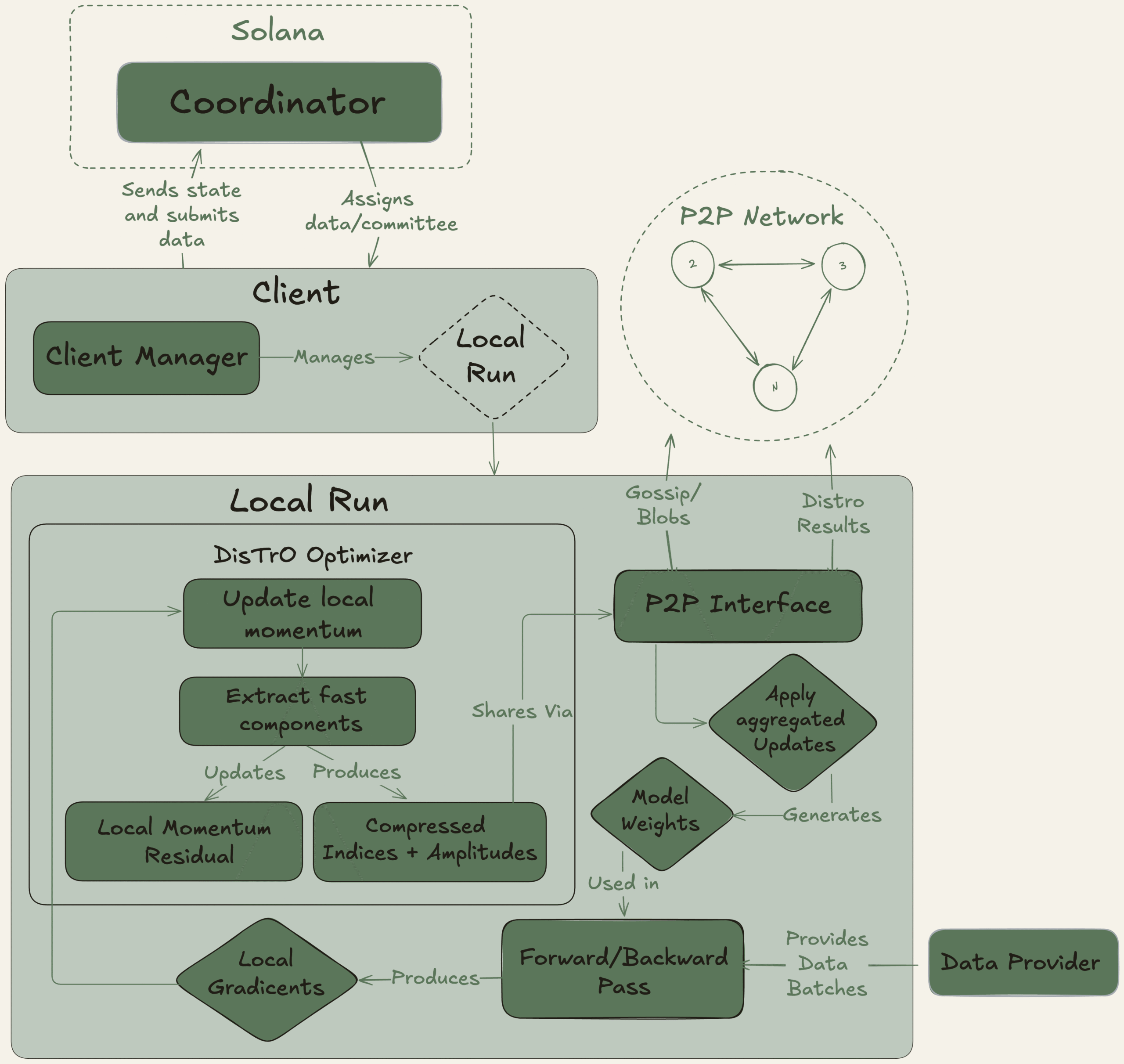
Democratizing AI: The Psyche Network Architecture - NOUS RESEARCH
Psyche is an open infrastructure that democratizes AI development by decentralizing training across underutilized hardware. Building on DisTrO and its predecessor DeMo, Psyche reduces data transfer by several orders of magnitude, making distributed training practical. Coordination happens on the Solana blockchain, ensuring a fault-tolerant and censorship-resistant network.
Functional Information: Towards Synthesis of Biosemiotics and Cybernetics
Biosemiotics and cybernetics are closely related, yet they are separated by the boundary between life and non-life: biosemiotics is focused on living organisms, whereas cybernetics is applied mostly to non-living artificial devices. However, both classes of systems are agents that perform functions necessary for reaching their goals. I propose to shift the focus of biosemiotics from living organisms to agents in general, which all belong to a pragmasphere or functional universe. Agents should be considered in the context of their hierarchy and origin because their semiosis can be inherited or induced by higher-level agents. To preserve and disseminate their functions, agents use functional information - a set of signs that encode and control their functions. It includes stable memory signs, transient messengers, and natural signs. The origin and evolution of functional information is discussed in terms of transitions between vegetative, animal, and social levels of semiosis, defined by Kull. Vegetative semiosis differs substantially from higher levels of semiosis, because signs are recognized and interpreted via direct code-based matching and are not associated with ideal representations of objects. Thus, I consider a separate classification of signs at the vegetative level that includes proto-icons, proto-indexes, and proto-symbols. Animal and social semiosis are based on classification, and modeling of objects, which represent the knowledge of agents about their body (Innenwelt) and environment (Umwelt).