


Nature - Scientists are helping to stop antisocial behaviour in the world's most popular online game. The next stop could be a kinder Internet.
Play nice! How the internet is trying to design out toxic behaviour
Online abuse can be cruel – but for some tech companies it is an existential threat. Can giants such as Facebook use behavioural psychology and persuasive design to tame the trolls?
Bias, Skew, and Search Engines Are Sufficient to Explain Online Toxicity
Temporarily Offline
A slightly unerving game on technological violence induced by pseudosimplicity and increasingly awful UI.
Anatomy of an internet argument
Social media isn't toxic, most people just haven't figured out the game (yet)
Exploitative Game Design: Beyond the F2P Debate
The past few months have seen a torrent of articles about Free-to-Play business models, often discussed alongside issues of ethics in games (for example: 1, 2, 3, 4, 5). These pieces have addressed the effect on addiction-prone players or children, the possibility of corrupting artistic intent, the sheer amount of money being spent, and other advantages and dangers of F2P. While all of this is relevant, I fear that we’re focusing too much on F2P and glossing over the wider ethical issues in game design.
Opinion | Video Games Are Destroying the People Who Make Them (Published 2017)
The industry’s infamous “crunch” culture is taking a serious toll on workers.

Frontiers | Cyber-mobbing, technology-facilitated abuse and online violence
This article collection will explore the pressing issues of cyber-mobbing, technology-facilitated abuse and online violence, including online abuse, stalking...

Making the Case for Actionable Prosocial Design Research
Regulating harmful design is only half the equation — attention must also go toward how platforms can build prosocial design, and toward the research that shows them how.

Lisa Nakamura: The internet is a trash fire. Here's how to fix it.
Life on the internet is real life, and we need to stop pretending that what happens online doesn't matter, says digital media researcher Lisa Nakamura. In this timely talk, she explains the steps we can take to correct the toxic behaviors that have become common online -- and help make the internet a place where we all feel safe.

Moderating With Humans, For Humans - Trust Issues
Moderating With Humans, For Humans - Trust Issues
In the face of rampant AI, is ‘data poisoning’ a new form of civil disobedience?
Boycotts, sabotage and other types of civil disobedience have long served collective action against injustice.

In the face of rampant AI, is ‘data poisoning’ a new form of civil disobedience?
Boycotts, sabotage and other types of civil disobedience have long served collective action against injustice.
Bias, Skew, and Search Engines Are Sufficient to Explain Online Toxicity
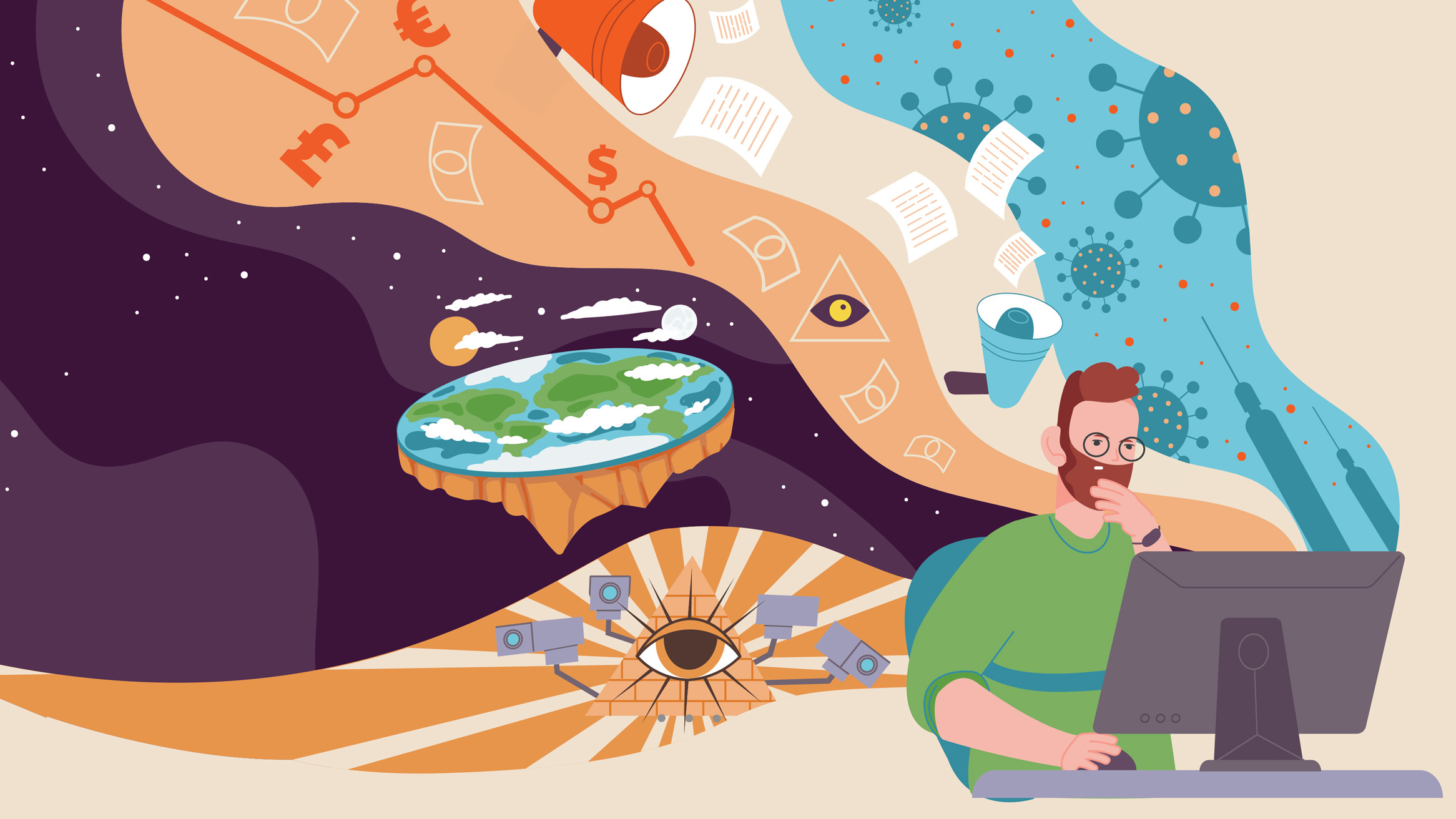
U.S. political discourse seems to have fissioned into discrete bubbles, each reflecting its own distorted image of the world. Many blame machine-learning algorithms that purportedly maximize “engagement”—serving up content that keeps YouTube or Facebook users watching videos or scrolling through their feeds—for radicalizing users or strengthening their partisanship. Sociologist Shoshana Zuboff15 even argues that “surveillance capitalism” uses optimized algorithmic feedback for “automated behavioral modification” at scale, writing the “music” that users then “dance” to.
Bias, Skew, and Search Engines Are Sufficient to Explain Online Toxicity
U.S. political discourse seems to have fissioned into discrete bubbles, each reflecting its own distorted image of the world. Many blame machine-learning algorithms that purportedly maximize “engagement”—serving up content that keeps YouTube or Facebook users watching videos or scrolling through their feeds—for radicalizing users or strengthening their partisanship. Sociologist Shoshana Zuboff15 even argues that “surveillance capitalism” uses optimized algorithmic feedback for “automated behavioral modification” at scale, writing the “music” that users then “dance” to.
From @mkarhulahti.bsky.social, me, @nballou.bsky.social, and Ivan Ropovik, newly accepted at Collabra: Psychology. This concerns a Nature: Human Behavior publication on the impacts of a Chinese anti-gaming policy. The paper has serious flaws making its results unsupportable. osf.io/preprints/psyarxiv/n2rka_v4
OSF
osf.io