

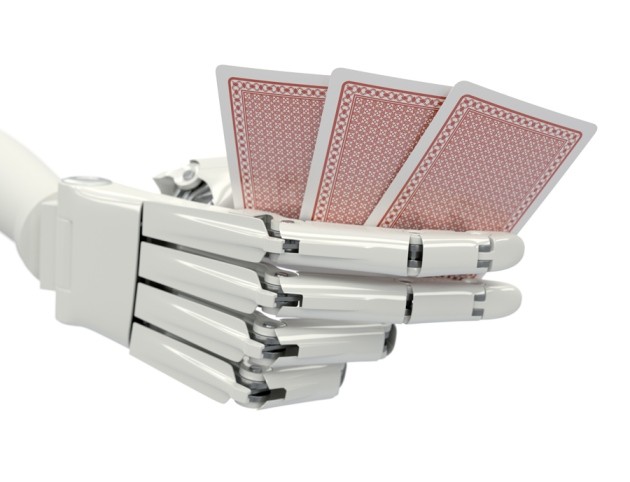
An 'essentially unbeatable' algorithm for the popular card game points to strategies for solving real-life problems without having complete information.
The Science of Winning Poker
Bluffing still matters, but the best players now depend on math theory

Magic: The Gathering is Turing Complete
$\textit{Magic: The Gathering}$ is a popular and famously complicated trading card game about magical combat. In this paper we show that optimal play in real-world $\textit{Magic}$ is at least as...

The Math of Idle Games, Part I
Originally published October 4, 2016 I’ve given a few talks in the past about the appeal and general mechanics of idle games, but what if you actually wanted to make one? Theory and patterns are nice, but there’s some complicated math running behind it. And how on earth

Simple Set Game Proof Stuns Mathematicians | Quanta Magazine
A new series of papers has settled a long-standing question related to the popular game in which players seek patterned sets of three cards.
GameSpot's SIMply Divine: The Story of Maxis Software
GameSpot action adventure driving puzzle role-playing simulation sports strategy hardware
The Gambler Who Cracked the Horse-Racing Code
Bill Benter did the impossible: He wrote an algorithm that couldn’t lose at the track. Close to a billion dollars later, he tells his story for the first time.

ReBeL: A general game-playing AI bot that excels at poker and more
Combining reinforcement learning with search (RL+Search) has been tremendously successful for perfect-information games. But prior RL+Search algorithms break down in

Game Theory | Open Yale Courses
This course is an introduction to game theory and strategic thinking. Ideas such as dominance, backward induction, Nash equilibrium, evolutionary stability, commitment, credibility, asymmetric information, adverse selection, and signaling are discussed and applied to games played in class and to examples drawn from economics, politics, the movies, and elsewhere.
Game Theory Is Really Counterintuitive
Every now and then, I hear someone say that game theory doesn’t tell us anything we don’t already know. In a sense, they are right—game theory is a methodology, so it’s not …

The Math Of Clash Royale
"Should I buy cards?", "How fast can I level up?" and other existential questions in Clash Royale are tackled using the power of MATH :)

ADDICTION BY DESIGN: Machine Gambling in Las Vegas – Natasha Dow Schüll
Slot machines, revamped by evermore compelling digital and video technology, have unseated traditional casino games as the gambling industry’s revenue mainstay. Drawing on fifteen years of field research in Las Vegas, anthropologist Natasha Dow Schüll explores the dark side of machine gambling—a solitary, rapid, continuous form of play that has less to do with the competitive thrill of winning than with the pull of “the machine zone,” as gamblers call the trancelike state they enter.
The Math of Idle Games, Part II
Originally published October 28, 2016 In Part I [https://www.sirpinski.com/the-math-of-idle-games-part-i/] of this three-part series, we looked at some of the standard math behind rapid-growth idle games, primarily at the relationships between exponential and polynomial growth and some methods of
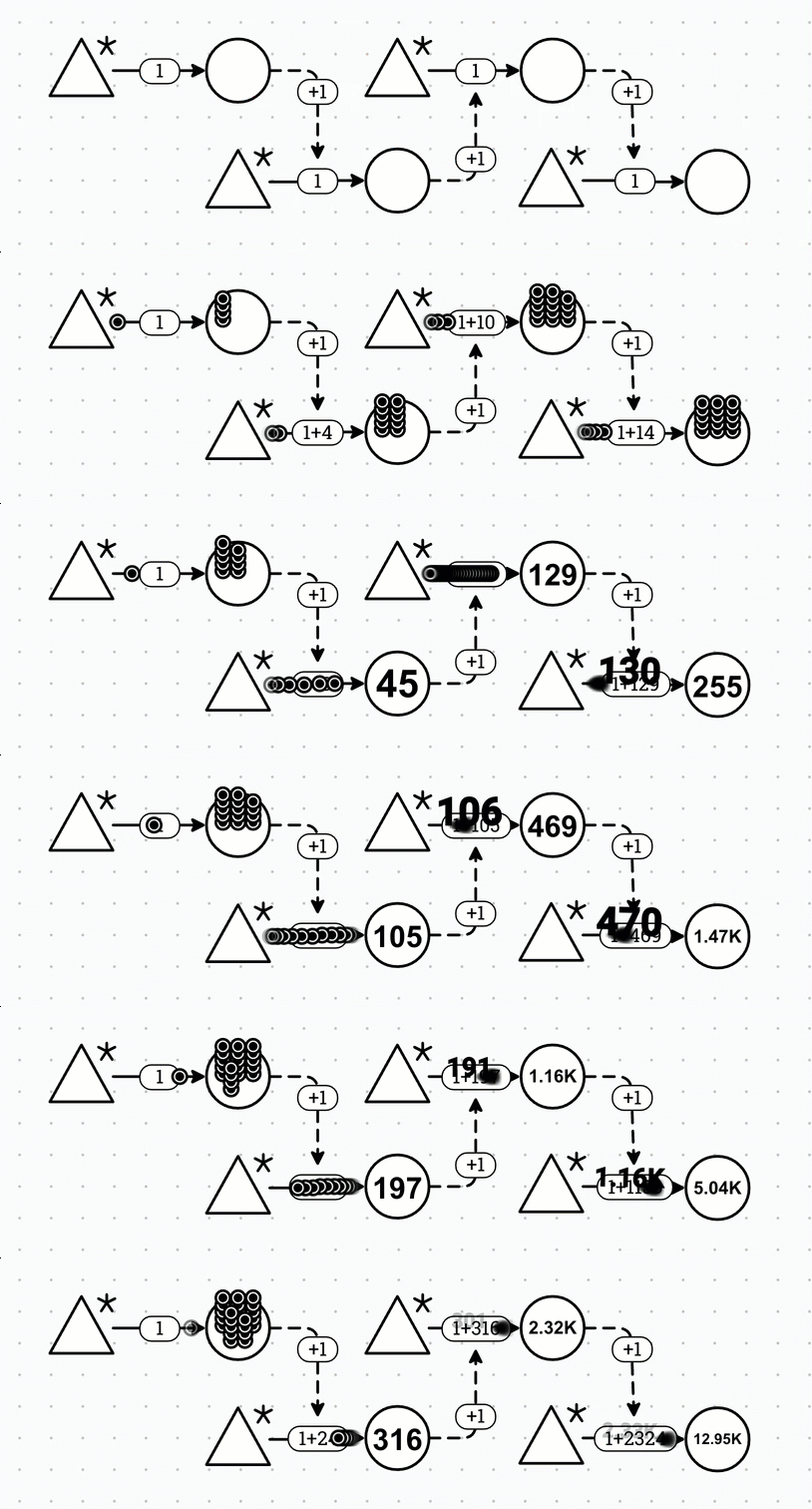
I am a legend: Hacking Hearthstone with machine-learning Defcon talk wrap-up | blog post
A wrap-up of my Defcon talk about hacking Hearthstone with machine learning including slides and a video.

» The Life and Times of Maxis, Part 3: The Sims The Digital Antiquarian
I don’t think people realize how much tactical and strategic forethought goes into their daily lives. There’s a whole subconscious time-efficiency layer in our lives. In essence, real-time strategy is our lives.
“How Do KeyForge?”: Universal Strategies For Piloting In The Crucible
I remember when I started with competitive card gaming- for me, my first serious game was Android: Netrunner. When I sat down at a…
