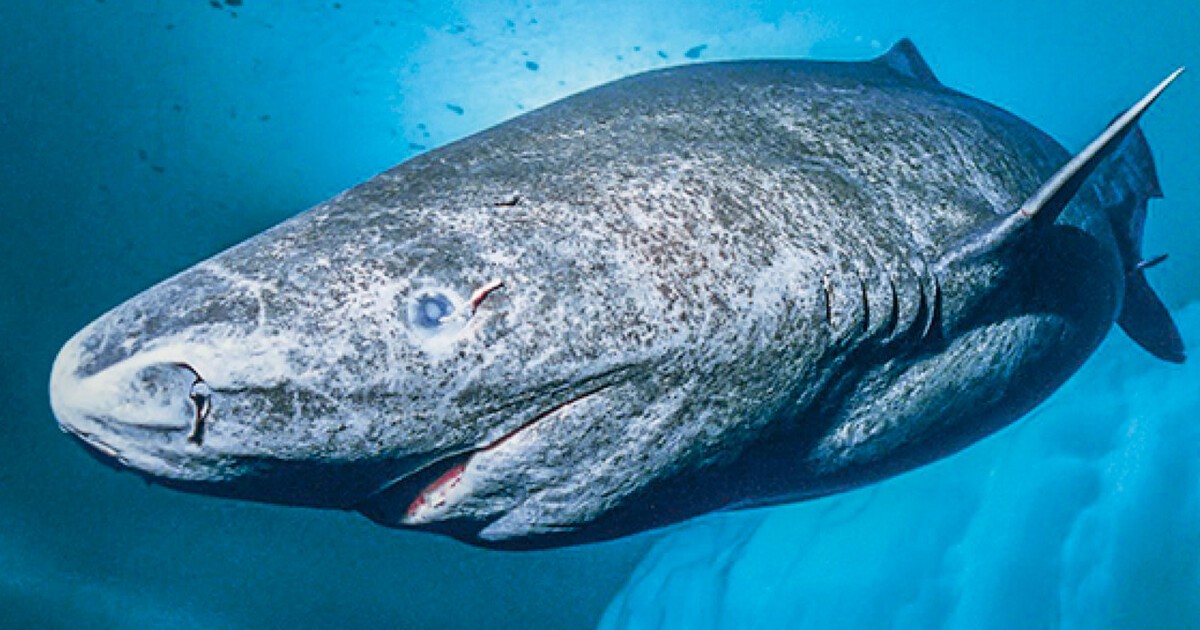
Greenland shark found to be at least 272 years old.
Katherine Rundell · Consider the Greenland Shark
I am glad not to be a Greenland shark; I don’t have enough thoughts to fill five hundred years. But I find the very...
Pacific kelp forests are far older than we thought - Berkeley News
The unique underwater kelp forests that line the Pacific Coast support a varied ecosystem that was thought to have evolved along with the kelp over the past 14 million years. But a new study shows that kelp flourished off the Northwest Coast more than 32 million years ago, long before the appearance of modern groups […]
The Octopus: An Alien Among Us
Self-replicating, bacterial life first appeared on Earth about 4 billion years ago. For most of Earth’s history, life remained at the single-celled level, and nothing like a nervous system existed …

Shark Navigator Lift-Away Deluxe Upright Vacuum - Blue NV360
Read reviews and buy Shark Navigator Lift-Away Deluxe Upright Vacuum - Blue NV360 at Target. Choose from contactless Same Day Delivery, Drive Up and more.

Earliest octopuses were giant top predators in Cretaceous oceans
Top predators drive changes in ecosystem structure. For the last ~370 million years, large-sized vertebrates have dominated the apex of the marine food chain, while invertebrates have served as smaller prey. Here we describe invertebrate top predators ...

Mute swan
The mute swan is a species of swan and a member of the family Anatidae within the waterfowl order. It is native to much of Europe and parts of Asia and the far north of Africa. It is an introduced species in North America, home to the largest populations outside of its native range, with additional smaller introductions in Australasia and Southern Africa. The name "mute" derives from it being less vocal than other swan species. Typically measuring 140 to 160 cm in length, this large swan is wholly white in plumage, with an orange beak bordered with black. It is recognisable by its pronounced knob atop the beak, which is larger in males.

Happywhale
Send us your whale photos, we’ll identify the individuals for fun and for science. We'll share with you what we find!
The Whale Museum
The Whale Museum, located in beautiful Friday Harbor, Washington, was opened to the public in 1979 as the first museum in the country devoted to a species livin

How To Speak Whale | Book | Tom Mustill
How to Speak Whale is an unforgettable look at how close we truly are to communicating with another species – and how doing so might change our world. Discover more.
The invasive soft coral Xenia umbellata has been confirmed in Cuban waters
Octocoral colonies with unusual morphology were detected in September 2022 and October 2023 in two coastal areas east of Havana, Cuba, and tentatively identified as Unomia stolonifera. U. stolonifera is an invasive octocoral from the Indo-Pacific that was first reported in the Caribbean off Venezuela in the 2000s, where it has spread rapidly, smothering coral reefs and substantially altering benthic communities. After obtaining tissue samples from a Cuban octocoral colony, we re-examined the specimen using molecular barcoding of three mitochondrial regions (16S/ND2, mtMutS, COI) and the nuclear large ribosomal subunit (28S rRNA), and we unequivocally identified it as Xenia umbellata. X. umbellata, a native of the Red Sea, was first identified in southern Puerto Rico in October 2023 and has since been found in various marine ecosystems along the southern coast of the island. The presence of either invasive octocoral species in Cuba or elsewhere in the Caribbean would be of a serious environmental concern due to their documented tolerance, totipotentiality, propagation capacity and significant negative interactions with local benthic fauna. Attempts to eradicate the invasive soft coral colonies from Cuban waters have been initiated with apparent success, helping to control further expansion. The most likely introduction pathway is the accidental or intentional releases from the aquarium trade but transport via ballast water cannot be ruled out. We cannot discount the possibility of independent invasion events from different routes to Puerto Rico and Cuba occurring within a year of each other. Propagation from Cuba to Puerto Rico, or vice versa, which we consider highly improbable, would likely imply that soft coral populations may also have been established on Hispaniola but have remained undetected in the Dominican Republic and Haiti to date.

The phonology of sperm whale coda vowels
Abstract. Sperm whales (Physeter macrocephalus) communicate using series of clicks known as codas. In previous research, sperm whale codas have been shown
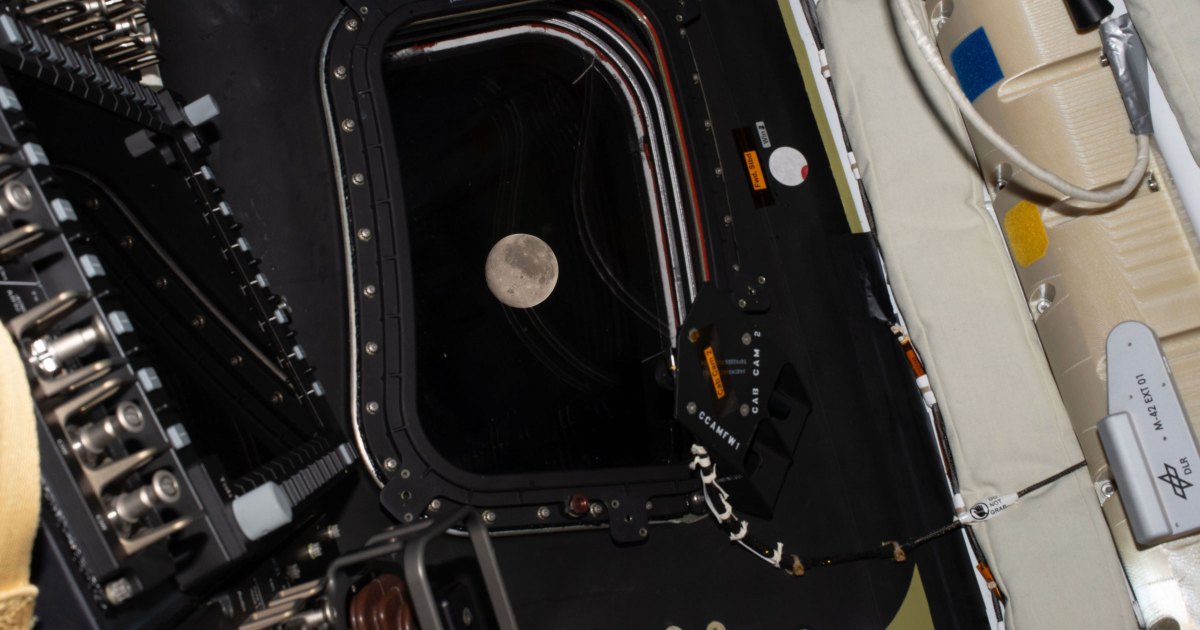
The Moon Astronauts Just Broke the Record for the Farthest Any Human Has Ever Traveled From Earth
NASA's Artemis 2 crew officially broke the record for the farthest any human has ever traveled from Earth this evening.