

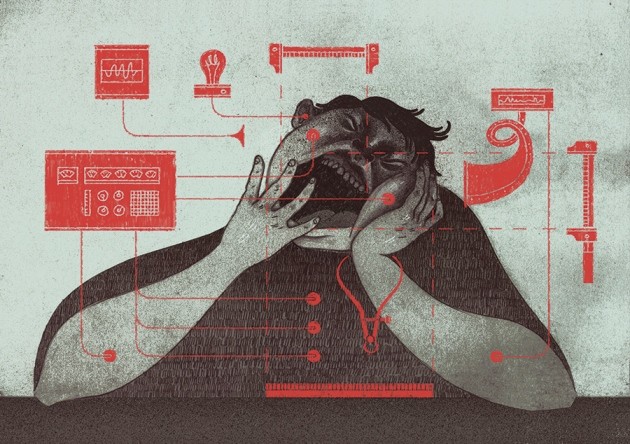
Implicated in everything from traumatic brain injury to learning ability, boredom has become extremely interesting to scientists.
Opinion | A Natural Fix for A.D.H.D. (Published 2014)
The problem is not just your brain. The problem is boredom.

Three ways boredom can actually be a benefit
A little boredom can be good for you.

For the Love of Boredom
Boredom is prone to myth-making — much like the story of Phineas Gage. This matters. If we believe certain myths about boredom, it could lead us astray in how we respond.

Boredom is not a problem to be solved. It's the last privilege of a free mind | Gayatri Devi
Lean in to boredom, not your smart phone screen. You’ll learn more about yourself and the world around you than you think

Opinion | Let Children Get Bored Again (Published 2019)
Boredom teaches us that life isn’t a parade of amusements. More important, it spawns creativity and self-sufficiency.

Why Being Bored Is Good | The Walrus
Technology keeps us constantly stimulated. What do we lose when we no longer have nothing to do?

The Cognitive Debt of Digging Through Preprints
Your Brain on MIT Media Lab

Introducing TRIBE v2: A Predictive Foundation Model Trained to Understand How the Human Brain Processes Complex Stimuli | Keith Doelling
This is some very cool work by some awesome colleagues Jean-Rémi King, and Teon Brooks! Seriously not enough good things can be said about how cool it is. You should enjoy it and play with it. And kudos to Meta for open sourcing it. At the same time, I'm already seeing posts about how the model will replace fMRI experiments as researchers will simulate how the brain "really works" instead of running costly experiments. I think this goes WELL beyond what its creators intend. We are already seeing that use of AI in science allows you to explore charted ideas more thoroughly and much more rapidly but slows us down in finding novel ideas (https://lnkd.in/eMR2akqt). At the same time, there is growing concern that LLM performance will collapse as they are increasingly trained on their own output (https://lnkd.in/eavgfyuY). Leaving neuroscience to AI simulations risks following the same fate, where we generate seemingly new findings without gaining new meaning. A mechanistic understanding of how the brain works (if that is still your goal) will be found at the margins, in errors and idiosyncrasies of neural function. What TRIBE provides is a super useful and cool instantiation of our current understanding on how and where neural activity is instantiated in the brain. But it won't help us make groundbreaking new findings of how neural circuits lead to cognition and behavior. Experiments on real human brains, may be costly, but they will always be necessary!
Why your brain needs exercise
The evolutionary history of humans explains why physical activity is important for brain health
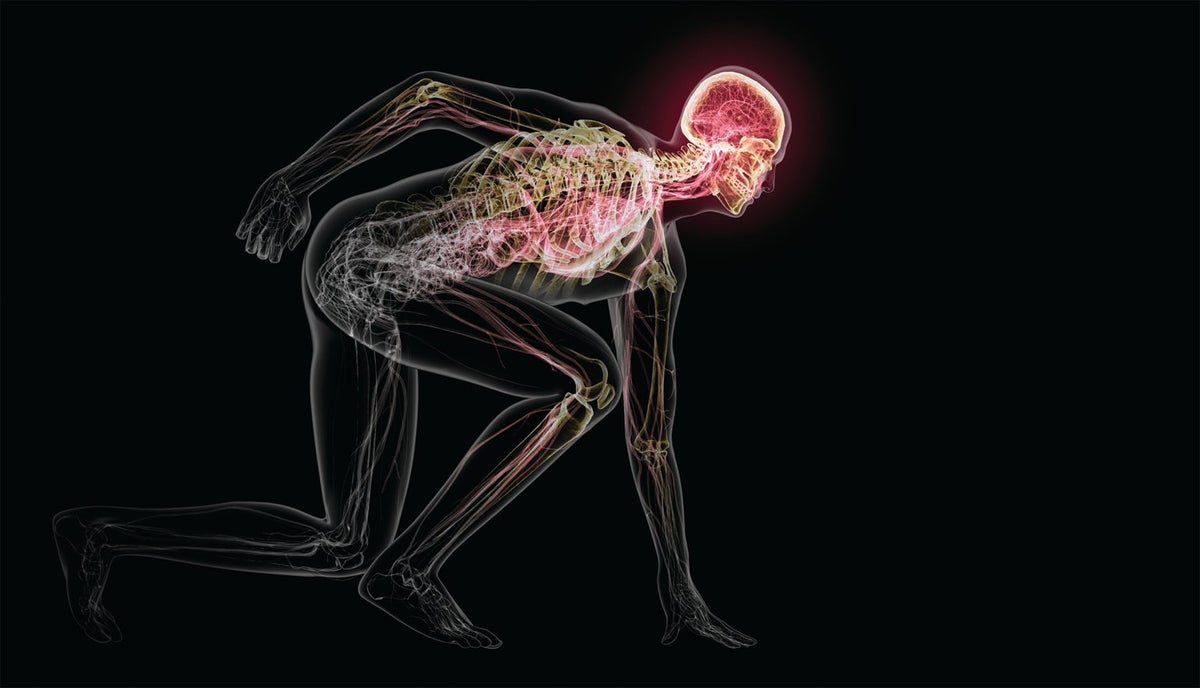
The Hole In Your Brain That Makes You Doomscroll
Learning to Learn: You, Too, Can Rewire Your Brain (Published 2017)
How an engineering professor who “flunked my way” through high school math and science went on to create the world’s most popular online course.

Why Your Brain Needs More Downtime
Research on naps, meditation, nature walks and the habits of exceptional artists and athletes reveals how mental breaks increase productivity, replenish attention, solidify memories and encourage creativity
Idle Skilling
Idle Skilling is the ultimate Idle Game with years of content! Meant to be played for 5-10 minutes a day, you gradually unlock new skills like mining, fishing, pet breeding, crusading, potion-making, lab-research, construction, and more! With new updates coming, you'll never run out of stuff to do!

This Is Your Brain on Exercise
Exercise is as good for your brain as it is for your body, and researchers are just beginning to discover why
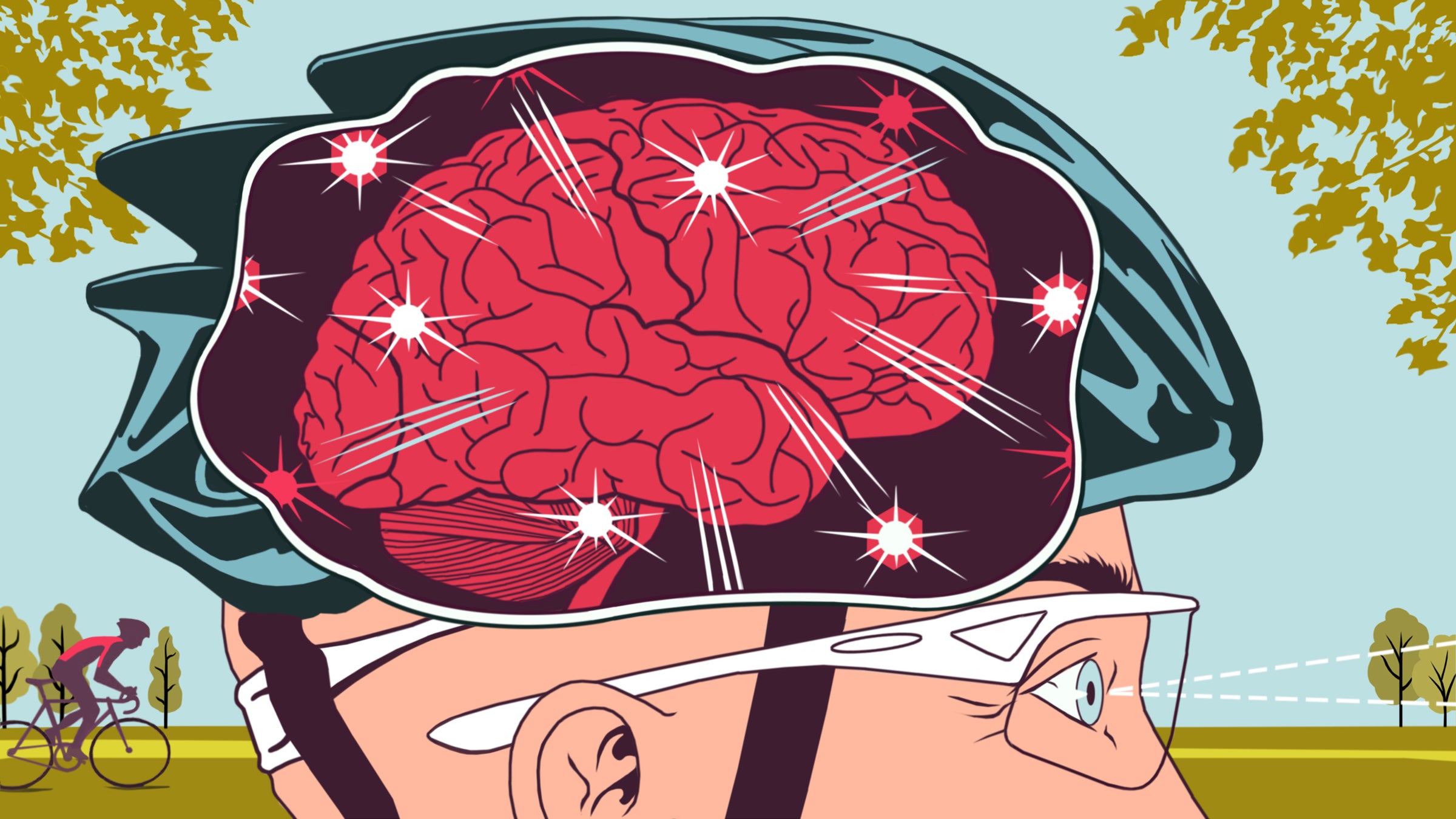
Learning Outside the Brain: Integrating Cognitive Science and Systems Biology
Learning is commonplace in organisms such as ourselves and even in organisms as far distant as the bee and the octopus. Such learning is implemented by brains, or neuronal networks, and has been extensively studied within ethology, psychology, cognitive science, and neuroscience. Whether learning also takes place in nonneuronal settings has remained a matter of sustained controversy, too often dominated by ideological views. In this survey, I will explain how learning can be rigorously interpreted as a form of information processing and then explore the evidence for whether learning also takes place in organismal contexts outside the brain, such as physiology, development, and individual cells. I will try to explain why it is important to build bridges in this way between cognitive science and systems biology, why concepts and methods from various branches of engineering may be helpful in this task, and what the eventual impact may be on how we think about the organism.