


We study fifteen months of human mobility data for one and a half million individuals and find that human mobility traces are highly unique. In fact, in a dataset where the location of an individual is specified hourly and with a spatial resolution equal to that given by the carrier's antennas, four spatio-temporal points are enough to uniquely identify 95% of the individuals. We coarsen the data spatially and temporally to find a formula for the uniqueness of human mobility traces given their resolution and the available outside information. This formula shows that the uniqueness of mobility traces decays approximately as the 1/10 power of their resolution. Hence, even coarse datasets provide little anonymity. These findings represent fundamental constraints to an individual's privacy and have important implications for the design of frameworks and institutions dedicated to protect the privacy of individuals.
Privacy and human behavior in the age of information
This Review summarizes and draws connections between diverse streams of empirical research on privacy behavior. We use three themes to connect insights from social and behavioral sciences: people's uncertainty about the consequences of privacy-related behaviors and their own preferences over those consequences; the context-dependence of people's concern, or lack thereof, about privacy; and the degree to which privacy concerns are malleable—manipulable by commercial and governmental interests. Organizing our discussion by these themes, we offer observations concerning the role of public policy in the protection of privacy in the information age.
Why Privacy Matters Even if You Have ‘Nothing to Hide’
What’s the problem with ubiquitous surveillance? Don’t think Orwell; think Kafka.

Why Privacy Matters Even if You Have ‘Nothing to Hide’
What’s the problem with ubiquitous surveillance? Don’t think Orwell; think Kafka.
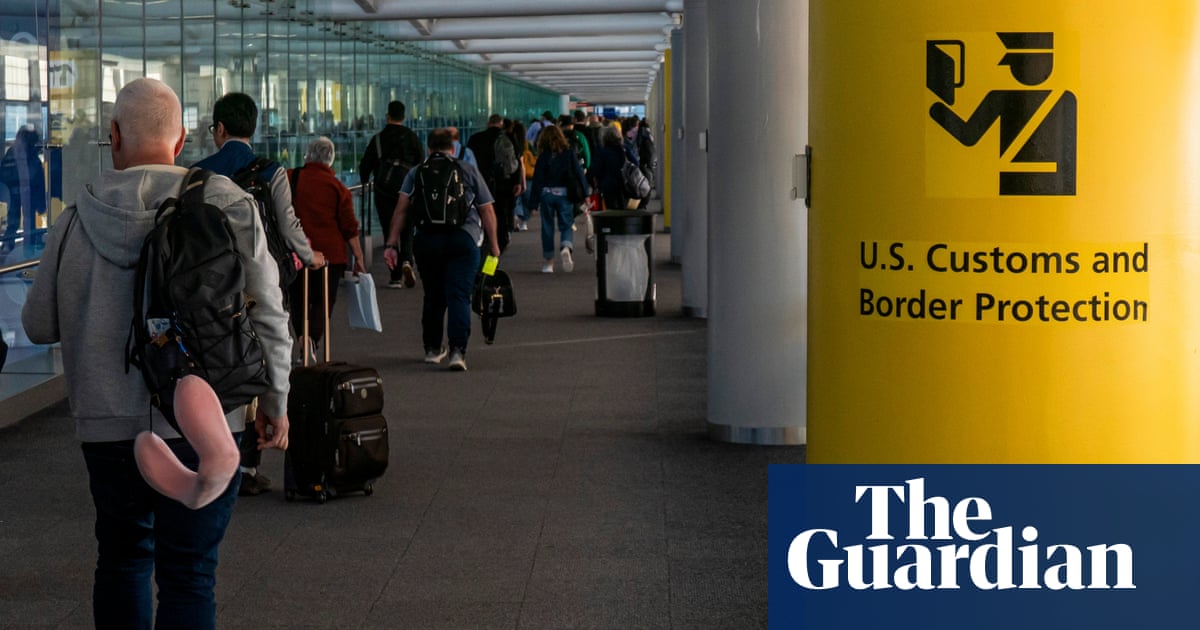
How to protect your phone and data privacy at the US border
With reports of people being turned away at airports over messages found on devices, here’s what to do to minimize risks
It Takes Just $1,000 to Track Someone's Location With Mobile Ads
University of Washington researchers have shown just how cheaply spies can exploit ad networks for fine-grained, individualized surveillance.

Experienced Segregation
We estimate a measure of segregation, experienced isolation, that captures individuals’ exposure to diverse others in the places they visit over the course of their days. Using Global Positioning System (GPS) data collected from smartphones, we measure experienced isolation by race. We find that the isolation individuals experience is substantially lower than standard residential isolation measures would suggest, but that experienced and residential isolation are highly correlated across cities. Experienced isolation is lower relative to residential isolation in denser, wealthier, more educated cities with high levels of public transit use, and is also negatively correlated with income mobility.

We Need A Massive Surveillance Program (Idle Words)
I am a privacy activist who has been riding a variety of high horses about the dangers of permanent, ubiquitous data collection since 2012.
Geotagging One Hundred Million Twitter Accounts with Total Variation Minimization
Geographically annotated social media is extremely valuable for modern information retrieval. However, when researchers can only access publicly-visible data, one quickly finds that social media users rarely publish location information. In this work, we provide a method which can geolocate the overwhelming majority of active Twitter users, independent of their location sharing preferences, using only publicly-visible Twitter data. Our method infers an unknown user's location by examining their friend's locations. We frame the geotagging problem as an optimization over a social network with a total variation-based objective and provide a scalable and distributed algorithm for its solution. Furthermore, we show how a robust estimate of the geographic dispersion of each user's ego network can be used as a per-user accuracy measure which is effective at removing outlying errors. Leave-many-out evaluation shows that our method is able to infer location for 101,846,236 Twitter users at a median error of 6.38 km, allowing us to geotag over 80\% of public tweets.

'Anonymised' data can never be totally anonymous, says study
Findings say it is impossible for researchers to fully protect real identities in datasets

Stanford quantifies the privacy-stripping power of metadata | TechCrunch
More proof, if proof were needed, of the privacy-stripping power of metadata. A multi-year crowdsourced study, conducted by Stanford scientists and published this week, underlines how much information can be inferred from basic phone logs cross-referenced with other public datasets.

Data Minimisation: a Language-Based Approach (Long Version)
Data minimisation is a privacy-enhancing principle considered as one of the pillars of personal data regulations. This principle dictates that personal data collected should be no more than...
Data Minimisation in Communication Protocols: A Formal Analysis...
With the growing amount of personal information exchanged over the Internet, privacy is becoming more and more a concern for users. One of the key principles in protecting privacy is data...
W Social: Verifiziert heisst veroeffentlicht
Das europaeische Netzwerk verspricht Anonymitaet trotz Ausweispflicht. Seine eigenen Datensaetze erzaehlen etwas anderes. Und die DSGVO hat dazu eine ziemlich klare Meinung. Analyse eines Privacy Fails, der auch die EU-Kommission betreffen duerfte! Wsocial Fail - Wenn Datenschutz kein Feature ist! | MeTacheles Tonspur🚨 W Socials Privacy-Fail! Anonym versprochen, halbes Profil

Hike, Bike, Drive Offline – Navigate with Privacy
Discover more of your journey - Powered by the community
Ordinary WiFi can now identify people with near perfect accuracy
Scientists in Germany have demonstrated a startling new form of surveillance: identifying people using nothing more than ordinary WiFi signals. By analyzing how radio waves bounce around a room, researchers can effectively “see” and recognize individuals — even if they are not carrying a device and even if their phone is turned off.

Why privacy is important, and having "nothing to hide" is irrelevant
The governments of Australia, Germany, the UK and the US are destroying your privacy. Some people don't see the problem...