


A strategy is a plan, method, or series of actions for obtaining a specified goal. A military strategy typically employs the threat or use of military force to advance goals in opposition to an adversary, and is called upon where large scale force is viewed as the way to achieve such goals. Strategic thinking is traditionally focused on which part or combination of land, air, and naval forces is most effective. This may be too narrow an approach to accomplishing the ultimate end, which is generally political influence or control—or preventing influence or control by others—and almost never consists of physical destruction itself. In order to broaden the discussion of military strategy, we consider here three distinct effects of inflicting stress on an opponent: a) A fragile system is damaged—possibly catastrophically, b) A robust system is largely unaffected, retaining much or all of its prior strength, c) Some systems actually gain strength, a property which has recently been termed antifragility. Traditional perspectives of military strategy implicitly assume fragility, limiting their validity and resulting in surprise, and assume a specific end state rather than an overall condition of the system as a goal. Robustness and antifragility are relevant both to offense, in attacks against the enemy, and defense, in meeting attacks against one’s own forces. While robustness and antifragility are desirable in friendly systems, an enemy possessing these characteristics undermines the premise that an attack will achieve a desired increase in control. Historical and contemporary examples demonstrate the failure of traditional strategies against antifragile enemies—even devastating damage inflicted upon nations or other organizations did not weaken and defeat them, but rather strengthened them, resulting in their victory. Underlying such successful responses are socio-economic or political strengths. Our discussion is a basis for scientific analysis of the historical and contemporary conditions under which distinct types of strategies will be successful and provides guidance to improved strategic thinking.
4 Ways to Pressure-Test Strategic Decisions, Inspired by the U.S. Military
Almost every leader has developed a process designed to avoid critical strategic mistakes, but, as the world continues to grow more complex, it’s much harder to anticipate all the changes and forces that may impact your final goal. Therefore, finding weaknesses in your strategies before you implement them and developing a rigorous process for doing so are vital. The innate ability to poke holes in one’s own strategies is something the US military has practiced and refined over centuries. Tips include forming teams that consider alternative scenarios to an expected outcome while brainstorming solutions to those scenarios if they occur; forming a council that will offer you the unvarnished truth; performing “war games” to poke holes in your own strategies; and forming a strategic council that can analyze situations from different perspectives.

Position: AI Is Not Ready for Strategic Conflicts
Open-ended strategic wargames are high-stakes LM-based social simulations: they model adversaries, institutions, escalation, plan brittleness, doctrine, and crisis response. Language models (LMs) are attractive in these settings because they can play agents, generate scenario branches, adjudicate ambiguous actions, and summarize lessons. The same affordances make open-ended player and adjudicator roles dangerous: model language can determine both what an actor attempts and what subsequently becomes simulated reality. This position paper argues that no LM-enabled wargame should inform high-stakes planning, doctrine, policy, or crisis response without an auditable safety case, and that the proper use of openended wargames today is to stress-test decision-influencing LM agents. We identify five failure modes: decision laundering, adjudication opacity, role collapse, escalation-through-adjudication, and failure of strategic imagination. Ordinary benchmarks cannot establish safety for these settings. Wargames can expose failures as stress tests; they are not themselves safety cases for consequential use. Until such safety cases exist, AI is not ready for strategic conflicts.
Position: AI Is Not Ready for Strategic Conflicts
Open-ended strategic wargames are high-stakes LM-based social simulations: they model adversaries, institutions, escalation, plan brittleness, doctrine, and crisis response. Language models (LMs) are attractive because they can play agents, generate scenario branches, adjudicate ambiguous actions, and summarize lessons, but the same affordances make open-ended roles dangerous: model language determines both what an actor attempts and what becomes simulated reality. This position paper argues that no LM-enabled wargame should inform planning, doctrine, policy, or crisis response without an auditable safety case, and that the proper use of open-ended wargames today is to stress-test decision-influencing LM agents. We identify five failure modes: decision laundering, adjudication opacity, role collapse, escalation-through-adjudication, and failure of strategic imagination. Ordinary benchmarks cannot establish safety for these settings. Wargames can expose failures as stress tests; they are not themselves safety cases for consequential use.

Safety Co-Option and Compromised National Security: The Self-Fulfilling Prophecy of Weakened AI Risk Thresholds
Risk thresholds provide a measure of the level of risk exposure that a society or individual is willing to withstand, ultimately shaping how we determine the safety of technological systems. Against the backdrop of the Cold War, the first risk analyses, such as those devised for nuclear systems, cemented societally accepted risk thresholds against which safety-critical and defense systems are now evaluated. But today, the appropriate risk tolerances for AI systems have yet to be agreed on by global governing efforts, despite the need for democratic deliberation regarding the acceptable levels of harm to human life. Absent such AI risk thresholds, AI technologists-primarily industry labs, as well as "AI safety" focused organizations-have instead advocated for risk tolerances skewed by a purported AI arms race and speculative "existential" risks, taking over the arbitration of risk determinations with life-or-death consequences, subverting democratic processes. In this paper, we demonstrate how such approaches have allowed AI technologists to engage in "safety revisionism," substituting traditional safety methods and terminology with ill-defined alternatives that vie for the accelerated adoption of military AI uses at the cost of lowered safety and security thresholds. We explore how the current trajectory for AI risk determination and evaluation for foundation model use within national security is poised for a race to the bottom, to the detriment of the US's national security interests. Safety-critical and defense systems must comply with assurance frameworks that are aligned with established risk thresholds, and foundation models are no exception. As such, development of evaluation frameworks for AI-based military systems must preserve the safety and security of US critical and defense infrastructure, and remain in alignment with international humanitarian law.
Collections: How the Weak Can Win – A Primer on Protracted War
Thanks to our volunteer narrator, this post is now available in audio format. This week, in an effort to fill in some of the theoretical basis for thinking about how weaker powers think about fight…

Collections: How the Weak Can Win – A Primer on Protracted War
Thanks to our volunteer narrator, this post is now available in audio format. This week, in an effort to fill in some of the theoretical basis for thinking about how weaker powers think about fight…
It's Safer in the Front
Faced with intensifying repression and state violence, there is an understandable inclination to seek safety by avoiding confrontation. But this is not always the most effective strategy.

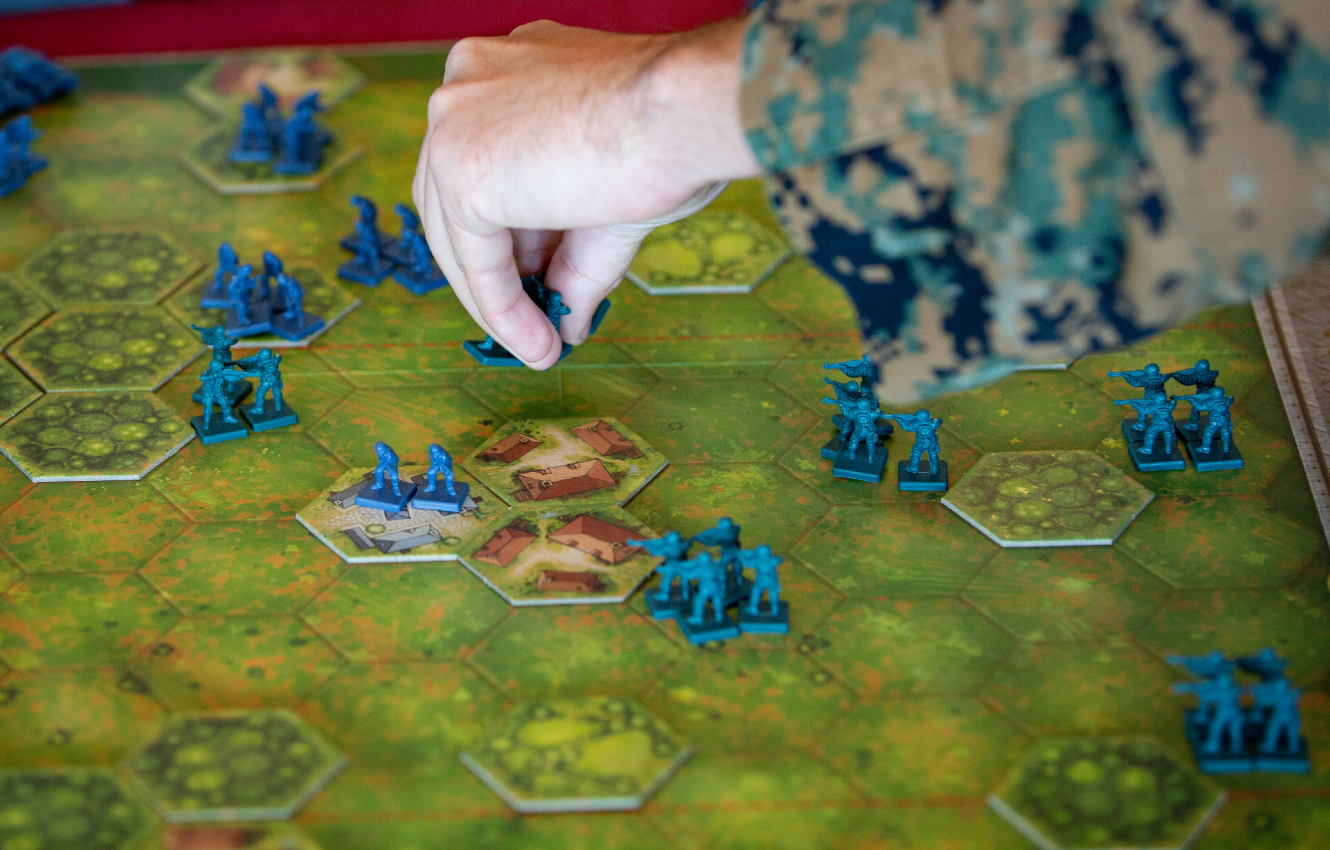
Reflections on Teaching Wargame Design
Disaster loomed for the hard-pressed U.S. Strategic Command team and the nascent U.S. Space Force. Negotiators toiled to maintain an international
Cognitive Warfare Through the Lens of Critical Neuroscience: Data, Theory, and Values
This study examines cognitive warfare through the lens of critical neuroscience and situates it within peace research as a methodological contribution. Cognitive warfare-understood as the strategic modulation of perception, belief, and decision-making-highlights how the human mind has become a contested domain of contemporary conflict. The weaponization of neuroscience unfolds within sociocultural contexts where empirical findings, theoretical interpretations, and normative commitments are deeply entangled. Drawing on Johan Galtung’s epistemological triad of data, theory, and values, I propose a framework for analyzing cognitive warfare that makes explicit the normative dimensions of neuroscientific knowledge. This perspective highlights not only the weaponization of neuroscience itself, but also of its reputation: exaggerated claims and neuropolitical imaginaries can shape expectations, distort public discourse, and erode trust in science independently of actual technological capabilities. Applying this framework, the study examines resilience and solidarity as two domains in which empirical mechanisms, theoretical interpretations, and normative priors intersect. Cognitive warfare is shown to undermine resilience by destabilizing shared models of reality, while evolutionary and social dynamics demonstrate the long-term advantages of cooperation, reciprocity, and generosity over manipulation and defection. By integrating critical neuroscience with peace research, the article advances an expanded notion of peace as the safeguarding of mental and social autonomy-conditions under which cognition remains free from systematic manipulation and capable of sustaining cooperative forms of life.
Climate Change and Hybrid Warfare Strategies
Concepts of hybrid warfare and climate security are contested on their own, and are rarely considered as connected in planning for future security risks. Yet climate change presents new hazards for national security, and opportunities for those looking to foment instability and uncertainty in traditional institutions. This article examines the connections between climate change risks and hybrid war strategies, and focuses on concepts of resilience targeting, information warfare, and geoengineering, illustrating that ‘full spectrum’ analyses of security are necessary in developing future security strategies.
High-Performing Teams Need Psychological Safety: Here’s How to Create It
The highest-performing teams have one thing in common: psychological safety — the belief that you won’t be punished when you make a mistake. Studies show that psychological safety allows for taking moderate risks, speaking your mind, being creative, and sticking your neck out without fear of having it cut off — just the types of behavior that lead to market breakthroughs. So how can you increase psychological safety on your own team? First, approach conflict as a collaborator, not an adversary. When conflicts come up, avoid triggering a fight-or-flight reaction by asking, “How could we achieve a mutually desirable outcome?” Speak human-to-human, but anticipate reactions, plan countermoves, and adopt a learning mindset, where you’re truly curious to hear the other person’s point of view. Ask for feedback to illuminate your own blind spots. If you create this sense of psychological safety on your own team starting now, you can expect to see higher levels of engagement, increased motivation to tackle difficult problems, more learning and development opportunities, and better performance.

Collections: Pre-Modern Armies for Worldbuilders, Part I: Why They Fight
This week I want to try something a little different. Rather than taking apart a particular fantasy military system, I thought I might try to lay out a more general sense of how military systems te…

Opportunities to Improve Military Policies and Practices to Reduce Civilian Harm From Explosive Weapons in Urban Conflict
This research paper seeks to contribute to further thinking and dialogue among States and their militaries that conduct operations in urbanized environments on what more can be done to reduce civilian harm by proposing practical measures in the form of options for consideration. UNIDIR seeks to enhance knowledge on ways to reduce risks and mitigate harm to civilians from the effects of explosive weapons in urbanized environments. This research frames the issue of explosive weapons in the broader context of protection of civilians in urban conflict and focuses on multilateral operations. The research takes a comprehensive approach to civilian protection from a ‘risk reduction’ perspective—that is, seeking to understand where the risks and uncertainties lie in the entire ‘civilian protection life cycle’, recognizing that civilian harm is the cumulative effect of numerous risks and decisions made from formulating mandates, planning, execution, assessment and response to lessons learned and institutional learning. Particular focus is placed on the targeting and weaponeering processes. Citation: Roger Lane, Larry Lewis and Himayu Shiotani (2019) "Opportunities to Improve Military Policies and Practices to Reduce Civilian Harm From Explosive Weapons in Urban Conflict", UNIDIR, Geneva, Switzerland. https://doi.org/10.37559/CAAP/19/PACAV/11 TRANSLATIONS To read the report in French, click here.

The Pre-emption of Resistance: Occupy Oakland and the Evolution of State Power
Author(s): Behbehanian, Laleh | Advisor(s): Burawoy, Michael B | Abstract: This dissertation aims to contribute to our understanding of contemporary state strategies targeting social movements by examining the case of Occupy Oakland. Emphasizing how state strategies, both tactical and discursive, dynamically evolve through their iterative relation to movement strategies, it presents a detailed empirical account that is disaggregated into three “moments”, each of which are characterized by the predominance of a distinct state strategic repertoire. The objective is to highlight an underlying transformation through which the state’s strategies evolve from being highly reactive, indiscriminate and vulnerable to spectacularization to becoming increasingly pre-emptive, targeted and discursively buttressed.The first “moment” commences with the movement’s occupation of Oscar Grant Plaza. Faced with Occupy Oakland’s highly disruptive tactics and its firm rejection of any forms of negotiation or cooperation with City officials, the state resorts to a strategy of Naked Coercion (reactive, indiscriminate violence that is highly vulnerable to spectacularization) which backfires and results in an internationally televised disaster on the evening of October 25th. This creates an extraordinary window of opportunity for the movement, dramatically increasing public support and enabling it to undertake the first general strike in the U.S. since 1946. This fuels a process of adaptation as the struggle proceeds into the second “moment”, and the state shifts to a strategy of Targeted Repression that is increasingly pro-active, targeted and discursively buttressed so as to diminish the danger of its spectacularization. The new strategy succeeds in permanently dislodging the occupation of Oscar Grant Plaza, as well as criminalizing the tactic of occupation and excising it from movement’s repertoire. Still unsatisfied with the repression it had achieved, in the third and final “moment” the state introduces a strategy of Pre-emptive Neutralization that is pre-emptively oriented, targeted at high “risk” populations and discursively buttressed by powerful spectacles of “risk”. This enables a thorough incapacitation of the movement – fully neutralizing its potential for collective action by rendering Occupiers a target population that could no longer even publicly assemble without inciting highly militarized police responses that were now pre-emptively justified by the risk of “violence” they collectively posed.

No One Wins in Nuclear War: Social Simulations of High-stakes Military Decision-making
WOPR is a social-simulation environment for studying how organizations make high-stakes decisions, built on a deterministic, replay-validated rules engine and using wargames as the vehicle. We instantiate it first with the published card game Nuclear War, traced against its published rules. We start with military decision-making because of its safety implications and because it needs further study, but the design is not specific to it: the decision- point contract that exposes the engine to agents is reusable across verifiable rule systems. Existing social-simulation work emphasizes persona fidelity and synthetic opinion, but lacks a verifiable rules engine with replay-checkable mechanics and private-channel negotiation. WOPR supplies that engine, and its contract makes every strategic choice an explicit agent decision. The method is agnostic to social-simulation frameworks; we adopt Concordia as the default harness for driving the game. On the same engine, WOPR layers a four-rung press ladder from silence to private single- recipient channels with structured commitments, and instantiates each faction as a collective command-and-control system rather than a single agent. We make all code, example configurations, and replay data publicly available at https://github.com/eilab-gt/wopr.
A primer on cognitive warfare. One goal is to induce paralysis. Anyone can use these tactics—cognitive war can be waged e.g. by individuals, gangs, crime rings, corporations, & nation-states. From @chadmbriggs.bsky.social at the 2026 Cambridge Disinformation Summit. youtu.be/JSI3gjuGGP4?is=5dNXWFayE1n89j…

Professor Chad Briggs Discusses Cognitive Warfare (The Gorgon Effect)
youtu.be