


Researchers hope to use the powerful biological tool to alter the genetic destiny of species and eliminate diseases.
(PDF) Highly efficient genome editing using oocyte-specific z cas9 transgenic zebrafish
PDF | Since its first application, CRISPR/Cas9 rapidly becomes a routine technique to perform genome editing in a variety of biological systems. To... | Find, read and cite all the research you need on ResearchGate

Cytosine base editors with increased PAM and deaminase motif flexibility for gene editing in zebrafish
Cytosine base editing is a powerful tool for making precise single nucleotide changes in cells and model organisms like zebrafish, which are valuable for studying human diseases. However, current base editors struggle to edit cytosines in certain DNA contexts, particularly those with GC and CC pairs, limiting their use in modelling disease-related mutations. Here we show the development of zevoCDA1, an optimized cytosine base editor for zebrafish that improves editing efficiency across various DNA contexts and reduces restrictions imposed by the protospacer adjacent motif. We also create zevoCDA1-198, a more precise editor with a narrower editing window of five nucleotides, minimizing off-target effects. Using these advanced tools, we successfully generate zebrafish models of diseases that were previously challenging to create due to sequence limitations. This work enhances the ability to introduce human pathogenic mutations in zebrafish, broadening the scope for genomic research with improved precision and efficiency.
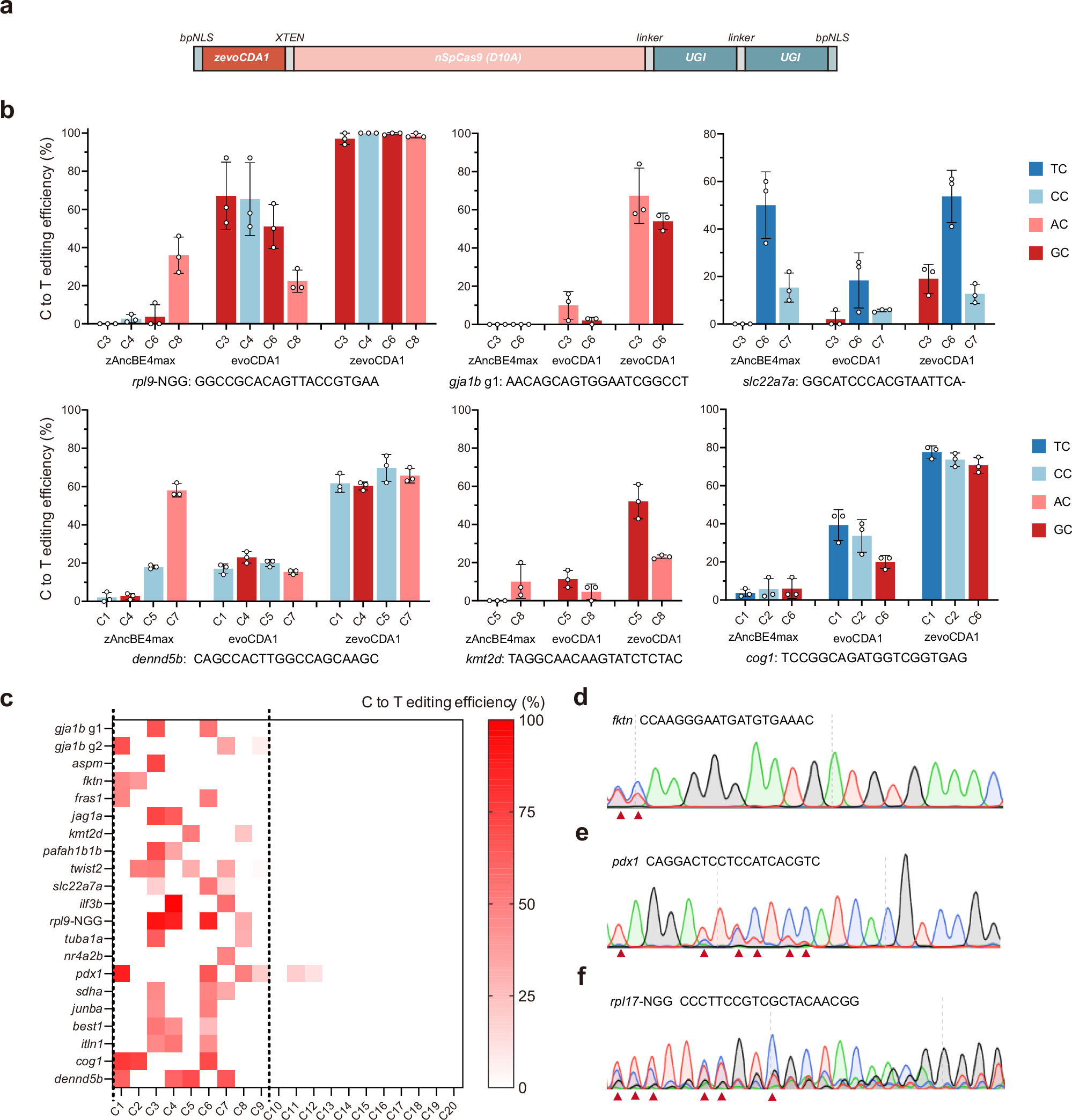
AI-designed nucleases build on nature’s design
Researchers used AI to create variants of a CRISPR-Cas12-like nuclease, some of which show increased editing activity

BE4max and AncBE4max Are Efficient in Germline Conversion of C:G to T:A Base Pairs in Zebrafish
The ease of use and robustness of genome editing by CRISPR/Cas9 has led to successful use of gene knockout zebrafish for disease modeling. However, it still remains a challenge to precisely edit the zebrafish genome to create single-nucleotide substitutions, which account for ~60% of human disease-causing mutations. Recently developed base editing nucleases provide an excellent alternate to CRISPR/Cas9-mediated homology dependent repair for generation of zebrafish with point mutations. A new set of cytosine base editors, termed BE4max and AncBE4max, demonstrated improved base editing efficiency in mammalian cells but have not been evaluated in zebrafish. Therefore, we undertook this study to evaluate their efficiency in converting C:G to T:A base pairs in zebrafish by somatic and germline analysis using highly active sgRNAs to twist and ntl genes. Our data demonstrated that these improved BE4max set of plasmids provide desired base substitutions at similar efficiency and without any indels compared to the previously reported BE3 and Target-AID plasmids in zebrafish. Our data also showed that AncBE4max produces fewer incorrect and bystander edits, suggesting that it can be further improved by codon optimization of its components for use in zebrafish.

Stage- and tissue-specific gene editing using 4-OHT–inducible Cas9 in whole organism
Li et al. report a novel Cas9-based spatiotemporal gene-editing approach in zebrafish. Given the limited germline transmission efficiency of knock-in allel

Prime editing-installed suppressor tRNAs for disease-agnostic genome editing
Precise genome-editing technologies such as base editing1,2 and prime editing3 can correct most pathogenic gene variants, but their widespread clinical application is impeded by the need to develop new therapeutic agents for each mutation. For diseases that are caused by premature stop codons, suppressor tRNAs (sup-tRNAs) offer a more general strategy. Existing approaches to use sup-tRNAs therapeutically, however, require lifelong administration4,5 or show modest potency, necessitating potentially toxic overexpression. Here we present prime editing-mediated readthrough of premature termination codons (PERT), a strategy to rescue nonsense mutations in a disease-agnostic manner by using prime editing to permanently convert a dispensable endogenous tRNA into an optimized sup-tRNA. Iterative screening of thousands of variants of all 418 human tRNAs identified tRNAs with the strongest sup-tRNA potential. We optimized prime editing agents to install an engineered sup-tRNA at a single genomic locus without overexpression and observed efficient readthrough of premature termination codons and protein rescue in human cell models of Batten disease, Tay-Sachs disease and cystic fibrosis. In vivo delivery of a single prime editor that converts an endogenous mouse tRNA into a sup-tRNA extensively rescued disease pathology in a model of Hurler syndrome. PERT did not induce detected readthrough of natural stop codons or cause significant transcriptomic or proteomic changes. Our findings suggest the potential of disease-agnostic therapeutic genome-editing approaches that require only a single composition of matter to treat diverse genetic diseases.
Highly efficient genome editing using oocyte-specific zcas9 transgenic zebrafish. Liu Y, Zhang C, Zhang Y, Lin S, Shi DL, Shao M
Highly efficient genome editing using oocyte-specific zcas9 transgenic zebrafish Since its first application to induce mutations in mammalian cells (Cong et al., 2013; Mali et al., 2013), CRISPR/Cas9 rapidly becomes a routine technique to perform genome editing in a variety of biological systems due to its facile, robust, and multiplexable features (Hwang et al., 2013; Guo et al., 2014; Wang et al., 2013). In every system, Cas9 and sgRNA should co-express to induce mutations. This is typically achieved by injection of the sgRNA mixed with Cas9 mRNA or protein into the fertilized eggs in zebrafish. As the in vivo translation of capped RNAs delay the presence of sufficient Cas9 protein, the mRNA injection produces more mosaic animals and shows relatively lower efficiency when compared to Cas9 protein injection (Burger et al., 2016). However, it is much more cost effective than using commercially available Cas9 protein, especially in the case of large-scale mutation screens. To further simplify this procedure, lower the cost and maintain an acceptable high genome editing efficiency in zebrafish, we set out to generate a transgenic line with stable and specific Cas9 expression in the egg. zpc (zp3b) promoter (zpc0.5) was reported to drive robust and specific GFP expression in the oocyte (Onichtchouk et al., 2003), we thus fused it with a zebrafish codon optimized cas9 (zcas9) followed by an SV40 3' UTR (Fig. 1A and File S1; Liu et al., 2014), and introduced this construct to zebrafish genome by Tol2 mediated transgenesis (Urasaki et al., 2006). To screen female F0 fish harboring this transgene, the F0 female founders were outcrossed with the wild-type male, the resulting eggs were injected with an sgRNA targeting slc45a2 (Moreno-Mateos et al., 2015), a gene essential for melanin synthesis, and assayed for their pigmentation phenotype. We found that the offspring of one founder showed a high proportion of pigmentation defect. Some of them exhibited a homozygous mutant like albino phenotype, suggesting a robust Cas9 expression in the egg and a very high efficient gene disruption. To examine the specificity of zcas9 expression in the transgenic line, the offspring (F1) of this F0 founder were raised to adulthood, and the ovaries of female F1 transgenic fish were dissected and subjected to in situ hybridization (ISH) employing the probe of zcas9. We found that the transcripts of zcas9 were specifically distributed in oocytes with a diameter of 40-200 µm, at around IB-II stages, while in WT embryos, no hybridization signals were detected (Fig. 1B, C). We did not detect zcas9 expression in stage IA oocytes or in larger ones after stage II. Accordingly, by RT-PCR, we also failed
The Scientist Who Scrambled Darwin’s Tree of Life (Published 2018)
How the microbiologist Carl Woese fundamentally changed the way we think about evolution and the origins of life.

ABE-ultramax for high-efficiency biallelic adenine base editing in zebrafish
Advancements in CRISPR technology, particularly the development of base editors, revolutionize genetic variant research. When combined with model organisms like zebrafish, base editors significantly accelerate and refine in vivo analysis of genetic variations. However, base editors are restricted by protospacer adjacent motif (PAM) sequences and specific editing windows, hindering their applicability to a broad spectrum of genetic variants. Additionally, base editors can introduce unintended mutations and often exhibit reduced efficiency in living organisms compared to cultured cell lines. Here, we engineer a suite of adenine base editors (ABEs) called ABE-Ultramax (Umax), demonstrating high editing efficiency and low rates of insertions and deletions (indels) in zebrafish. The ABE-Umax suite of editors includes ABEs with shifted, narrowed, or broadened editing windows, reduced bystander mutation frequency, and highly flexible PAM sequence requirements. These advancements have the potential to address previous challenges in disease modeling and advance gene therapy applications.
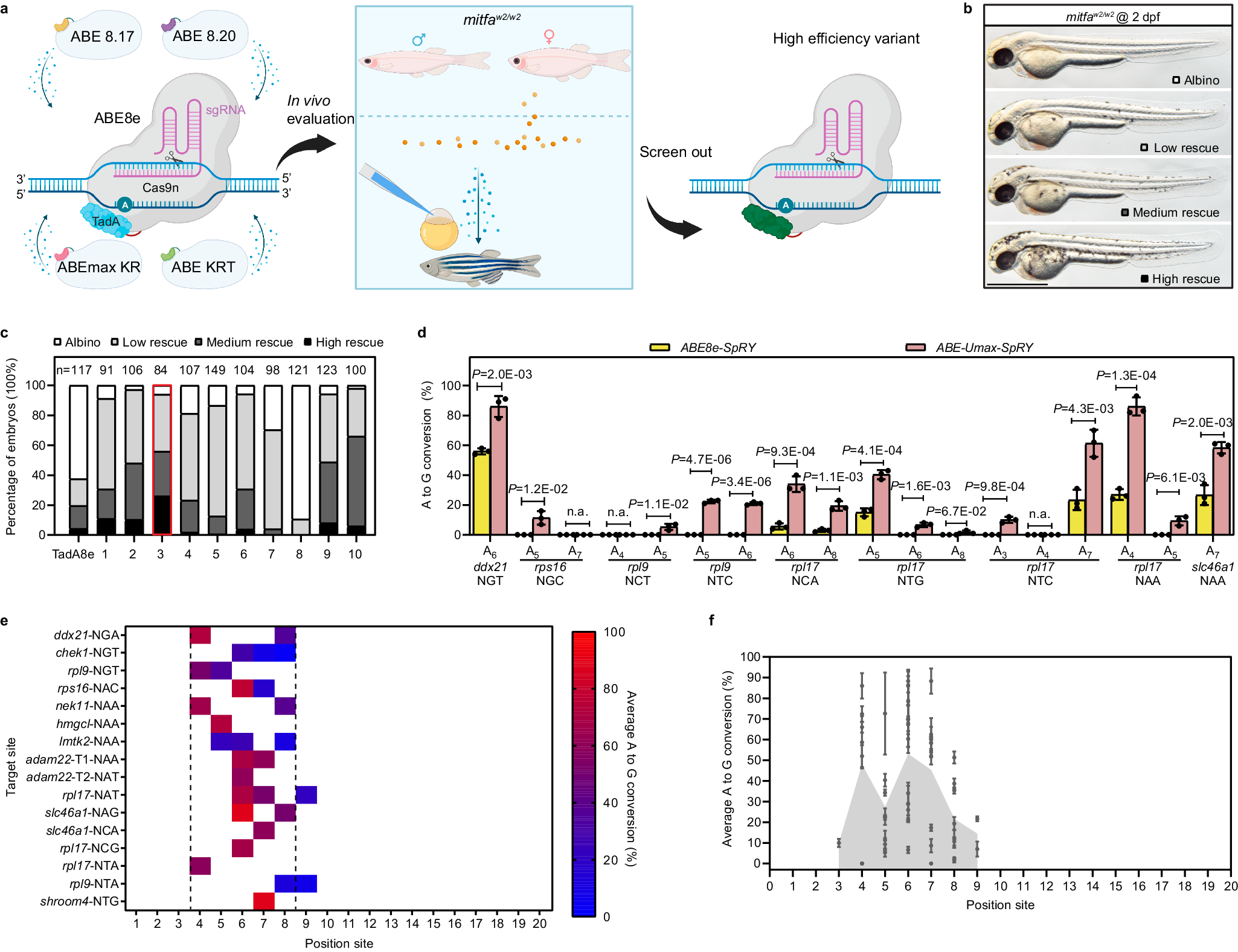
Sequence Context‐Agnostic TadA‐Derived Cytosine Base Editors for Genome‐Wide Editing in Zebrafish
zTadA-CBEs, developed by introducing key mutations into TadA8e, enable efficient and precise sequence context-agnostic cytosine base editing. Specifically, zTadA-BE4max and zTadA-BEmv provide complem...

How Life Works: A User’s Guide to the New Biology
“Bold and intriguing.”—Wall Street Journal • “Penetrating. . . . Provocative and profound.”—Publishers Weekly (starred review) • “Offers plenty of food for thought.”—Kirkus Reviews (starred review) “Ball’s marvelous book is both wide-ranging and deep. . . . I could not put it down.”—Siddhartha Mukherjee, author of The Song of the Cell and the Pulitzer Prize–winning The Emperor of All Maladies A new, cutting-edge vision of biology that revises our understanding of what life itself is, how to enhance it, and what possibilities it offers. Biology is undergoing a quiet but profound transformation. Several aspects of the standard picture of how life works—the idea of the genome as a blueprint, of genes as instructions for building an organism, of proteins as precisely tailored molecular machines, of cells as entities with fixed identities, and more—have been exposed as incomplete, misleading, or wrong. In How Life Works, Philip Ball explores the new biology, revealing life to be a far richer, more ingenious affair than we had guessed. Ball explains that there is no unique place to look for an answer to this question: life is a system of many levels—genes, proteins, cells, tissues, and body modules such as the immune system and the nervous system—each with its own rules and principles. How Life Works explains how these levels operate, interface, and work together (most of the time). With this knowledge come new possibilities. Today we can redesign and reconfigure living systems, tissues, and organisms. We can reprogram cells, for instance, to carry out new tasks and grow into structures not seen in the natural world. As we discover the conditions that dictate the forms into which cells organize themselves, our ability to guide and select the outcomes becomes ever more extraordinary. Some researchers believe that ultimately we will be able to regenerate limbs and organs, and perhaps even create new life forms that evolution has never imagined. Incorporating the latest research and insights, How Life Works is a sweeping journey into this new frontier of the life sciences, a realm that will reshape our understanding of life as we know it.
Safeguarding human health in the Anthropocene epoch: report of The Rockefeller Foundation–Lancet Commission on planetary health
Far-reaching changes to the structure and function of the Earth's natural systems represent a growing threat to human health. And yet, global health has mainly improved as these changes have gathered pace. What is the explanation? As a Commission, we are deeply concerned that the explanation is straightforward and sobering: we have been mortgaging the health of future generations to realise economic and development gains in the present. By unsustainably exploiting nature's resources, human civilisation has flourished but now risks substantial health effects from the degradation of nature's life support systems in the future.

Synthetic Biology of Plants and Microbes for Agriculture, Environment, and Future Applications
Agriculture is under pressure to provide food for a growing population and the feedstock required to drive the bioeconomy. Methods to breed and genetically modify plants are inadequate to keep pace. When engineering crops, traits are painstakingly introduced into plants one-at-a-time, combine unpredictably, and are continuously expressed. Synthetic biology is changing these paradigms with new genome construction tools, computer aided design (CAD), and artificial intelligence (AI). “Smart plants” contain circuits that respond to environmental change, alter morphology, or respond to threats. Further, the plant and associated microbes (fungi, bacteria, archaea) are now being viewed by genetic engineers as a holistic system. Historically, plant health has been enhanced by many natural and laboratory-evolved soil microbes marketed to enhance growth or provide nutrients, or pest/stress resistance. Synthetic biology has expanded the number of species that can be engineered, increased the complexity of engineered functions, controlled environmental release, and can assemble stable consortia. New CAD tools will manage genetic engineering projects spanning multiple plant genomes (nucleus, chloroplast, mitochondrion) and the thousands of genomes of associated bacteria/fungi. This review covers advanced genetic engineering techniques to drive the next agricultural revolution, as well as push plant engineering into new realms for manufacturing, infrastructure, sensing, and remediation.

Generative AI comes to gene editing
Profluent releases AI-designed gene editor, OpenCRISPR-1

Reinventing the wheel: milk, microbes, and the fight for real cheese
"Reinventing the Wheel is equal parts popular science, history, and muckraking. Over the past hundred and fifty years, dairy farming and cheesemaking have been transformed, and this book explores what has been lost along the way. Today, using cutting-edge technologies like high-throughput DNA sequencing, scientists are beginning to understand the techniques of our great-grandparents. The authors describe how geneticists are helping conservationists rescue rare dairy cow breeds on the brink of extinction, microbiologists are teaching cheesemakers to nurture the naturally occurring microbes in their raw milk rather than destroying them, and communities of cheesemakers are producing "real" cheeses that reunite farming and flavor, rewarding diversity and sustainability at every level."--Provided by publisher.
Targeted mutagenesis of specific genomic DNA sequences in animals for the in vivo generation of variant libraries
Understanding how the number, placement and affinity of transcription factor binding sites dictates gene regulatory programs remains a major unsolved challenge in biology, particularly in the context of multicellular organisms. To uncover these rules, it is first necessary to find the binding sites within a regulatory region with high precision, and then to systematically modulate this binding site arrangement while simultaneously measuring the effect of this modulation on output gene expression. Massively parallel reporter assays (MPRAs), where the gene expression stemming from 10,000s of in vitro-generated regulatory sequences is measured, have made this feat possible in high-throughput in single cells in culture. However, because of lack of technologies to incorporate DNA libraries, MPRAs are limited in whole organisms. To enable MPRAs in multicellular organisms, we generated tools to create a high degree of mutagenesis in specific genomic loci in vivo using base editing. Targeting GFP integrated in the genome of Drosophila cell culture and whole animals as a case study, we show that the base editor AIDevoCDA1 stemming from sea lamprey fused to nCas9 is highly mutagenic. Surprisingly, longer gRNAs increase mutation efficiency and expand the mutating window, which can allow the introduction of mutations in previously untargetable sequences. Finally, we demonstrate arrays of >20 gRNAs that can efficiently introduce mutations along a 200bp sequence, making it a promising tool to test enhancer function in vivo in a high throughput manner.
