


Christian Rudder, president of the online dating service OkCupid, says websites like his should conduct more research, not less, on users’ habits.
OkCupid Study Reveals the Perils of Big-Data Science
The data of 70,000 OKCupid users is now searchable in a database. Ethicist Michael T Zimmer explains why it doesn't matter that it was "already public."

Illegal, Immoral, and Mood-Altering
How Facebook and OkCupid Broke the Law When They Experimented on Users

The Weirdness of Dating/Mating: Deep Nonconsent Preference — LessWrong
Every time I see someone mention statistics on nonconsent kink online, someone else is surprised by how common it is. So let’s start with some statis…

Not My Type | Stanford University Press
In the world of online dating, race-based discrimination is not only tolerated, but encouraged as part of a pervasive belief that it is simply a neutral, personal choice about one's romantic partner. Indeed, it is so much a part of our inherited wisdom about dating and romance that it actually directs the algorithmic infrastructures of most major online dating platforms, such that they openly reproduce racist and sexist hierarchies.

Chris Olah on Twitter / X
Research Intimacy: Internalizing obscure knowledge, equations, relationships, and ways of thinking related to a research topic.— Chris Olah (@ch402) August 16, 2020
Men, algorithms and how YouTube shapes media consumption
ISD's new research project explores the topics and content YouTube’s algorithm recommends to young male users.

Meta’s ‘Digital Companions’ Will Talk Sex With Users—Even Children
Chatbots on Instagram, Facebook and WhatsApp are empowered to engage in ‘romantic role-play’ that can turn explicit. Some people inside the company are concerned.

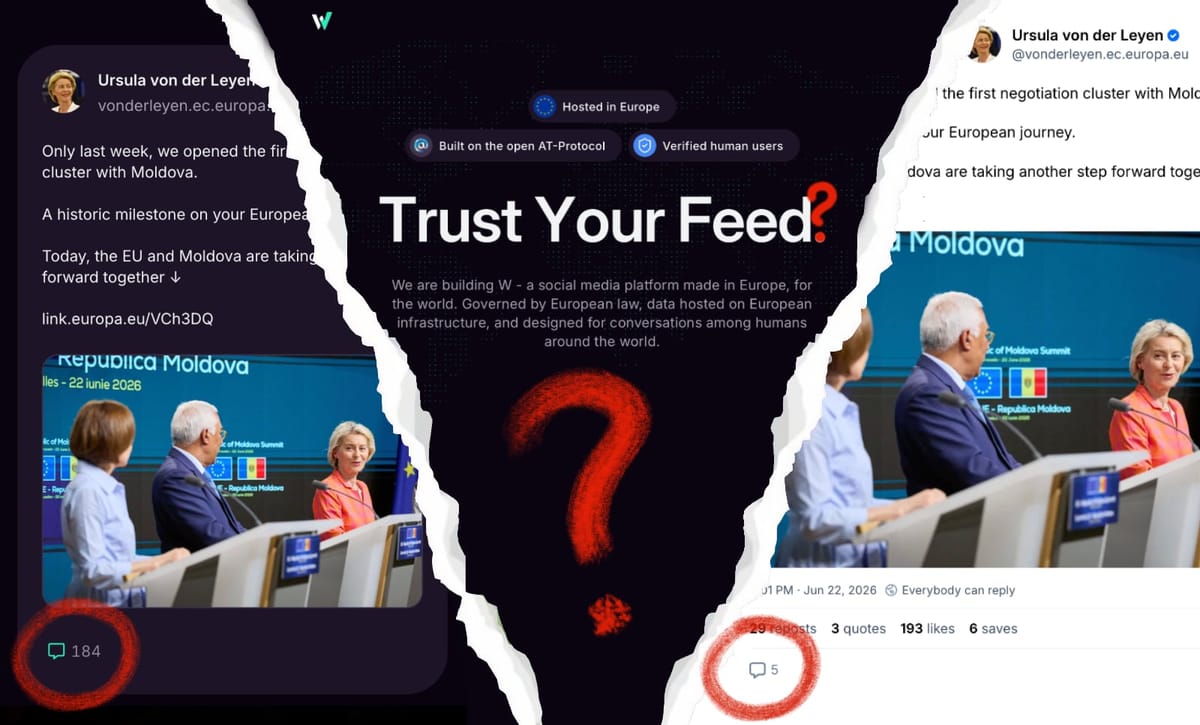
W Social, Fictional Metrics and the Beauty of Open Data
W Social's tagline is "Trust Your Feed" but the company's landing page displays inflated engagement metrics - a misrepresentation that contradicts its own promise.
How social media is fueling an intense form of romantic obsession
The digital world is primed to fuel episodes of profound infatuation known as limerence.
Introducing a network for thoughtful conversations
The quality of conversations on the Internet is terrible. Most platforms like Twitter, Facebook, Instagram, Reddit, etc. optimize for engagement as their key metric. This spawns and rewards behavior that leads to bragging of gameable metrics such as likes and followers, self-feeding thought bubbles, knee-jerk reactions, “if you’re not on our side, you’re on their side” mentality, and thought policing even by people who think they’re fighting for a good cause. Today’s Internet doesn’t incentiviz

Gradients of intimacy and creating shelter: An interview with Erin Kissane
How might we use nature as an inspiration for creating online communities?

Experimentally manipulating social media abstinence: results of a four-week diary study
Social media use has a weak, negative association with well-being in cross-sectional and longitudinal research, but this association in experimental studies is mixed. This investigation explores wh...

Objective, subjective, and accurate reporting of social media use: No evidence that daily social media use correlates with personality traits, motivational states, or well-being.
Criticism of Facebook
Facebook (and parent company Meta Platforms) has been the subject of criticism and legal action since it was founded in 2004.[1] Criticisms include the outsize influence Facebook has on the lives and health of its users and employees, as well as Facebook's influence on the way media, specifically news, is reported and distributed. Notable issues include Internet privacy, such as use of a widespread "like" button on third-party websites tracking users,[2][3] possible indefinite records of user information,[4] automatic facial recognition software,[5][6] and its role in the workplace, including employer-employee account disclosure.[7] The use of Facebook can have negative psychological and physiological effects[8] that include feelings of sexual jealousy,[9][10] stress,[11][12] lack of attention,[13] and social media addiction that in some cases is comparable to drug addiction.[14][15]
ProbablyFrens, Contextual Feeds and Intent-Based Discovery
It’s that time of the year—ETHDenver is just around the corner! Index will be there, and if you’re attending, we’d love to connect! But that’s not all—Index has been evolving, bringing new experiences to make discovery more intuitive and personalized.Meet ProbablyFrens: The Matchmaker AgentWe’re introducing Index’s Matchmaker Agent, an autonomous connector that helps you find the friendships, collaborations, and conversations that should already exist. Whether you’re looking for thought partn...

Social media algorithms don't allow us to understand or control what we see online and why... until now! Top scholars @jonathanstray.com and @noupside.bsky.social are sharing @mysky.social, a tool that allows users to adjust their feed’s priorities and explains why certain posts appear over others.

🎛️📲 Meet the algorithm you can actually control and understand
newpublic.substack.com