


It’s about listening, empathy and having more women.

Superteams
FEATURED ON THE COVER OF HARVARD BUSINESS REVIEW SHORTLISTED FOR THE SABEW 2026 BEST IN BUSINESS BOOK AWARDS “An outstanding book.” —NPR “A valuable guide for teams and managers seeking to improve performance.” —The Wall Street Journal “A rare read that introduces fresh ideas about how to make groups more than the sum of their parts.” —Adam Grant, bestselling author of Think Again “The ultimate playbook for how to build exceptional teams.” —Fast Company What do the best teams do differently? To find out, award-winning social psychologist Ron Friedman surveyed thousands of teams and pinpointed the precise habits that separate the best from the rest. The results upend everything we think we know about teamwork. It turns out that the most successful teams aren’t the ones that collaborate most, get along best, or put in the longest hours. What really sets them apart is the way they manage their energy and attention, bring out the best in one another, and keep improving over time. Blending eye-opening discoveries with unforgettable stories, Superteams takes you inside the writers’ room of Succession and Bridgerton, the recording studio of ABBA and Fleetwood Mac, the kitchens of Michelin-starred restaurants, the laboratories of Nobel Prize-winning scientists, the locker rooms of NBA and NFL teams, and the boardrooms of the world's most innovative companies. You will learn: - A simple rule that instantly cuts meeting time in half - Why the secret to better teamwork is less teamwork - The one question that makes team decisions up to 30% smarter - The only office perk that improves performance (spoiler: it’s not coffee) - How personal productivity hacks make teamwork harder - Why feeling like the smartest person in the room is a red flag - Why top performers care more about disappointing their peers than their boss - How the best teams avoid burnout without working fewer hours - The science of truly restorative breaks, evenings, and vacations - How to build a team that keeps getting better (even when you’re not in charge) Smart, insightful, and relentlessly practical, this is your science-backed guide to turning your team into a Superteam.

The New Science of Building Great Teams
Why do some teams consistently deliver high performance while other, seemingly identical teams struggle? Led by Sandy Pentland, researchers at MIT’s Human Dynamics Laboratory set out to solve that puzzle. Hoping to decode the “It factor” that made groups click, they equipped teams from a broad variety of projects and industries (comprising 2,500 individuals in total) with wearable electronic sensors that collected data on their social behavior for weeks at a time. With remarkable consistency, the data showed that the most important predictor of a team’s success was its communication patterns. Those patterns were as significant as all other factors—intelligence, personality, talent—combined. In fact, the researchers could foretell which teams would outperform simply by looking at the data on their communication, without even meeting their members. In this article Pentland shares the secrets of his findings and shows how anyone can engineer a great team. He has identified three key communication dynamics that affect performance: energy, engagement, and exploration. Drawing from the data, he has precisely quantified the ideal team patterns for each. Even more significant, he has seen that when teams map their own communication behavior over time and then make adjustments that move it closer to the ideal, they can dramatically improve their performance.
Home
Research, expert perspectives, and product announcements from Atlassian on how teams can work smarter with AI. Subscribe for monthly insights on the future of teamwork.
There’s a Reason Women Aren’t Swooning Over AI Like Men Are
Or rather, a great many reasons

Does AI Make Teams Better at Working Together?
AI helps teams most when trust and critical engagement are present, and when AI is designed to support shared regulation.

Why Do So Many Incompetent Men Become Leaders?
Why are so few women in management positions? The popular explanations range from women just aren’t capable of being leaders to women just don’t want to be leaders. According to the author, however, the absence of women in leadership roles has less to do with women themselves and more to do with how we interpret leadership traits. Confidence – a trait more associated with men – is often misinterpreted as competence. As a result, charismatic, but incompetent men have fewer barriers to reach the top than women. Individuals in positions to promote and hire managers should think more critically about what seems like a leadership trait versus what is an actual leadership trait. They will find that arrogance and overconfidence – the characteristics that get men into management positions – are also the characteristics that cause poor performance.

AI Development Needs More Women. Here’s What Leaders Can Do About It
Only 31% of professionals in AI development are women—learn how female talent can drive accountability, improve accuracy and improve AI's societal impact.

Why AI Makes Things Worse for Enterprise Teams, by Paul Ford
Why are so few engineering teams reaping the benefits of AI? On this week’s episode, Paul presents Rich with the findings from a recent report from CircleCI and

Scientists Say Smart People Are Better Off With Fewer Friends - Slashdot
HughPickens.com writes: Christopher Ingraham writes in the Washington Post that a new study finds that when smart people spend more time with their friends, it makes them less happy. "The findings in here suggest (and it is no surprise) that those with more intelligence and the capacity to use it .....

Don't hire top talent; hire for weaknesses. - Benji's Blog
Design your hiring process to find the right people to strengthen your teams' weaknesses, rather than trying to find the best people. Instead of "how can we find the smartest people?" think about "how can we find the people who will make our team stronger?"
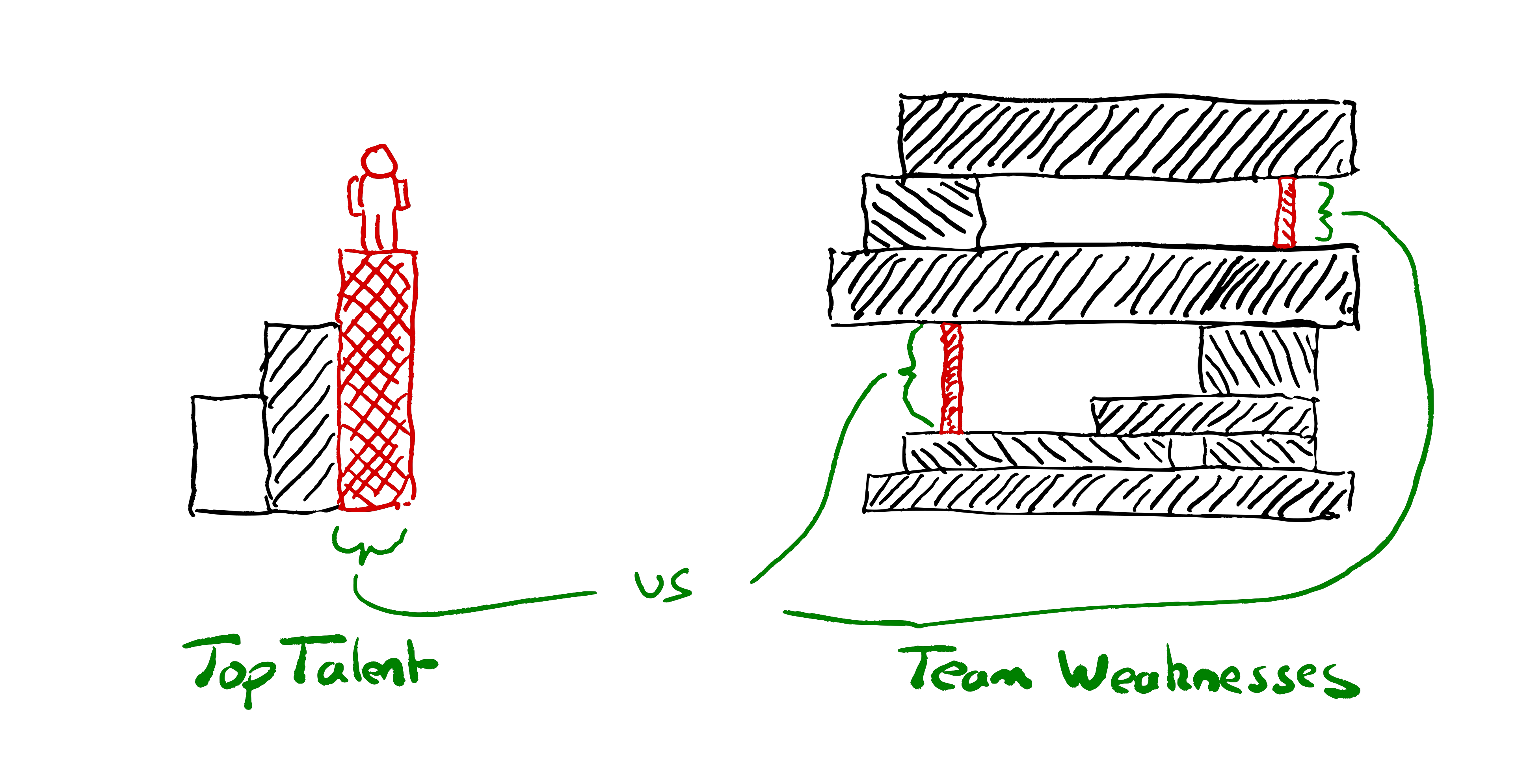
Don't hire top talent; hire for weaknesses. - Benji's Blog
Design your hiring process to find the right people to strengthen your teams' weaknesses, rather than trying to find the best people. Instead of "how can we find the smartest people?" think about "how can we find the people who will make our team stronger?"
Women treat AI with greater skepticism than men do, study suggests
Women perceive artificial intelligence (AI) as riskier than men do, according to a study. Beatrice Magistro and colleagues hypothesized that women are both more exposed to risk from AI and are more averse ...

Men in tech #YesAllMen - EMF 2026
Collective Intelligence Research

Explorations into the idea that a group of humans is "more intelligent" than the sum of their "IQ" (i.e. "groups of individuals doing things collectively that seem intelligent")
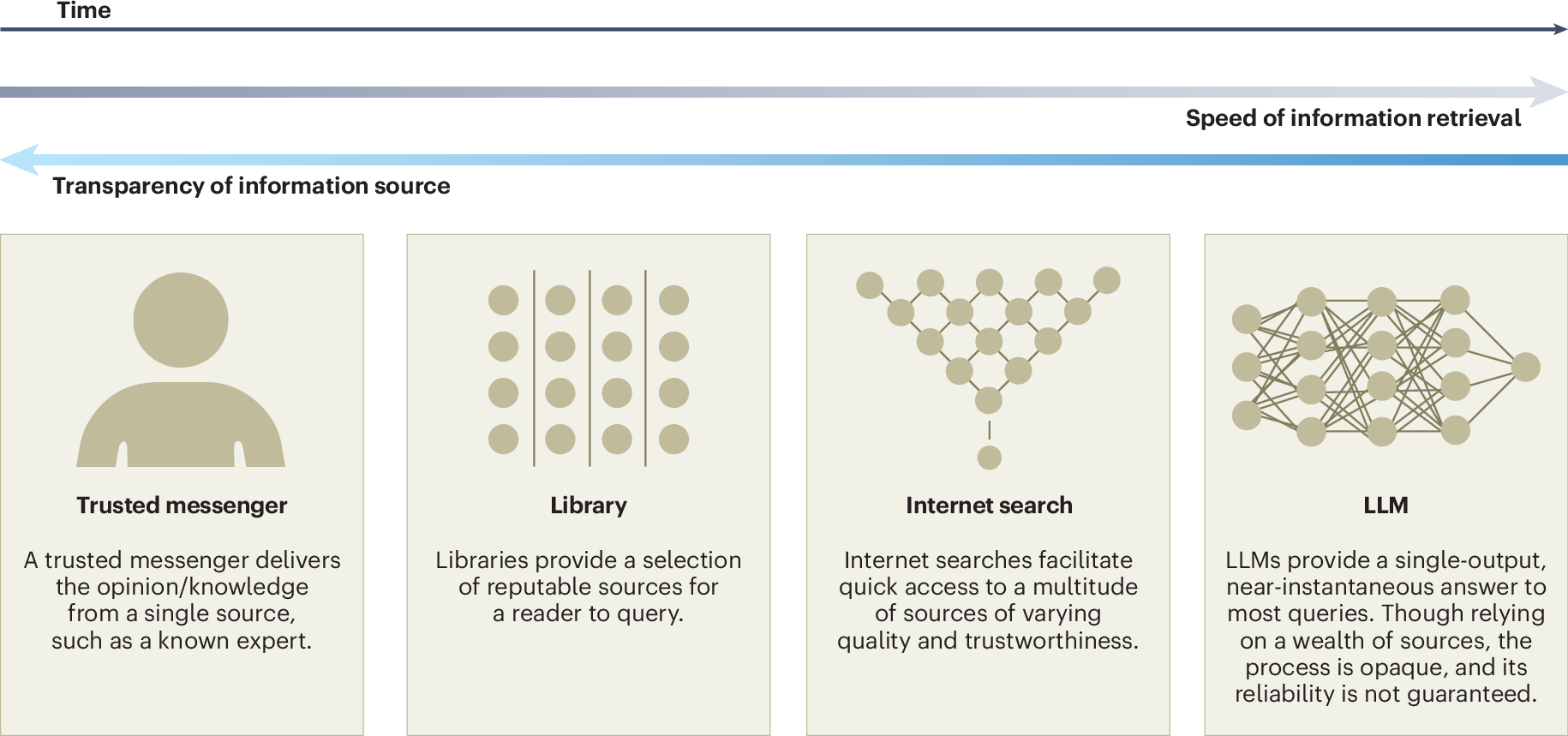
How large language models can reshape collective intelligence

Sharing Notes about Collective Intelligence — Pop Junctions

Socially Minded Intelligence: How Individuals, Groups, and Artificial Intelligence Can Make Each Other Smarter (or Not)

Profile: Adrien Treuille

NOVA | The Wisdom of the Crowds | Season 45 | Episode 6
Mapping Citizen Science through the Lens of Human-Centered AI