


There’s a lot of advice out there about what kinds of food you should be avoiding. Here’s a more positive approach.
Need More Self-Control? Try a Simple Ritual
Study finds an unusual technique for eating less

This study 40 years ago could have reshaped the American diet. But it was never fully published.
A fuller accounting of the results of a massive government-funded experiment on fatty foods challenges the conventional advice about what is healthy, and what is not.

What health variables should you document when embarking on a new Soylent diet?
41K subscribers in the soylent community. Resources, links, experiences, and relevant news dealing with engineered staple foods including but not…
Beginner's Health and Fitness Guide
That's what this guide is for. It's a basic guide to diet and fitness for beginners who want to get in better shape. If you want to look better, improve your overall athletic ability, or just improve your health, read on. If you're a bodybuilder or athlete, you probably already know most of this anyway.
A diet guru explains why you should eat dinner at 2pm
There have been two main changes in dietary habits from the 1970s (before the obesity epidemic) until today. First, there was the change is what we were recommended to eat. Prior to 1970, there was no official government sanctioned dietary advice. You ate what your mother told you to eat. With the publication of the Dietary Guidelines for Americans, we were told to cut the fat in our diets way down and replace that with carbohydrates, which might have been OK if it was all broccoli and kale, but might not be OK if it was all white bread and sugar.

EatingWell: Healthy Recipes, Healthy Eating
Find healthy, delicious recipes and meal plan ideas from our test kitchen cooks and nutrition experts at EatingWell. Learn how to make healthier food choices every day.

When We Eat, or Don’t Eat, May Be Critical for Health (Published 2018)
A growing body of research suggests that our bodies function optimally when we align our eating patterns with our circadian rhythms.

A contributory citizen science project reveals the impact of dietary keys to microbiome health in Spain
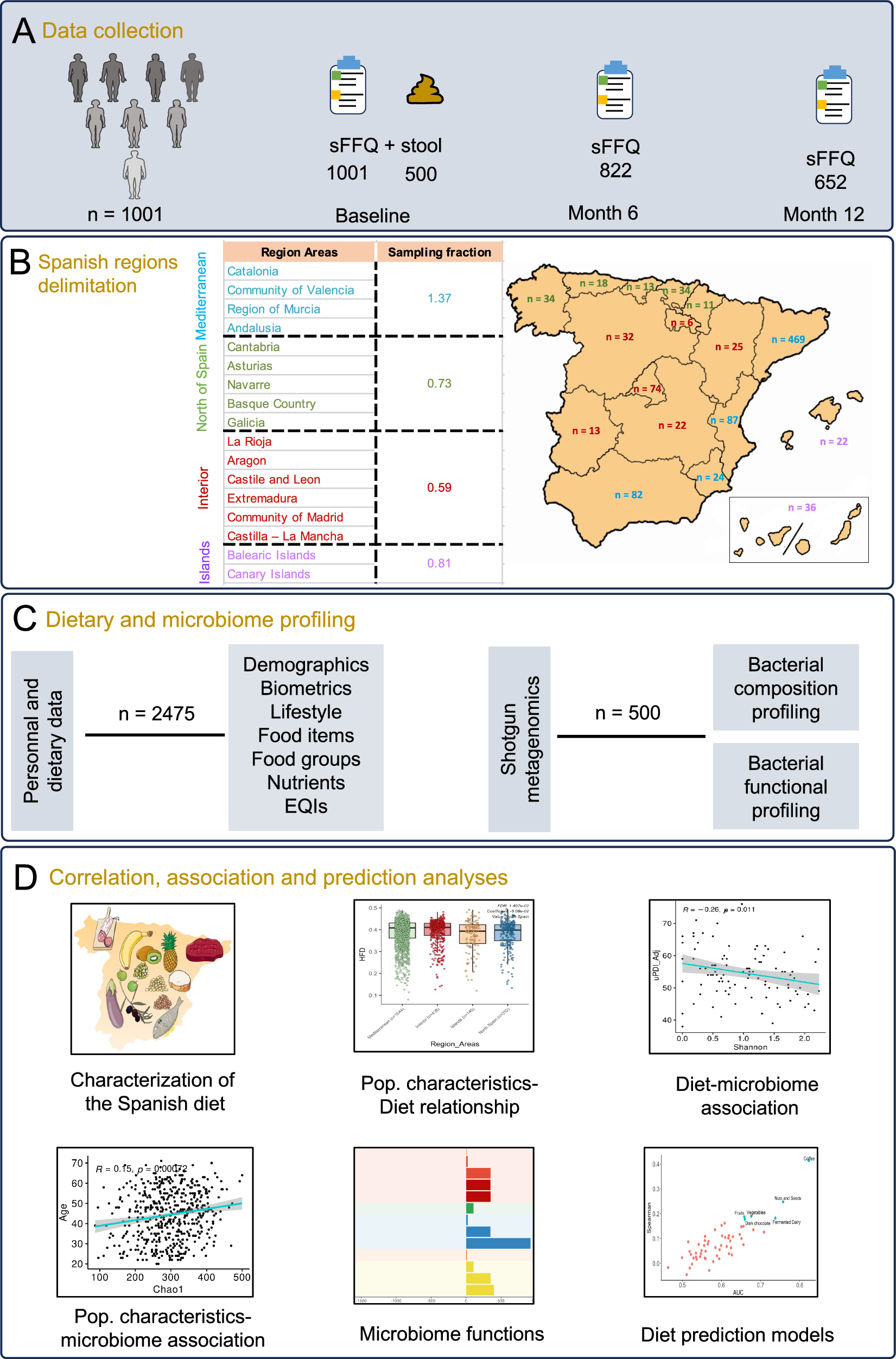
Low consumption of whole grains, fruits, and vegetables has been identified as dietary risks for non-communicable diseases such as inflammatory bowel diseases (IBDs). We explore how individual and lifestyle factors influence these risks by shaping gut microbiome composition. 1001 healthy participants from all Spanish regions provided personal and dietary data at baseline, six, and twelve months, yielding 2475 responses. Gut microbiome data were analyzed for 500 healthy participants and 321 IBD patients. Our findings reveal that adherence to national dietary guidelines—characterized by diets rich in nuts, seeds, fruits, and vegetables—was associated with greater microbial diversity and reduced IBD-related dysbiosis. Finally, we observed variations in dietary patterns and microbiome diversity and composition across age groups, genders, regions, seasons, and transit time. This study is among the first to uncover dietary intake associated with IBD-related dysbiosis and to propose an interactive website for participants (https://manichanh.vhir.org/POP/en).
Nut intake and hyperuricemia risk in young adults
Objective:The relationship between dietary nut intake and hyperuricemia risk remains unclear. The aim of this study was to investigate the relationship between different nut intake and hyperuricemia risk with a cross-sectional study.Design:A semi-quantitative FFQ was adopted to collect dietary information. Biochemical and anthropometric parameters were measured by standard methods. Multivariate-adjusted logistic regression models were implemented to analyse the relationship between individual nut intake and hyperuricemia risk.Setting:Qingdao University in Shandong Province, China.Participants:During 2018–2019, a total of 14 056 undergraduates (6862 males and 7194 females) aged 15–25 years participated in the study.Results:After adjusting for multiple confounding factors, compared with the lowest quartile, the highest quartile intakes of pine nut (95 % CI (0·51, 0·98)) was significantly associated with 29 % reduction in hyperuricemia risk, the highest quartile intake of walnut (OR = 0·78; 95 % CI (0·58, 1·05)) was marginally negatively associated with hyperuricemia risk.Conclusions:The present study showed that the relationships between intakes of different nuts and hyperuricemia risk were different. Increased dietary intakes of walnut and pine nut are negatively associated with the hyperuricemia.
Pescatarian Diet for Heart Health? Here’s Why You May Want to Consider - Friends Life Care
Your lifestyle is the best defense against heart disease, so one lifestyle change you might want to consider is a pescatarian diet.

How to Meal Prep Chicken...if you hate meal prepping.
The Unhealthy Truth Behind 'Wellness' and 'Clean Eating'
My eating disorder had once looked very different, and then I found wellness—but I was not well.
A Feast of Poison
How would I go if I tried to convince you that most food contains poison? You might nod and agree but I am not talking about processed junk laced with manmade chemicals, but rather this is all abou…

What Is Safe To Eat? How I'm Thinking About Cyclosporiasis | Shouldn't Need to Be a Lawyer by Matthew Cortland
nb. I got into this outbreak in detail, even though I was having surgery, because I need to know what is safe for me to eat as someone who
Epic diarrhea outbreak has 40% of Americans avoiding fruits and veggies
Kennedy has focused on nutrition but has neglected food safety, critics say.
Dietary Carbohydrates Impair Healthspan and Promote Mortality
The prospective cohort study, named PURE, found that in >135,000 participants from 18 countries, nutritive carbohydrates increase human mortality, whereas dietary fat reduces it, requesting a fundamental change of current nutritional guidelines. Experimental evidence from animal models provides synergizing mechanistic concepts as well as pharmacological options to mimic low-carb or ketogenic diets.
