


How a clunky Swedish computer game is teaching millions of children to master the digital world.
NewCrafts Paris 2025
NewCrafts Paris, an ephemeral learning ground for professional developers who care for quality code and bettering their practices.
The Rise and Fall of the Lone Game Developer – Holy Ghost Stories
In the early 80s, all it took to make a game was a computer, some graph paper, and a lot of determination.
Resonite
A novel digital universe with infinite possibilities. Whether you resonate with people around the world in a casual conversation, playing games and socializing. Or you riff off each other when creating anything from art to programming complex games, you'll find your place here.
Growing up in the online world: a national consultation
We are consulting on further measures to prepare children for the future in an age of rapid technological change. This includes potential age restrictions on social media and other services such as gaming sites and AI chatbots, restrictions on addictive design features and risky functionalities, and better support for parents and families.


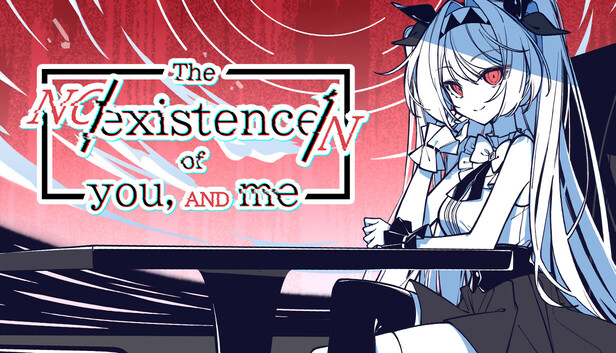
The NOexistenceN of you AND me
Use "game" as a medium to showcase the world of "you/girl". Explore the truth of "you/girl/world" through the form of a "visual novel".
Notes from my Beginner Computer Literacy Class Part 1 - Alex’s Writing Journal
Helping the uninitiated navigate this brave new digital world
Ten Years of World of Warcraft
Ten years of World of Warcraft. Well. So many thoughts. WoW has always been a contradiction of sorts: not the pioneer, but the one that solidified the pattern. Not the experimenter, but the one tha…

What I've Learnt After Making My First Hobby Game
A lot of people (myself included) get into software development because of computer games — as a kid, I was amazed at computer games and always curious about how it was made. However, after finally getting into the industry, most people (myself included) end up not doing game development.
Learning to solve complex tasks by growing knowledge culturally across generations
Knowledge built culturally across generations allows humans to learn far more than an individual could glean from their own experience in a lifetime. Cultural knowledge in turn rests on language: language is the richest record of what previous generations believed, valued, and practiced, and how these evolved over time. The power and mechanisms of language as a means of cultural learning, however, are not well understood, and as a result, current AI systems do not leverage language as a means for cultural knowledge transmission. Here, we take a first step towards reverse-engineering cultural learning through language. We developed a suite of complex tasks in the form of minimalist-style video games, which we deployed in an iterated learning paradigm. Human participants were limited to only two attempts (two lives) to beat each game and were allowed to write a message to a future participant who read the message before playing. Knowledge accumulated gradually across generations, allowing later generations to advance further in the games and perform more efficient actions. Multigenerational learning followed a strikingly similar trajectory to individuals learning alone with an unlimited number of lives. Successive generations of learners were able to succeed by expressing distinct types of knowledge in natural language: the dynamics of the environment, valuable goals, dangerous risks, and strategies for success. The video game paradigm we pioneer here is thus a rich test bed for developing AI systems capable of acquiring and transmitting cultural knowledge.

Platform Studies
The Platform Studies book series has been established to promote the investigation of underlying computing systems and how they enable, constrain, shape and support the creative work that is done on them. The series investigates the foundations of digital media — the computing systems, both hardware and software, that developers and users depend upon for artistic, literary, and gaming development. Books in the series will certainly vary in their approaches, but they will all also share certain features: A focus on a single platform or a closely related family of platforms; Technical rigor and in-depth investigation of how computing technologies work; An awareness of and discussion of how computing platforms exist in a context of culture and society, being developed based on cultural concepts and then contributing to culture in a variety of ways — for instance, by affecting how people perceive computing.
Digital Degrowth: Radically Rethinking our Digital Futures
We are fast approaching the point of “peak digital”, with the continued mass production and excessive consumption of digital technologies set to become a key driver of climate crisis, ecological breakdown and ongoing societal instability.<br /> <br /><i>Digital Degrowth</i> is a call to completely rethink our digital futures in these fast-changing times. It explores how degrowth thinking and alternate forms of “radically sustainable computing” might support ambitions of sustainable, scaled-down and equitable ways of living with digital technologies. Neil Selwyn proposes a rebalancing of digital technology use: digital degrowth is not a call for simply making reduced use of the digital technologies that we already have – rather it is an argument to reimagine digital practices that maximise societal benefits with minimal environmental and social impact. Drawing on illustrative examples from across computer science, hacker and environmental activist communities, this book examines how core degrowth principles of conviviality, autonomy and care are already being used to reimagine alternate forms of digital technology.<br /> <br />Original and stimulating, this is essential reading for students and scholars of media and communication, sustainability studies, political ecology, computer/data sciences, and across the social sciences.

» Apple, Carmen Sandiego, and the Rise of Edutainment The Digital Antiquarian
If there was any one application that was the favorite amongst early boosters of personal computing, it was education. Indeed, it could sometimes be difficult to find one of those digital utopianists who was willing to prioritize anything else — unsurprisingly, given that so much early PC culture grew out of places like The People’s Computer Company, who made “knowledge is power” their de facto mantra and talked of teaching people about computers and using computers to teach with equal countercultural fervor. Creative Computing, the first monthly magazine dedicated to personal computing, grew out of that idealistic milieu, founded by an educational consultant who filled a big chunk of its pages with plans, schemes, and dreams for computers as tools for democratizing, improving, and just making schooling more fun. A few years later, when Apple started selling the II, they pushed it hard as the learning computer, making deals with the influential likes of the Minnesota Educational Consortium (MECC) of Oregon Trail fame that gave the machine a luster none of its competitors could touch. For much of the adult public, who may have had their first exposure to a PC when they visited a child’s classroom, the Apple II became synonymous with the PC, which was in turn almost synonymous with education in the days before IBM turned it into a business machine. We can still see the effect today: when journalists and advertisers look for an easy story of innovation to which to compare some new gadget, it’s always the Apple II they choose, not the TRS-80 or Commodore PET. And the iconic image of an Apple II in the public’s imagination remains a group of children gathered around it in a classroom.
Racecraft (Project Koru) · Prologue — The Origin Story
A blog about my journey through Mozilla,Open Source Contribution, Virtual,Augmented,Mixed Reality, Security,Hackathon and in general technology.


KWS - Tools to help developers manage youth audiences at scale
Kids Web Services is built to enable safer digital experiences for young audiences. We help our partners navigate the complex global landscape of parental consent and verification, enabling youth audiences to access the games and platforms they love.