

Many policymakers cite as fact that cuts in the top income and capital gains tax rates spur much greater economic growth and that increases in those tax rates significantly hurt growth. A new...
Economists Say We Should Tax The Rich At 90 Percent
America has been doing income taxes wrong for more than 50 years.All Americans, including the rich, would be better off if top tax rates went back to Eisenhower-era levels when the top federal income tax rate was 91 percent, a new paper concludes.

Opinion | The Rich Really Do Pay Lower Taxes Than You (Published 2019)
The 400 wealthiest Americans now pay a lower rate than the middle class.

Yeah, We're Going to Have to Tax the Middle Class
Do the Rich Capture All the Gains from Economic Growth?
Adjusted for inflation, the US economy has more than doubled in real terms since 1975.

Economists question Victorian Liberal's plan for surplus while cutting taxes
Two economists have warned Victoria's troubled budget would get worse under a Coalition government, because plans unveiled so far fail to cut enough spending while reducing taxes.
Wealth Capture Policies | Windfall Policy Atlas
What mechanisms can ensure AI-driven productivity gains are captured for the public benefit?

Fiscal stagnation
Public debt-to-GDP ratios have climbed to historic highs in most advanced economies. This column studies the connection between productivity growth, fiscal policy, and public debt. Using a theoretical model, it argues that a feedback loop is possible between fiscal policy and growth. Large primary surpluses are associated with fiscal distortions which depress investment and productivity growth, and lead to further pressure on public debt-to-GDP ratios. A fall into fiscal stagnation can result from hysteresis effects or pessimistic animal spirits. Meanwhile, exiting fiscal stagnation requires large policy interventions that reduce the public debt-to-GDP ratio, such as credible pro-growth strategies.

Exponential Growth Bias and Household Finance
ABSTRACT Exponential growth bias is the pervasive tendency to linearize exponential functions when assessing them intuitively. We show that exponential growth bias can explain two stylized facts in household finance: the tendency to underestimate an interest rate given other loan terms, and the tendency to underestimate a future value given other investment terms. Bias matters empirically: More‐biased households borrow more, save less, favor shorter maturities, and use and benefit more from financial advice, conditional on a rich set of household characteristics. There is little evidence that our measure of exponential growth bias merely proxies for broader financial sophistication.

Why higher tariffs won’t shrink the trade deficit
In President Donald Trump’s executive order calling for reciprocal tariffs, he said that their main purpose is to reduce the US trade deficit. Economists have long argued that tariffs have no effect on trade balances.

The New Paper Arguing Biden’s Power Sector Emissions Cuts Are Largely Intact — Even Under Trump
How the IRS Was Gutted — ProPublica
An eight-year campaign to slash the agency’s budget has left it understaffed, hamstrung and operating with archaic equipment. The result: billions less to fund the government. That’s good news for corporations and the wealthy.

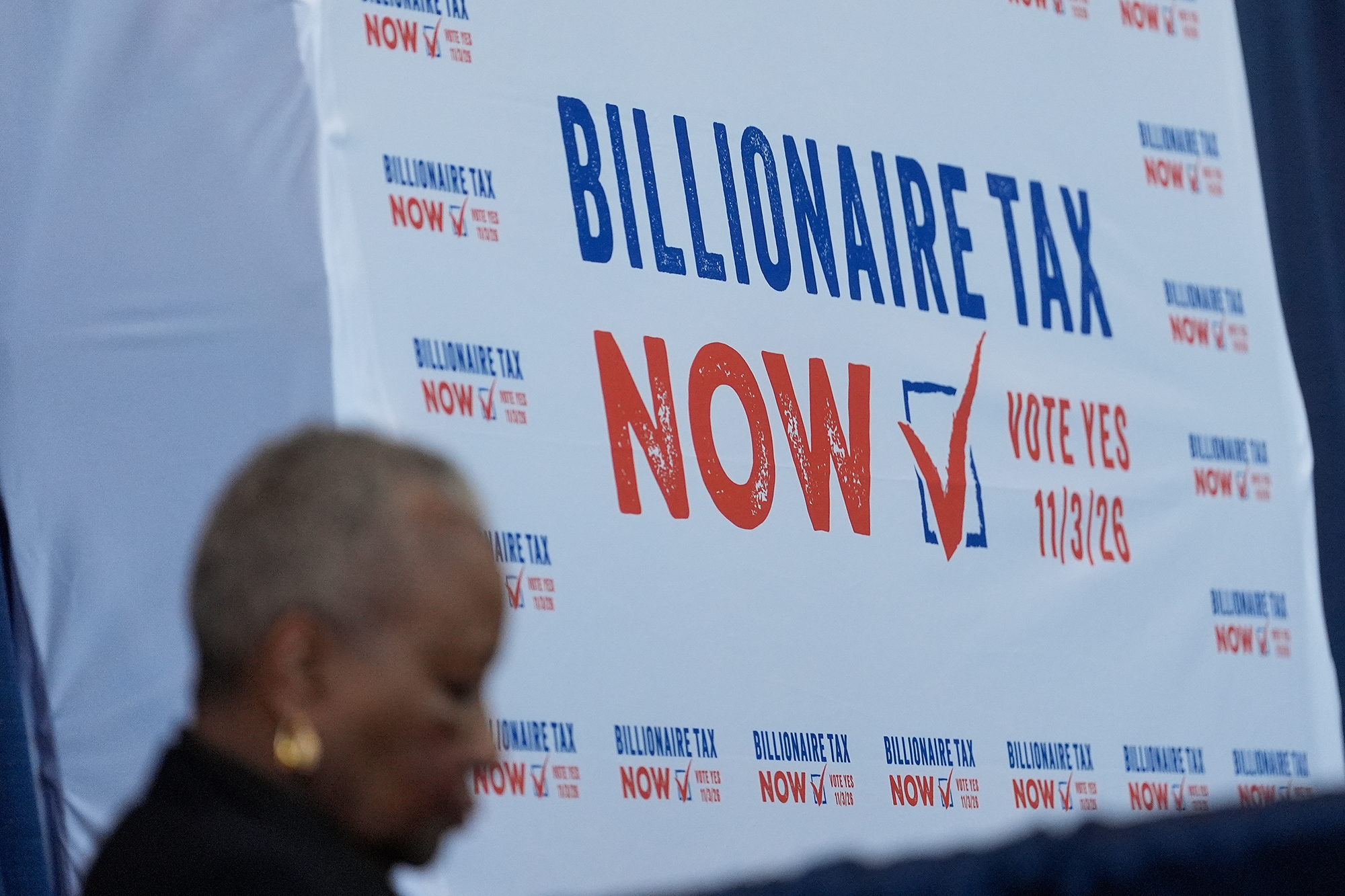
Fact check: Could California lawmakers expand the billionaire tax to everyone?
Opponents say Prop. 40 opens the door to broader taxes. Experts explain what the measure allows and what would take another vote.
Guardian Essential poll: Labor’s housing and tax changes fail to win over voters as support for One Nation swells
Just 25% of Australians polled back the budget while the majority believe the government has fallen short of expectations over the past year

The AI spending boom could have real consequences for the U.S. economy
As revisions to U.S. jobs numbers call into question economic growth, Big Tech is becoming an even more important part of American prosperity.

Shaping Preferences with Pigouvian Taxes
A Pigouvian tax is a tax that is imposed to correct an externality, which arises when a person engages in behavior that harms others without their consent. Pigouvian taxes are popular among academics—with prominent economists and legal scholars arguing for their imposition on myriad goods and activities that harm third parties, like carbon emissions and alcohol. Policymakers have recently been receptive to at least some of these arguments as evidenced by taxes imposed on or proposed for a variety of externality-generating goods, including guns, plastic bags, and sugary drinks.The conventional economic rationale for Pigouvian taxes assumes that they affect behavior by increasing the prices of taxed goods and not by altering people’s underlying preferences for them. For example, a carbon tax reduces driving by making gasoline more expensive, but it otherwise leaves people’s desire to drive unchanged. This conclusion follows from the standard assumption in economics that people’s tastes and preferences are fixed and determined exogenously to public policy.Contrary to standard analysis, I argue that Pigouvian taxes can in fact shape preferences and that policymakers should consider using them for that purpose. A carbon tax, for instance, would not only make driving more expensive, it might also modify preferences such that people develop a taste for alternative modes of transportation—making driving less desirable, even if we ignore the increase in gas prices.I make an original contribution to the literature on Pigouvian taxes by explaining in detail the psychological mechanisms through which these taxes can alter preferences. I also argue that once we relax the assumption of fixed preferences, the already strong case for Pigouvian taxes often becomes even more compelling. Specifically, preference endogeneity means that the loss in consumer utility resulting from Pigouvian taxes will often be smaller than standard analysis suggests. Moreover, malleable preferences dramatically expand the potential scope for Pigouvian taxes and enhance their impact on behavior through a social multiplier effect that can make taxes more effective in achieving public policy goals than scholars have traditionally assumed. I illustrate these points in a variety of policy-relevant contexts, including environmental law, gun control, and public health policy.
Everything these guys do to avoid the billionaire’s’ tax is going to radicalize people to vote for it nytimes.com/2026/10/21/technology/mark-zu…

How Mark Zuckerberg Pushed Meta to Shield Him From California’s Proposed Wealth Tax (Gift Article)
www.nytimes.com