
An inside look at the multibillion-dollar business and science of selling us on what we want.
8 documentaries that will make you smarter about money
These will keep you entertained and teach you valuable lessons about money and the economy.
Writings and rehearsals by Nathan Schneider
Welcome. I’m a professor of media studies at the University of Colorado Boulder, where I direct the Media Economies Design Lab and teach and learn from our students. I’ve written a book each on online democracy, cooperative enterprise, the Occupy movement, and God, and I’ve edited ones about solidarity economies, crypto, and co-ops. Reporting articles for both magazines and academic journals keeps my notebooks filled. Working with others to build a democratic economy keeps me accountable.
Digital Strategists: Network of Manipulation Projects and Buying Influencers for Israel | Arabic Post
Arabic Post Exposes the Network of "Buying Influencers" in America Since the Start of the Gaza War
The $2.43 Billion Question: Podcast Advertising in 2024
An immersive data story exploring podcast advertising trends and the breaking point where ads drive audiences away.
Debunking the science of advertising
We delve into the world of advertising, worth hundreds of billions of dollars annually, to find out if it's really even that effective. A collection with 3 stories from The Correspondent.

How the US Is Destroying Young People’s Future | Scott Galloway | TED
Persuasion: Empirical Evidence
We provide a selective survey of empirical evidence on the effects as well as the drivers of persuasive communication. We consider persuasion directed at consumers, voters, donors, and investors. We organize our review around four questions. First, to what extent does persuasion affect the behavior of each of these groups? Second, what models best capture the response to persuasive communication? Third, what are persuaders' incentives, and what limits their ability to distort communications? Finally, what evidence exists on the way persuasion affects equilibrium outcomes in economics and politics?

Consumerism | The Paper Pilot
The Paper Pilot's digital garden of thoughts on philosophy, politics, and sociology
How to pick a mutual fund without getting ripped off
Vox is a general interest news site for the 21st century. Its mission: to help everyone understand our complicated world, so that we can all help shape it. In text, video and audio, our reporters explain politics, policy, world affairs, technology, culture, science, the climate crisis, money, health and everything else that matters. Our goal is to ensure that everyone, regardless of income or status, can access accurate information that empowers them.

Our Plan for a Sustainably Open Social Network - Bluesky
We've been exploring avenues of monetization other than traditional advertising, and have raised a seed round to support our mission and growth.

Do we really want to “sell” ourselves?
Co-authored by Elizabeth Renieris and Dazza Greenwood — September 23, 2018

We spent $51,975 on podcast advertising: here’s everything we learned
Demystifying a good bit of the podcast sponsorship experience.

Systems: How the Ultra-Wealthy Think About Money - Anil Dash
A blog about making culture. Since 1999.

Capitalism | The Paper Pilot
The Paper Pilot's digital garden of thoughts on philosophy, politics, and sociology
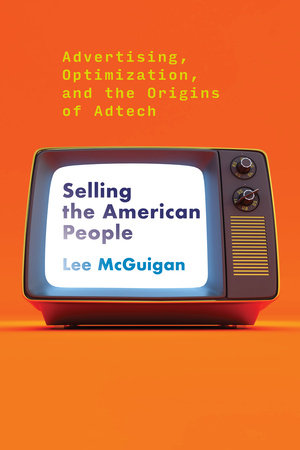
Selling the American People: Advertising, Optimization, and the Origins of Adtech
How marketers learned to dream of optimization and speak in the idiom of management science well before the widespread use of the Internet.Algorithms, data
The marketplace of rationalizations
Recent work in economics has rediscovered the importance of belief-based utility for understanding human behaviour. Belief ‘choice’ is subject to an important constraint, however: people can only bring themselves to believe things for which they can find rationalizations. When preferences for similar beliefs are widespread, this constraint generates rationalization markets, social structures in which agents compete to produce rationalizations in exchange for money and social rewards. I explore the nature of such markets, I draw on political media to illustrate their characteristics and behaviour, and I highlight their implications for understanding motivated cognition and misinformation.