


There are gaping holes in children’s privacy protection.
EFF’s "Spying on Students" Report Highlights Tech Companies’ Data
San Francisco—School children are being spied on by tech companies through devices and software used in classrooms that often collect and store kids’ names, birth dates, browsing histories, location
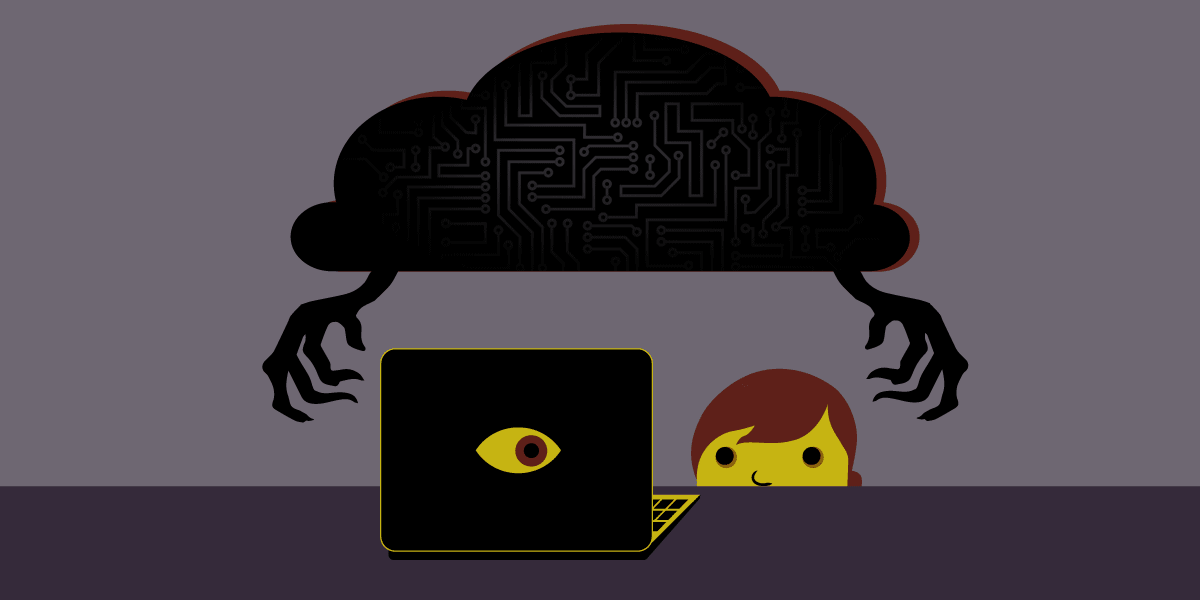
Home | Protecting Kids Online
Our mission is to protect children and defend parental rights by equipping families and citizens with the tools to keep kids safe online. We oppose government surveillance disguised as child safety legislation and seek to build an informed, independent parent-led coalition to #ProtectKidsOnline.

U.S. Social Media Regulations for Minors
The digital lives of American children and teenagers have become a focal point of intense national debate and legislative action. ContentsThe Federal Foundation: The Children’s Online Privacy Protection Act (COPPA)The State-Level Surge: A Patchwork of New RulesThe Next Generation of Federal Law: Congress Weighs InThe Constitutional Crossroads: Free Speech vs. State RegulationThe Great Debate: Voices […]

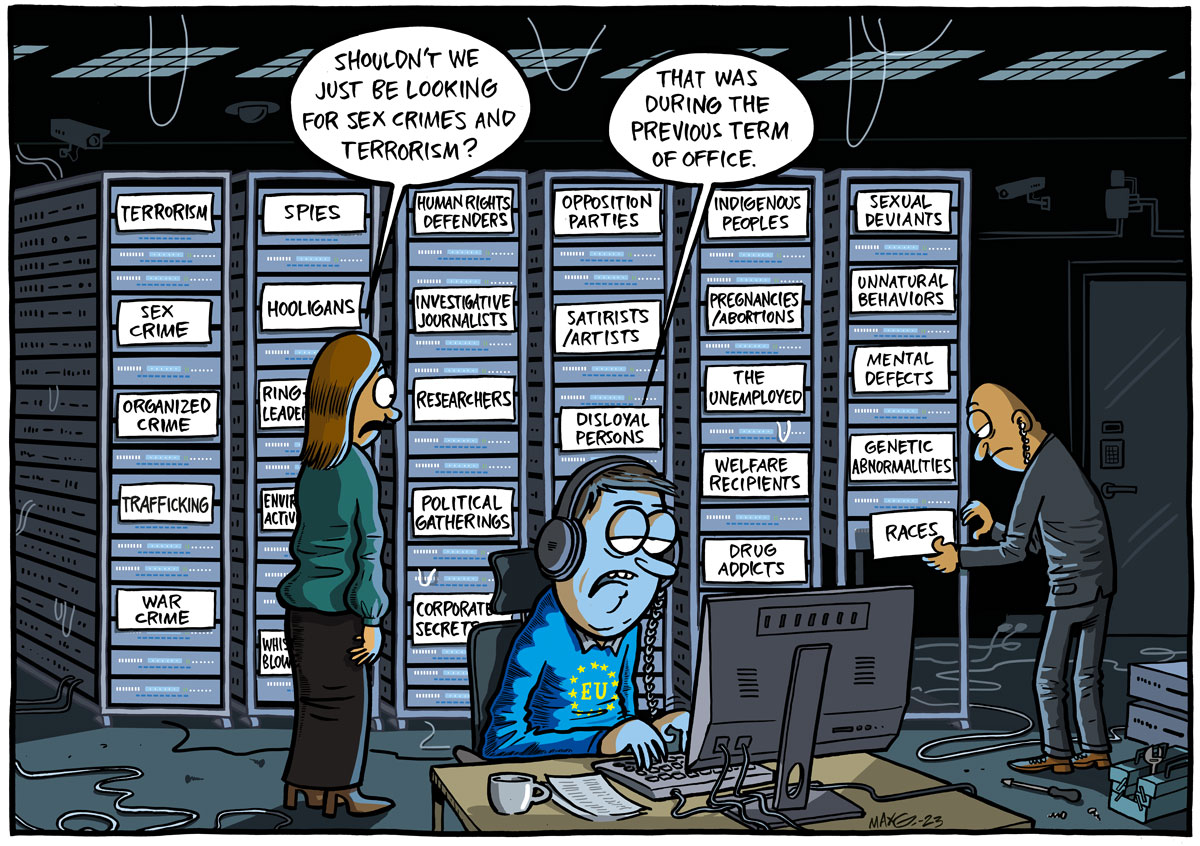
Chat Control & Going Dark: The war on encryption is on the rise. Through a shady collaboration between the US and the EU.
After Snowden’s whistleblowing in 2013, large parts of the internet became encrypted, enabling private and secure communication. Not everyone has welcomed this change. Most notably, the FBI and other U.S. government agencies have fought what is often called the “crypto wars”, the war on encryption. In recent years, they have been joined by the European Commission. Under the slogan “what about the children,” they try to introduce total mass surveillance of all EU citizens — first through the proposed Chat Control legislation, and later via the Going Dark and ProtectEU initiatives. The goal is to legally mandate spy tools on every European smartphone and computer. The forces behind these efforts have turned out to be American tech companies and intelligence agencies.
Under digital surveillance: how American schools spy on millions of kids
Fueled by fears of school shootings, the market has grown rapidly for technologies that monitor students through official school emails and chats

Supreme Court Upholds Age Verification: A Game-Changer for Child Online Safety Laws – Public Interest Privacy Center
Ohio's New Porn Age Verification Law: Big Brother Dressed Up as Child Protection - Nick's Blog
Ohio's new age verification law requiring ID to access adult websites (starting September 29, 2025) fails to protect children while forcing adults to surrender personal data to access legal content. This "small government" Republican law creates a surveillance system that invades privacy without addressing the real online dangers kids face.
What happened to the fight for the Internet? -- Dustycloud Brainstorms
At the moment I am writing this, bad internet bills are being proposed across the US, Canada, Europe, and the UK. They're using the usual tactics: they claim they're fighting for kids or fighting security risks, but in general, that's what surveillance and censorship bills have always claimed.
The "Segregate-and-Suppress" Approach to Regulating Child Safety Online
<div> In an effort to protect children online, regulators around the country and the world are enacting laws that compel Internet publishers to age-authenticat

Spying on Congress and Israel: NSA Cheerleaders Discover Value of Privacy Only When Their Own Is Violated
This pattern has been seen many times as part of the Snowden revelations, but also well before that.

Big Tech and the Online Child Sexual Exploitation Crisis | United States Senate Committee on the Judiciary
United States Senate Committee on the Judiciary
A Surveillance Net Blankets China’s Cities, Giving Police Vast Powers (Published 2019)
The authorities can scan your phones, track your face and find out when you leave your home. One of the world’s biggest spying networks is aimed at regular people, and nobody can stop it.

#cybersafety #ageverification #privacy #minors #ai | Parry Aftab
Internet Age-Verification Causing More Risks than It’s Worth This is not a new issue. Regulators and policymakers have raised it for the last 28 years as the way the keep kids safer online. They compare it to having to flash an ID to purchase regulated content or items (porn, cigarettes, alcohol, restricted medications, age-restricted movies, amusement rides, etc.) But verification online is very different and vastly riskier than flashing an ID in real life. For one, it’s collecting personally-identifiable information about our kids. For two, it puts that information in the too-often untrustworthy digital hands of tech companies. For three, while porn, alcohol and regulated drugs may be a clear-cut case for restricting access to adults, access to the Internet is very different. Yet, regulations begun in the UK and adopted globally have begun a weighted cybersafety approach that, in my humble opinion, prefers excluding young people from digital technology over teaching the cybersafety and digital life skills. That, in my 32 years of work in the fields of cybersafety and protection of minors online, was and remains a mistake. One of my best known quotes, repeated in Congressional and state legislative testimony and in the media is: “The greatest single risk our children face online is being denied access. We have solutions for everything else.” (my testimony before the FTC) Some proponents of age-verification have opted to denying them access unless they give up confirmable personally-identifiable info, such as selfies, feeding AI with PII, and govt or school credentials. I argue that this gives social networks, game providers and digital app operators a wealth of PII to be used for profiling, marketing and collecting far too much. With their privacy at stake, too often incompetent, malicious and greedy producers and mega-tech industry players, can’t and shouldn’t be trusted with the personal info of our most vulnerable - our kids. And AI will now be tasked with collecting everything it can find about our kids to be able to “age-verify.” (It’s ability to age-verify is less reliable with youth as their data-sets are more limited.) I served on a task force appointed by 49 state attorneys general, charged to research and weigh-in on this issue. We concluded that age-verification wasn’t feasible. While this task force was formed many years ago, with the exception of a fortified AI, not much as changed. Our children’s privacy remains, or should remain, paramount. We have robust filtering and blocking technologies. The adult industry has adopted an age-gated model. And parents can restrict access using device-specific tools. And, many well-intentioned age-verification laws were adopted too quickly for thoughtful discourse. Or by governments more prone to censorship/content restrictions. I fear in our quest to protect our kids we have thrown our babies out with the bath water. #cybersafety #ageverification #privacy #minors #AI

Disney Sued for Spying on Kids Using iPhone, Android Apps
Apps used to collect info without permission, suit claims

How the Government Quietly Silenced the Internet (And Got Away With It) (ft Siri Dahl)
Our statement on the UK gov't's demand that all content on all devices sold or used in the UK be scanned, on the presumption of nudity, using a dystopian combination of age verification & content scanning. This proposal will not safeguard children. It endangers us all. signal.org/blog/pdfs/2026-06-08-uk-surve…
