

"Most people in transportation focus on the five percent of the time that cars are moving. But the average car is parked 95 percent of the ...
What If We Kept Our Cars Parked for Trips Less Than One Mile? | US EPA
Thought starter about walking or biking for trips less than one mile.

Experts: Too many private cars to fix traffic in Dhaka
About 76% of Dhaka roads are occupied by 6% of the population that owns private cars

Backseat Software
What if your car worked like so many apps? You’re driving somewhere important…maybe running a little bit late. A few minutes into the drive, your car pulls over to the side of the road and asks:
Speedcam Anywhere
Vehicle exhaust emissions - CO2, PM2.5 and NOx - are highest during acceleration. Microplastic particulates from tire emissions are highest during braking, accelerating and cornering quickly. In urban areas, vehicles accelerate and decelerate repeatedly due to junctions and traffic. Allowing for the emissions when vehicles are accelerating and they typically have the lowest NOx and CO2 emissions, and the best mpg, when driven at maximum speeds of 15-20mph. Particulate Matter (PM2.5) from tyre wear and brake pad wear is a lot higher when decelerating from higher speeds, and also from cornering at higher speeds. Because of the extra emissions during acceleration, NOx and CO2 go up rapidly when driving at higher speeds in urban areas.
Yohan on Twitter / X
For six months, Google Maps sent a slice of drivers in ten American cities down deliberately slower routes.About 30 seconds slower on average, and under 2% of trips were touched. The experiment ran on roughly 100 of the most congested road segments in each city, switching on… pic.twitter.com/5cshNdmWU2— Yohan (@yohaniddawela) August 28, 2026

Exploring Psychology in the Field: Steps and Examples From the Used‐Car Market
Abstract The growing availability of large datasets in a variety of domains presents an opportunity for researchers to use field data to better understand psychological concepts. I discuss, from an empirical economics point of view, steps for how to study cognition in large datasets. I use two recent papers that explore psychology in the used‐car market as motivating examples. These examples help illustrate the potential importance of big data as a way to explore human psychology and cognition. , The growing availability of large datasets in a variety of domains presents an opportunity for researchers to use field data to better understand psychological concepts. I discuss from an empirical economics point of view, steps for how to study cognition in large datasets and illustrate these steps with recent empirical papers.

No Vehicles In The Park
This is a game about language and rules. It consists of 27 questions, but after the first seven, you can skip to the end.
The new 20% time, minus the time
Attention is replacing hours. But is it 120% time all over again?


Moving Car-Free as a Parent
Observations & reflections on moving around with an infant–photo diaries included.

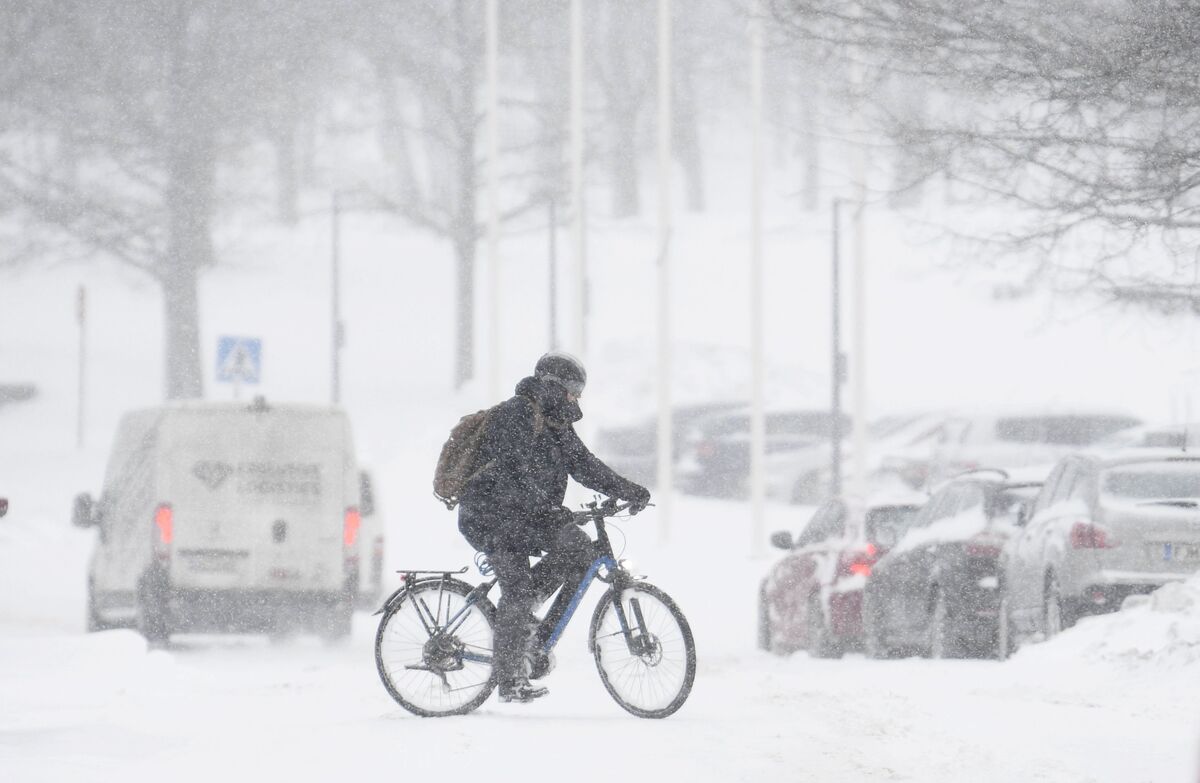
Helsinki, Finland's Amazing Traffic Safety Record, Explained
The Nordic nation’s rate of vehicle fatalities is a fraction of the toll in the US, despite a harsh climate and ice-covered streets. Here’s how the Finns do traffic safety.
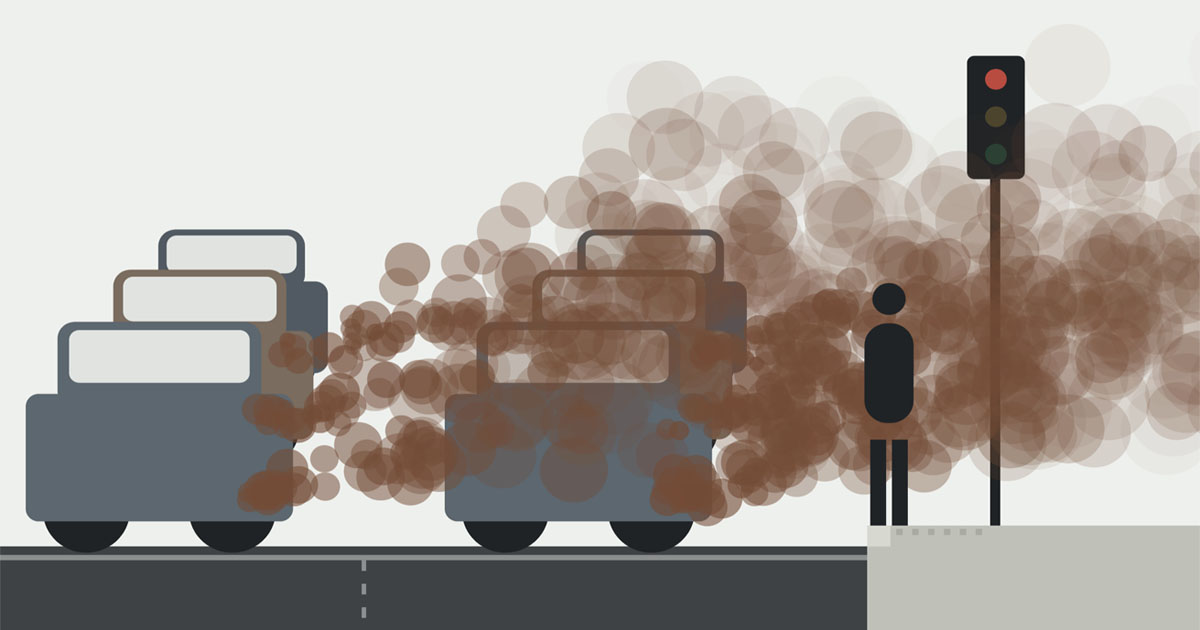
'Step back' - air pollution at pedestrian crossings
Every busy road produces a cloud of pollution you can't see. Where you stand in it matters more than most people might realise.
Pluralistic: Market participation is exhausting (30 Mar 2026) – Pluralistic: Daily links from Cory Doctorow
We're a diverse species, cognitively speaking – different ways of thinking come more easily to some of us than others. I'm good at a lot of things, but I have terrible spatial sense. I can't parallel park or catch a ball, and I get lost so easily it's almost comical (it's a running joke in my family).
Experienced Segregation
We estimate a measure of segregation, experienced isolation, that captures individuals’ exposure to diverse others in the places they visit over the course of their days. Using Global Positioning System (GPS) data collected from smartphones, we measure experienced isolation by race. We find that the isolation individuals experience is substantially lower than standard residential isolation measures would suggest, but that experienced and residential isolation are highly correlated across cities. Experienced isolation is lower relative to residential isolation in denser, wealthier, more educated cities with high levels of public transit use, and is also negatively correlated with income mobility.

Speed: How It Explains the World - Vaclav Smil
In a world that feels like it’s moving faster than ever, Smil examines how our relentless pursuit of speed – in areas such as production, travel and communication – shapes not only our technological landscape but also our social and environmental realities. And through engaging anecdotes and striking statistics, Smil challenges the assumption that faster is always better.

Americans’ love affair with big cars is killing them
New analysis shows that the heaviest vehicles kill more people than they save in crashes
