

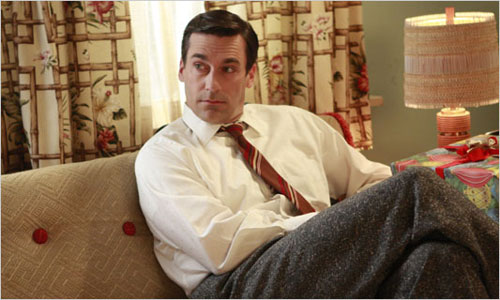
Here's what A.O. Scott's lamentation about adulthood in pop culture misses: our economic transformation
Capitalism and the Death Drive
What we call growth today is in fact a tumorous growth,…

Welcome to the Millennial Midlife Crisis
As we enter our 40s, we’re being forced to confront something awful — not our mortality. Our finances.

The Elite Death Project: Why Capitalism Is Choosing Collapse
Capitalism is choosing collapse. This is not failure — it is the death wish made systemic.
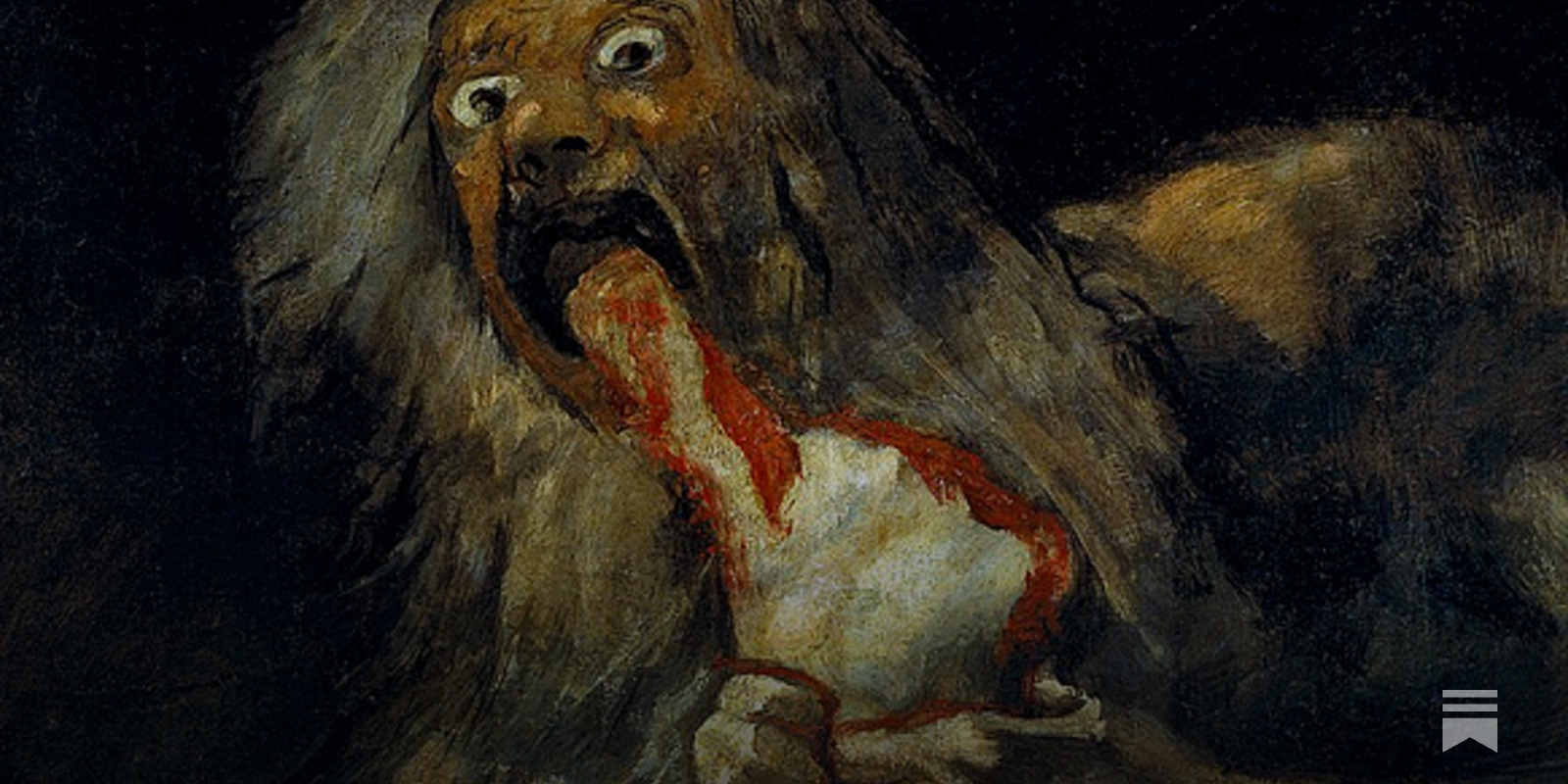
Open source confronts its midlife crisis | The Observation Deck
Midlife is tough: the idealism of youth has faded, as has inevitably some of its fitness and vigor. At the same time, the responsibilities of adulthood have grown: the kids that were such a fresh adventure when they were infants and toddlers are now grappling with their own transition into adulthood – and you try to remind yourself that the kids that you have sacrificed so much for probably don’t actually hate your guts, regardless of that post they just liked on the ‘gram. Making things more challenging, while you are navigating the turbulence of teenagers, your own parents are likely entering life’s twilight, needing help in new ways from their adult children. By midlife, in addition to the singular joys of life, you have also likely experienced its terrible sorrows: death, heartbreak, betrayal. Taken together, the fading of youth, the growth in responsibility and the endurance of misfortune can lead to cynicism or (worse) drastic and poorly thought-out choices. Add in a little fear of mortality and some existential dread, and you have the stuff of which midlife crises are made…
How to Grow Old: Bertrand Russell on What Makes a Fulfilling Life
“Make your interests gradually wider and more impersonal, until bit by bit the walls of the ego recede, and your life becomes increasingly merged in the universal life.”

The Player and the Played
In an age when capitalism feels like an unwinnable game, extreme reactionary ideas and politics are on the rise. The Hunger Games, Game of Thrones, Squid Gam...
The soft life: why millennials are quitting the rat race
Ambition once came with a promise: a home, a salary, progress and fulfilment. What happens when that promise is broken? Meet the women who are turning their backs on consumerism, materialism and burnout

Deaths of Despair and the Future of Capitalism
A New York Times BestsellerA Wall Street Journal BestsellerA New York Times Notable Book of 2020A New York Times Book Review Editors' ChoiceShortlisted for the Financial Times and McKinsey Business Book of the YearA New Statesman Book to ReadFrom economist Anne Case and Nobel Prize winner Angus Deaton, a groundbreaking account of how the flaws in capitalism are fatal for America's working class
If you think your profession is dying, it could soon be gone
Younger workers once foresaw the demise of horse-drawn carriages — but anticipating obsolescence can be self-fulfilling

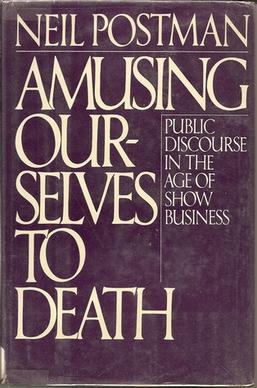
Amusing Ourselves to Death
Amusing Ourselves to Death: Public Discourse in the Age of Show Business (1985) is a book by sociologist and mass media scholar Neil Postman. It has been translated into 16 languages and sold some 200,000 copies worldwide. In 2005, Postman's son Andrew reissued the book in a 20th anniversary edition.
Post-growth
Post-growth is an umbrella term that refers to a broad family of economic, ecological, and political perspectives responding to the limits-to-growth dilemma —the recognition that infinite economic growth is biophysically unsustainable on a finite planet. Central to post-growth thinking is the shift of the focus out of GDP growth as the main goal of the economy. Instead, well-being becomes the main objective. Post-growth puts emphasis on decoupling societal well-being from economic growth, advocating for the possibility of prosperity beyond growth.

Cognitive Capitalism - Public Seminar
There are broadly three ways of thinking historically about capitalism. One draws on Marx’s value theory and pretty much treats...Read More

The obsolescence of man, vol I , part 2: The world as phantom and as matrix: philosophical considerations on radio and television - Günther Anders
The first complete English translation of a remarkable 1956 essay about television from Vol. I of The Obsolescence of Man by Günther Anders, who—using phenomenological analyses, excerpts from his diaries and reflections on daily life—depicts a capitalist world that manufactures a warped “mass-man” by imposing nonparticipation, consumption of images, artificial “needs” (“drug addiction is the model for today’s needs”), separation, “conditioning”, an eternal present, commodified leisure and the dissolution of the individual in vapid mass produced roles, in a text that in many ways anticipates the theory of the “spectacle” of Guy Debord and the situationists.

The Global Decline in the Mental Health of the Young
One of the major findings in wellbeing research until recently was that happiness was U-shaped by age and unhappiness hump-shaped by age. There was a midlife crisis — a finding reported in well over 600 published papers using data on 145 countries. It was present in both developing and developed countries. And it was persistent over time. The finding of a peak in ill-being in midlife was consistent with Anne Case and Angus Deaton’s work on mortality and the so-called “deaths of despair.”1 In the US in particular and to a lesser extent in other countries, White prime-aged individuals without a college degree had high death rates from suicide, drug overdoses, and cirrhosis of the liver. Drug overdose deaths in the US, for example, peaked at midlife ages. In 2023, the Centers for Disease Control and Prevention (CDC) reported that overdose death rates per 100,000 by age rose from 13.5 for 15-to-24-year-olds to 45.6 for 25-to-34-year-olds and 60.8 for 35-to-44-year-olds, and then declined to 53.3 for 45-to-54-year-olds, 49.2 for 55-to-64-year-olds, and 14.7 for those over the age of 65.2 The morbidity data matched the mortality data.

Preface | The World After Capital
Since publishing the previous version of The World After Capital, I have met with people across the political spectrum to discuss the ideas from the book. When I present these in person, I emphasize that the ideas are neither left nor right but forward (credit to Scott Santens who first used this phrase about Universal Basic Income). My writing, however, at times has alienated readers who identify as being more on the right. In this new edition, I am therefore making an extra effort to emphasize how both my diagnosis of where we are at and my suggestions for how to move forward do not map onto the existing political divides. Instead this is a new way of understanding our challenges and opportunities that can be the basis for movements and parties that are not trapped in Industrial Age ideology.