


A new study in the journal Current Biology shows that physical exercise after learning improves memory and memory traces, but only if the exercise is done in a specific time window and not immediately after learning.
Self-control saps memory resources
New research shows that exercising willpower impairs memory function by draining shared brain mechanisms and structures

A Single Exercise Session May Slow Cancer Cell Growth, Study Finds - Slashdot
The Washington Post notes that past research "indicates that exercise helps some cancer survivors avoid recurrence of their disease." But a new study "offers an explanation of how, showing that exercise changes the inner workings of our muscles and cells, although more study is still needed..." T...
How Exercise Might "Clean" the Alzheimer's Brain
Hints at potential treatments for age-related dementia and memory loss

Does Exercise Slow the Aging Process?
Almost any amount and type of physical activity may slow aging deep within our cells, and middle age may be a critical time to get the process rolling.

This Is Your Brain on Exercise
Exercise is as good for your brain as it is for your body, and researchers are just beginning to discover why
The Best Exercise for Aging Muscles (Published 2017)
Certain kinds of exercise may mitigate the effects of aging at the cellular level.

The Best Exercise for Aging Muscles (Published 2017)
Certain kinds of exercise may mitigate the effects of aging at the cellular level.
The Scientific 7-Minute Workout
In 12 exercises deploying only body weight, a chair and a wall, it fulfills the latest mandates for high-intensity effort, which essentially combines a long run and a visit to the weight room into about seven minutes of steady discomfort — all of it based on science.

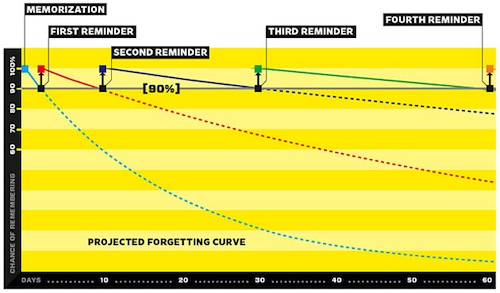
QS Primer: Spaced Repetition and Learning - Quantified Self
Many people think the Quantified Self mostly involves physical metrics: heart rate, sleep, diet, etc. but what about what goes on in our brains? Can we quantify that? There have been several inspiring Quantified Self talks about tracking learning and memory. This post will collect all of them into one place, along with good resources...
Can three minutes of exercise a week help make you fit?
A few weekly doses of intense exercise may deliver many of the health and fitness benefits of hours of conventional exercise, says Dr Michael Mosley.

1 Minute of All-Out Exercise May Have Benefits of 45 Minutes of Moderate Exertion
Sixty seconds of intense exercise provided the benefits of three-quarters of an hour of moderate cycling.

Which Type of Exercise Is Best for the Brain?
For the first time, scientists compared the neurological impacts of different types of exercise in rats: running, weight training and high-intensity interval training.

Dance training is superior to repetitive physical exercise in inducing brain plasticity in the elderly
Animal research indicates that a combination of physical activity and sensory enrichment has the largest and the only sustaining effect on adult neuroplasticity. Dancing has been suggested as a human homologue to this combined intervention as it poses demands on both physical and cognitive functions. For the present exploratory study, we designed an especially challenging dance program in which our elderly participants constantly had to learn novel and increasingly difficult choreographies. This six-month-long program was compared to conventional fitness training matched for intensity. An extensive pre/post-assessment was performed on the 38 participants (63–80 y), covering general cognition, attention, memory, postural and cardio-respiratory performance, neurotrophic factors and–most crucially–structural MRI using an exploratory analysis. For analysis of MRI data, a new method of voxel-based morphometry (VBM) designed specifically for pairwise longitudinal group comparisons was employed. Both interventions increased physical fitness to the same extent. Pronounced differences were seen in the effects on brain volumes: Dancing compared to conventional fitness activity led to larger volume increases in more brain areas, including the cingulate cortex, insula, corpus callosum and sensorimotor cortex. Only dancing was associated with an increase in plasma BDNF levels. Regarding cognition, both groups improved in attention and spatial memory, but no significant group differences emerged. The latter finding may indicate that cognitive benefits may develop later and after structural brain changes have taken place. The present results recommend our challenging dance program as an effective measure to counteract detrimental effects of aging on the brain.
There's even more evidence that one type of exercise is the closest thing we have to a miracle drug
Aerobic exercise, which raises your heart rate for a sustained period, is "key for your head, just as it is for your heart," researchers say.
Opinion | There’s a Good Reason You Can’t Concentrate
Just as we changed our thinking around physical fitness, we need to change our attitude toward cognitive fitness.

Regular naps are 'key to learning'
Regular and lengthy naps are the key to memory and learning in early life, say scientists.
