


Scientists have discovered a natural compound that targets dangerous C. difficile bacteria without wiping out the gut's beneficial microbes. Successful early tests suggest it could lead to a gentler, more effective treatment for stubborn intestinal infections that frequently return.
How we can stop antibiotic resistance
It’s been dubbed “the end of modern medicine”. BBC Future asked experts to explain how we might avoid the worst effects of antibiotic resistance – a grand challenge of our age.

I believed we would face an antibiotics apocalypse - until now | Richard James
For decades my research showed the dangers of new strains of resistance, and this week we heard of another threat. But there’s been a breakthrough

The pleiotropic effects of prebiotic galacto-oligosaccharides on the aging gut
Prebiotic galacto-oligosaccharides (GOS) have an extensively demonstrated beneficial impact on intestinal health. In this study, we determined the impact of GOS diets on hallmarks of gut aging: microbiome dysbiosis, inflammation, and intestinal barrier defects (“leaky gut”). We also evaluated if short-term GOS feeding influenced how the aging gut responded to antibiotic challenges in a mouse model of Clostridioides difficile infection. Finally, we assessed if colonic organoids could reproduce the GOS responder—non-responder phenotypes observed in vivo.

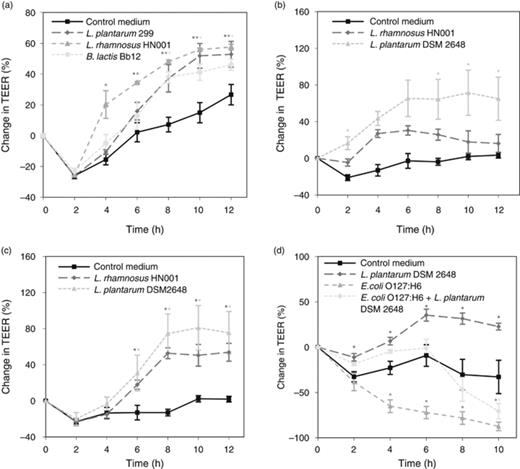
Lactobacillus plantarum DSM 2648 is a potential probiotic that enhances intestinal barrier function: Lactobacillus plantarum enhances intestinal barrier function
Abstract. The aim of this research was to identify bacterial isolates having the potential to improve intestinal barrier function. Lactobacillus plantarum
8 things to know about the gut microbiome and keeping yours healthy
Wellness influencers often talk about fixing a broken gut microbiome. And marketers sell tests and supplements to fix your gut health. Here's what what the evidence really shows about gut health.

CDC Stopped Monitoring Parasite Now Causing Explosive Diarrhea Across The Country
MAHA.

Mucus barrier, mucins and gut microbiota: the expected slimy partners?
The gastrointestinal tract is often considered as a key organ involved in the digestion of food and providing nutrients to the body for proper maintenance. However, this system is composed of organs that are extremely complex. Among the different parts, the intestine is viewed as an incredible surface of contact with the environment and is colonised by hundreds of trillions of gut microbes. The role of the gut barrier has been studied for decades, but the exact mechanisms involved in the protection of the gut barrier are various and complementary. Among them, the integrity of the mucus barrier is one of the first lines of protection of the gastrointestinal tract. In the past, this ‘slimy’ partner was mostly considered a simple lubricant for facilitating the progression of the food bolus and the stools in the gut. Since then, different researchers have made important progress, and currently, the regulation of this mucus barrier is gaining increasing attention from the scientific community. Among the factors influencing the mucus barrier, the microbiome plays a major role in driving mucus changes. Additionally, our dietary habits (ie, high-fat diet, low-fibre/high-fibre diet, food additives, pre- probiotics) influence the mucus at different levels. Given that the mucus layer has been linked with the appearance of diseases, proper knowledge is highly warranted. Here, we debate different aspects of the mucus layer by focusing on its chemical composition, regulation of synthesis and degradation by the microbiota as well as some characteristics of the mucus layer in both physiological and pathological situations.
Gut microbiome atlas maps how bacteria establish themselves and shift in inflammatory bowel disease
Researchers created a microbiome-wide atlas mapping more than seven million colonization factor genes across 4,716 human gut microbial species, revealing three putative strategies linked to metabolism, stress resistance, and microbial communication. Applying the framework to inflammatory bowel disease showed that colonization-factor profiles can provide a compact, biologically interpretable view of disease-associated microbiome changes.
Fecal transplants for autism deliver success in clinical trials
Scientific research continues to uncover interesting connections between the gut microbiome and human health, including everything from depression to PTSD to autoimmune disease. Another example of this are emerging ties between gut health and autism. Exciting new research, now moving to Phase 3 human trials, has found boosting microbial diversity via fecal transplants can dramatically reduce autism symptoms in the long term.
First new antibiotic in 30 years discovered in major breakthrough
The first new antibiotic to be discovered in nearly 30 years has been hailed as a ‘paradigm shift’ in the fight against the growing resistance to drugs.

Regulation of Intestinal Barrier Function by Microbial Metabolites
The human gastrointestinal tract (GI) harbors a diverse population of microbial life that continually shapes host pathophysiological responses. Despite readily available abundant metagenomic data, the functional dynamics of gut microbiota remain to be explored in various health and disease conditions. Microbiota generate a variety of metabolites from dietary products that influence host health and pathophysiological functions. Since gut microbial metabolites are produced in close proximity to gut epithelium, presumably they have significant impact on gut barrier function and immune responses.

Crispr Could Revolutionize the Way We Eradicate Invasive Species
Gene editing isn't brutal like poison, but it could transform our power over nature.

The mycobiome as integral part of the gut microbiome: crucial role of symbiotic fungi in health and disease
The gut mycobiome significantly affects host health and immunity. However, most studies have focused on symbiotic bacteria in the gut microbiome, whereas less attention has been given to symbiotic fungi. Although fungi constitute only 0.01%-0.1% of the gut microbiome, their larger size and unique immunoregulatory functions make them significant. Factors like diet, antimicrobials use, and age can disrupt the fungal community, leading to dysbiosis. Fungal-bacterial-host immune interactions are critical in maintaining gut homeostasis, with fungi playing a role in mediating immune responses such as Th17 cell activation. This review highlights methods for studying gut fungi, the composition and influencing factors of the gut mycobiome, and its potential in therapeutic interventions for intestinal and hepatic diseases. We aim to provide new insights into the underexplored role of gut fungi in human health.

PTAB Reverses §101 Rejection of Probiotic + Prebiotic Composition Claims
Patent Trial and Appeal Board Finds That Probiotic Formulation Is Not a Product of Nature

E. coli chemotaxis: the baffling intelligence of a single cell
I want to tell the story of a beautiful phenomenon in biology. In some sense it’s the prototype of much of the activity of life. The phenomenon is the way in which an individual cell of E. coli forages for nutrients. This process, known as “chemotaxis”—the “chemo-” for chemical and the “taxis” from the Greek τάξις, for tactics—is intelligence in one of its most elemental forms. An individual E. coli has no brain, obviously, and is even many orders of magnitude simpler than a human cell, and yet already it possesses something like a sense of smell, drive, even a memory. Chemotaxis recasts E. coli not as some aimless gut-pest but rather as an exquisitely sophisticated physical computer.
A challenge if anyone wants to take it up. Here is a recent review in the BMJ on the "Evidence for clinical interventions targeting the gut microbiome in cardiometabolic disease". There is not a single effect estimate reported in this review, or either supplemental file bmj.com/content/383/bmj-2023-075180

Evidence for clinical interventions targeting the gut microbiome in cardiometabolic disease
www.bmj.com