


Analyzing how stories change in the retelling down through the generations sheds light on the history of human migration going as far back as the Paleolithic period
Scientists Trace Society’s Myths to Primordial Origins
Analyzing how stories change in the retelling down through the generations sheds light on the history of human migration going as far back as the Paleolithic period
Sapiens [Tenth Anniversary Edition]: A Brief History of Humankind
New York Times Readers’ Pick: Top 100 Books of the 21st CenturyThe tenth anniversary edition of the internationally bestselling phenomenon that cemented Yuval Noah Harari as one of the most prominent historians of our time—featuring a new afterword from the author.One hundred thousand years ago, at least six human species inhabited the earth. Today there is just one. Us. Homo sapiens. How did our species succeed in the battle for dominance? Why did our foraging ancestors come together to create cities and kingdoms? How did we come to believe in gods, nations, and human rights; to trust money, books, and laws; and to be enslaved by bureaucracy, timetables, and consumerism? And what will our world be like in the millennia to come?In Sapiens, Professor Yuval Noah Harari spans the whole of human history, from the very first humans to walk the earth to the radical—and sometimes devastating—breakthroughs of the Cognitive, Agricultural, and Scientific Revolutions. Drawing on insights from biology, anthropology, paleontology, and economics, and incorporating full-color illustrations throughout the text, he explores how the currents of history have shaped our human societies, the animals and plants around us, and even our personalities. Can we ever free our behavior from the legacy of our ancestors? And what, if anything, can we do to influence the course of the centuries to come?Bold, wide-ranging, and provocative, Sapiens integrates history and science to challenge everything we thought we knew about being human: our thoughts, our actions, our heritage...and our future.
Lost civilisations make good TV, but archaeology’s real stories hold far more wonder | Flint Dibble
I took on a pseudoscientist because misinformation about history too often goes unchallenged
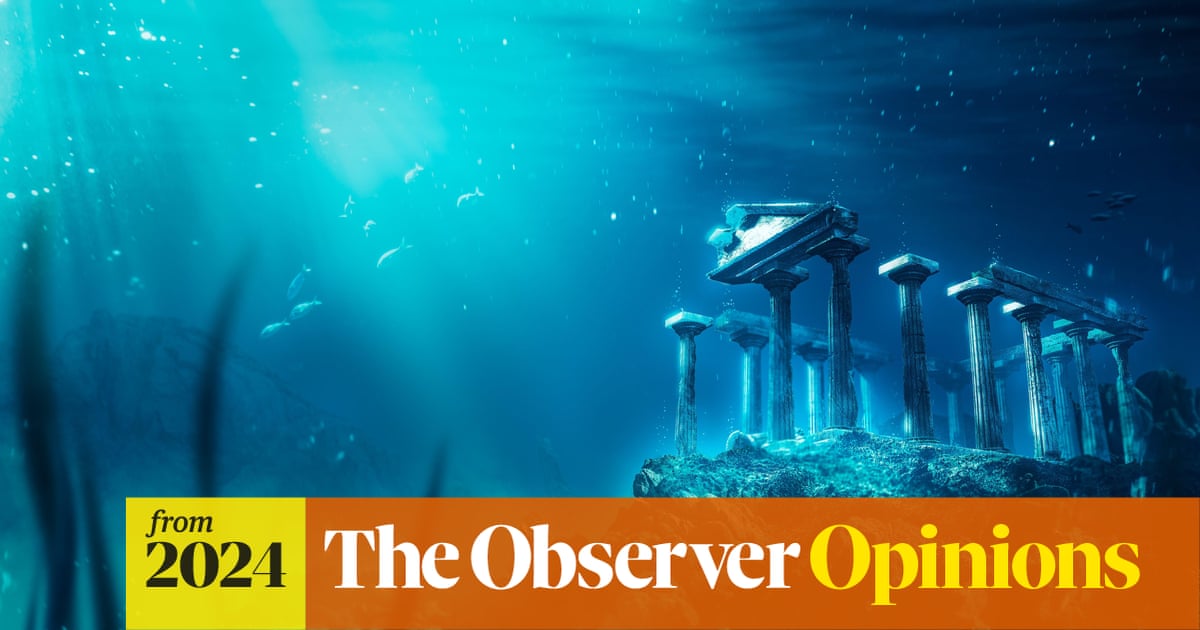
2013: The Space Between Stories | Reality Sandwich
Every culture has a Story of the People to give meaning to the world. We are entering a new phase in the dissolution of our Story and of the edifice of civilization built on top of it. We do not have a new story yet. Here and there we see patterns emerging, but the new mythos has not yet emerged. We will abide for a time in the space between stories.

Scientist Tracks the Movement and Evolution of Ancient Myths Across Continents - Reactor
Psychologist Carl Jung believed that many cultures across the globe produced similar myths due to a sort of unified subconscious, the idea that deep down in our collective psyche, we all embraced the same symbols in an effort to explain the world. But what if it were far more simple than that? What if these linked […]

The Chesapeake Slave Trade:Regional Patterns, African Origins, and Some Implications | History Cooperative
THE movement of peoples from the Old World to the New and the resulting transfers or transformations of homeland cultures in new physical and social environments has been a central theme of early American history. Overwhelmingly, historians have written on the transfers of peoples from sixteenth- through eighteenth-century Europe and sub-Saharan Africa to various American destinations in isolation from one another. When these two contemporary migration flows are considered together, sheer numbers demonstrate that, up to 1776, the majority of men, women, and children transported from the Old World to British North America were, to varying degrees, unfree. And increasingly throughout most of the eighteenth century, those migrants came from Africa and were permanently enslaved.
Breaking Free of The Hero Myth
We've come a long way; we humans and the way we interact with narrative. Evolving from the days of stories round a campfire, epic tales of heroes fighting monsters in far away lands, the gods playing tricks with the mortals, the hubris of humanity and legends of beautiful and scary creatures who filled our oceans, our forests, and our skies.

Narrative strands & memetic lineages in community social data using Community Archive - - ATmospher
Beyond Afrofuturism: Sinners, the Great Migration, and Rust Belt Gothik - Reactor
"Sinners" is a particular kind of story about migration, spirituality, and Black speculative survival skills

Goliath's curse: the history and future of societal collapse
A vast and unprecedented survey of societal collapse -- stretching from the Bronze Age to the age of silicon -- that digs through the ruins of fallen societies to understand the root causes of their downfall and the most dire consequences for our future. Stepping back to look at our precariously interdependent global society of today -- with the threat of nuclear war ever present and the world heating up faster than it did before the Great Permian Extinction, which wiped away 80-90 percent of life on Earth -- one couldn't be blamed for asking : Will we make it? Addressing this question with the seriousness it demands, Cambridge scholar Luke Kemp conducts a historical autopsy that stretches across five millennia, and more than 440 societal lifespans, from the first Egyptian dynasty to the modern-day United Kingdom, using the latest discoveries from archaeology and anthropology to reveal profound and often counterintuitive insights into why exactly societies fail. While books like Jared Diamond's Collapse zoom in on only a few case studies, Kemp's embrace of a 'deep systems' approach, availing himself of the largest dataset possible, allows him to discover the broader trends, and deeper causes, of collapse that pose future risks -- without abandoning the gripping historical narratives that bring these pages alive. Goliath's Curse is a stark reminder that there are both bright and dark sides to societal collapse -- that it is not necessarily a reversion to chaos or a dark age -- and that making a more resilient world may well mean making a more just one

What will the paper of the future look like? | I4R
In the course of my research, I will occasionally indulge in a session of academic archaeology and follow a trail of references back in time to see if I can find the source of some particular concept or idea. I would like to think that acquiring this ki…
We May Be Entering A Second Axial Age
The transition from small hunter-gatherer societies into complex civilizations gave rise to the first Axial Age. Today, the planetary polycrisis of climate chaos, mass migration, increasing warfare and transformative AI represents a rupture of comparable magnitude.

All Possible Views About Humanity's Future Are Wild
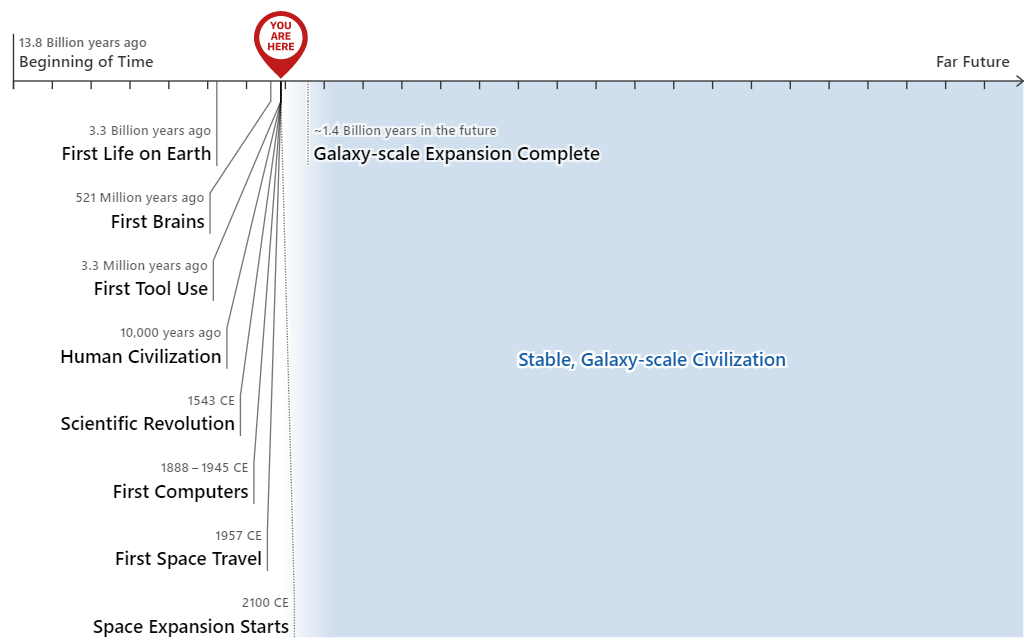
If humans will eventually spread out across the galaxy, then we are among the earliest living beings, with remarkable opportunities to shape the future
Food, foragers, and folklore: the role of narrative in human subsistence
Narrative is a species-typical, reliably developing, complex cognitive process whose design is unlikely to have emerged by chance. Moreover, the folklore record indicates that narrative content is consistent across widely divergent cultures. I have argued elsewhere that a storyteller may use narrative to manipulate an audience's representations of the social and/or physical environment to serve his or her own fitness ends. However, my subsequent research suggests that such manipulation results from a broader selection pressure which narrative effectively alleviates: information acquisition. By substituting verbal representations for potentially costly first-hand experience, narrative enables an individual to safely and efficiently acquire information pertinent to the pursuit of fitness in local habitats. If this hypothesis is true, narrative should be rich with information useful to the pursuit of fitness. One class of information integral to the accomplishment of this task is foraging knowledge. In this paper, then, I present evidence that foraging peoples use narrative to transmit subsistence information: specifically, I demonstrate how various narrative devices (e.g., setting, description, mimicry, anthropomorphism) are used to communicate foraging knowledge.
A Fascinating Study of How Creationists Understand Early Human Fossils
Young-earth creationists don't ignore science. Instead, they reinterpret it to fit their belief system. One paleontologist was curious to find out what
