

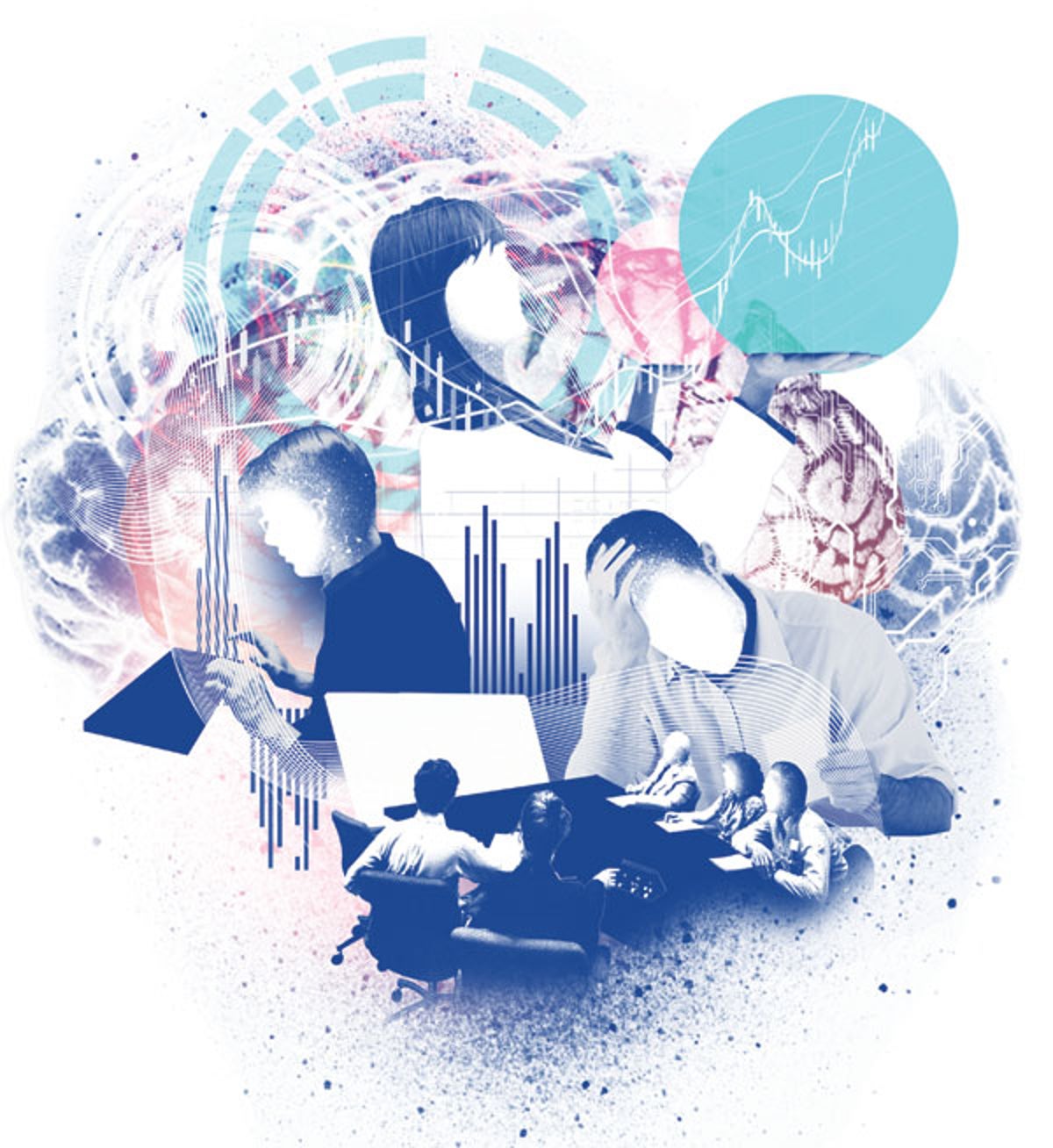
Two years in, a $1-billion-plus effort to simulate the human brain is in disarray. Was it poor management, or is something fundamentally wrong with Big Science?
Is the scientific paper due to be replaced?
AI is pushing scientific publishing to the brink. For neuroscience, the crisis may be an opportunity to finally connect findings across subfields.
Is the scientific paper due to be replaced?
AI is pushing scientific publishing to the brink. For neuroscience, the crisis may be an opportunity to finally connect findings across subfields.
Inventing the future: A neuroscience research roadmap
The past decade of transformative advances in neurotechnology portends an exciting future for neuroscience. This NeuroView charts a strategic path to accelerate and integrate research discovery and speed the development of new cures for human brain disorders.

Introducing TRIBE v2: A Predictive Foundation Model Trained to Understand How the Human Brain Processes Complex Stimuli | Keith Doelling
This is some very cool work by some awesome colleagues Jean-Rémi King, and Teon Brooks! Seriously not enough good things can be said about how cool it is. You should enjoy it and play with it. And kudos to Meta for open sourcing it. At the same time, I'm already seeing posts about how the model will replace fMRI experiments as researchers will simulate how the brain "really works" instead of running costly experiments. I think this goes WELL beyond what its creators intend. We are already seeing that use of AI in science allows you to explore charted ideas more thoroughly and much more rapidly but slows us down in finding novel ideas (https://lnkd.in/eMR2akqt). At the same time, there is growing concern that LLM performance will collapse as they are increasingly trained on their own output (https://lnkd.in/eavgfyuY). Leaving neuroscience to AI simulations risks following the same fate, where we generate seemingly new findings without gaining new meaning. A mechanistic understanding of how the brain works (if that is still your goal) will be found at the margins, in errors and idiosyncrasies of neural function. What TRIBE provides is a super useful and cool instantiation of our current understanding on how and where neural activity is instantiated in the brain. But it won't help us make groundbreaking new findings of how neural circuits lead to cognition and behavior. Experiments on real human brains, may be costly, but they will always be necessary!
Introducing TRIBE v2: A Predictive Foundation Model Trained to Understand How the Human Brain Processes Complex Stimuli | Keith Doelling
This is some very cool work by some awesome colleagues Jean-Rémi King, and Teon Brooks! Seriously not enough good things can be said about how cool it is. You should enjoy it and play with it. And kudos to Meta for open sourcing it. At the same time, I'm already seeing posts about how the model will replace fMRI experiments as researchers will simulate how the brain "really works" instead of running costly experiments. I think this goes WELL beyond what its creators intend. We are already seeing that use of AI in science allows you to explore charted ideas more thoroughly and much more rapidly but slows us down in finding novel ideas (https://lnkd.in/eMR2akqt). At the same time, there is growing concern that LLM performance will collapse as they are increasingly trained on their own output (https://lnkd.in/eavgfyuY). Leaving neuroscience to AI simulations risks following the same fate, where we generate seemingly new findings without gaining new meaning. A mechanistic understanding of how the brain works (if that is still your goal) will be found at the margins, in errors and idiosyncrasies of neural function. What TRIBE provides is a super useful and cool instantiation of our current understanding on how and where neural activity is instantiated in the brain. But it won't help us make groundbreaking new findings of how neural circuits lead to cognition and behavior. Experiments on real human brains, may be costly, but they will always be necessary!
Just back from a truly impactful few days at Asilomar for the Brain and Mind, hosted by the brilliant team at BrainMind. The spirit of the 1975 Recombinant DNA Conference felt palpable as we gathered… | Sean White
Just back from a truly impactful few days at Asilomar for the Brain and Mind, hosted by the brilliant team at BrainMind. The spirit of the 1975 Recombinant DNA Conference felt palpable as we gathered to chart ethical standards for the accelerating field of Neurotech. While our focus was on neuroethics, from investor diligence questions and board-level risk matrices to user/stakeholder engagement and toolkits for neuroentrepreneurs, the key themes shared a powerful parallel with AI Ethics: maintain and enhance human agency, combat misuse and mistrust, and acknowledge that innovation is moving faster than its guardrails. Both fields present novel challenges that demand we adapt our existing frameworks and principles to meet new challenges. At the heart of it all is human agency. Whether we're discussing neurodevices or large language models, our core responsibility as builders, executives, investors, and policymakers is to ensure people are informed, in control, and never burdened to fight for their own empowerment or autonomy. We have the fundamental responsibility to care about the people we serve. This commitment to responsible, human-centric development is fundamental to our work at Inflection AI. We're building with emotional intelligence at the core. Every product decision we make starts with a simple question: does this expand what people can do, or does it quietly shift the burden onto them? AI should work for the humans using it, amplifying judgment, not replacing it. Earning trust through transparency rather than demanding it through dependency. A special thank you to Diana Saville for once again outdoing herself at every event and to Michael McCullough, MD for his endless support of the ecosystem. And to all the Braingels who showed up and rolled up their sleeves! Let's translate the urgency from Asilomar into action and continue to drive positive change.

Massively Scalable Neurotechnologies
Backed by £50m, this programme sits within the Scalable Neural Interfaces opportunity space and is seeking radically new ways to deliver responsive neurotechnologies to the brain without brain surgery.
What the Studies Say About How AI Affects Your Brain: A (Very Big) Compilation
The entire literature clearly points to a single surprising finding
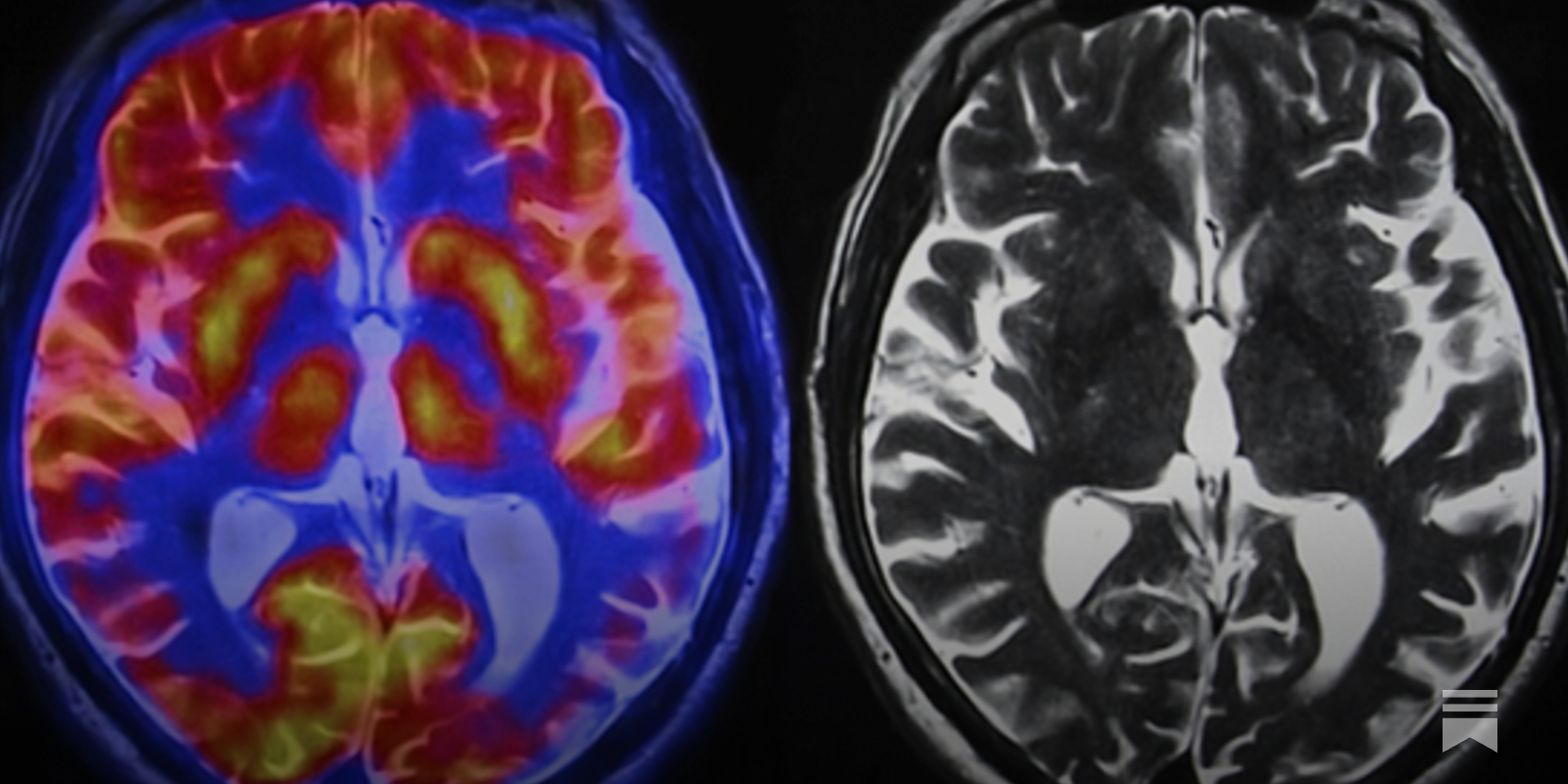
I’m going to cure my girlfriend’s brain tumor.
Launch of an experiment to use AI-Scientists to accelerate research of a "solved" disease.

Stanford scientists discover the human brain may actually be two separate organs
Scientists have found that the human brain develops from two distinct cellular systems, suggesting that evolution fused together two ancient nervous systems with very different jobs. The discovery also allowed researchers to grow human hindbrain neurons in the lab, opening new possibilities for studying ALS, spinal muscular atrophy, and other brainstem diseases.
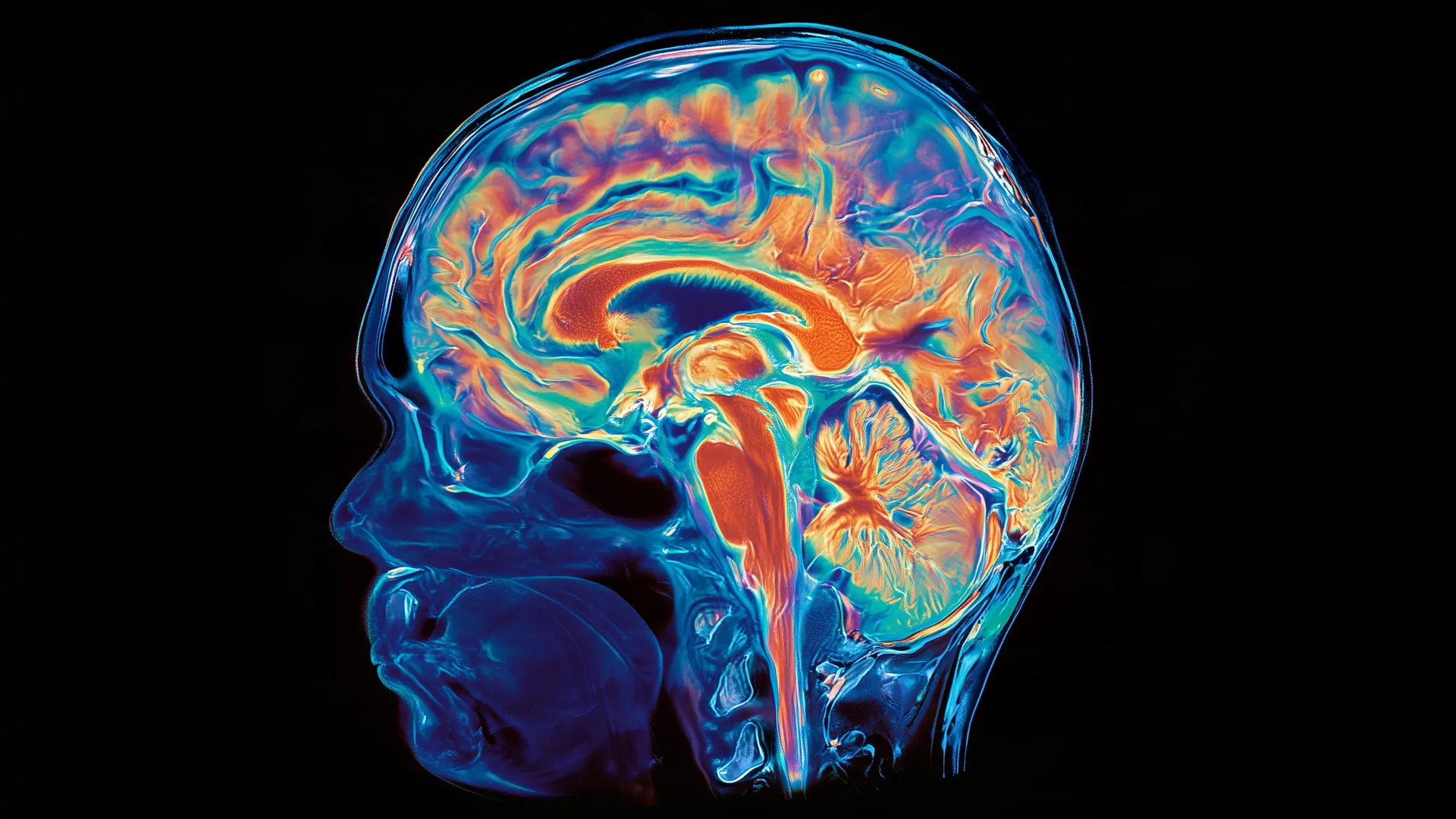
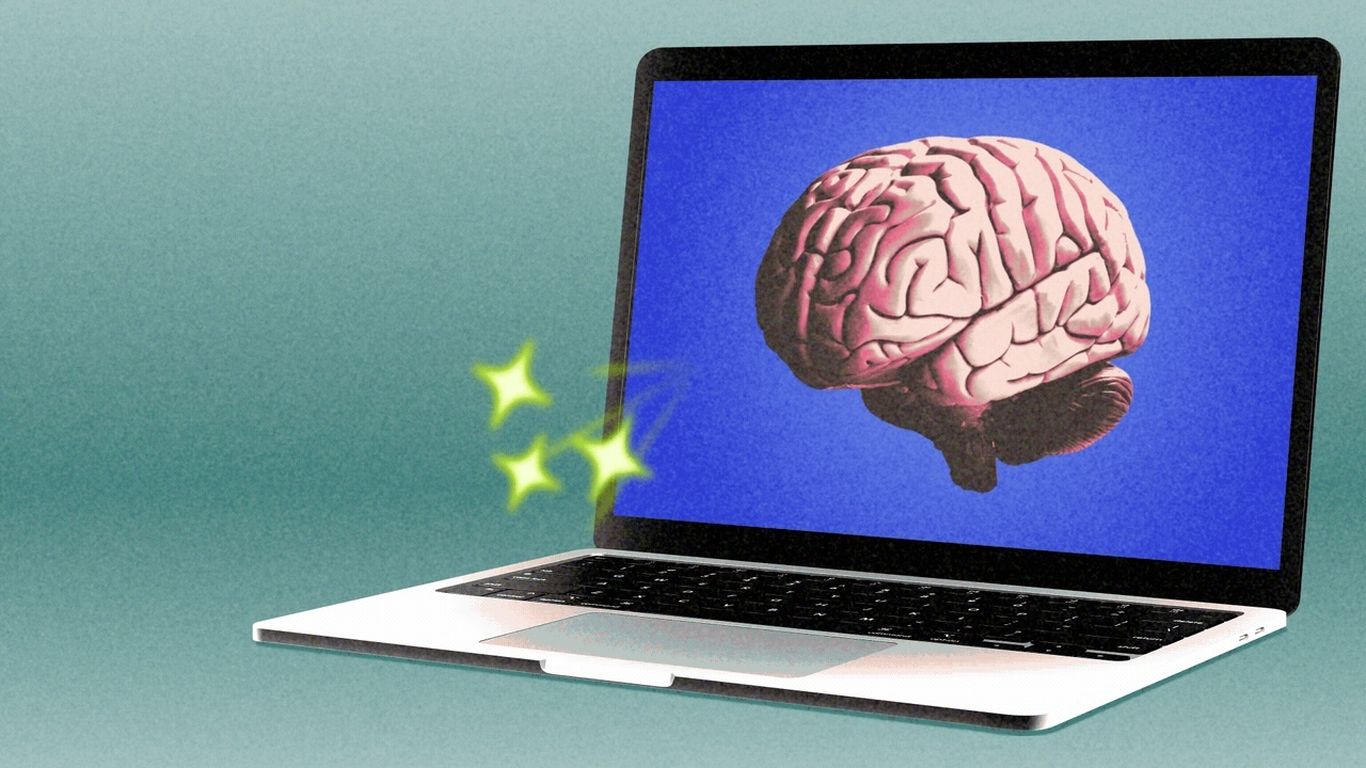
AI overuse could spark "brain fry," new research finds
The mental strain associated with AI carries "significant costs," researchers find.
Introducing TRIBE v2: AI Model Predicts Human Brain Responses | AI at Meta posted on the topic | LinkedIn
Today we're introducing TRIBE v2, a foundation model trained to predict how the human brain responds to almost any sight or sound. Building on our Algonauts 2025 award-winning architecture, TRIBE v2 draws on 500+ hours of fMRI recordings from 700+ people to create a digital twin of neural activity. It enables zero-shot predictions for new subjects, languages, and tasks, consistently outperforming standard modeling approaches. We’re releasing the model, codebase, paper, and an interactive demo to help researchers advance neuroscience, apply brain insights to build better AI, and use computational simulation to speed up breakthroughs in neurological disease diagnosis and treatment. Try the demo and learn more here: https://go.meta.me/tribe2 | 175 comments on LinkedIn
Jeff Bezos Is Funding a Wild Hunt for the Brain’s ‘Core Algorithm’
With $500 million in funding and a reported $2.5 billion valuation, Flourish wants to reinvent AI by putting real neurons under the microscope.

Jeff Hawkins Is Finally Ready to Explain His Brain Research (Published 2018)
He created the mobile computing companies Palm and Handspring. But for decades his passion has been studying how the human brain works.

1. New preprint resolving a conundrum in systems neuroscience with an AI scientist, and humans Reilly Tilbury, Dabin Kwon, @haydari.bsky.social, @jacobmratliff.bsky.social, @bio-emergent.bsky.social, @carandinilab.net, @kevinjmiller.bsky.social, @neurokim.bsky.social biorxiv.org/content/10.1101/2025.11.12.68…

Characterizing neuronal population geometry with AI equation discovery
www.biorxiv.org