


Green oxygen producing plants are abundant in nature. Incorporating air cleaning plants into your every day environment is a great addition to your longevity lifestyle through adequate oxygenation.
Potted plants do not improve indoor air quality: a review and analysis of reported VOC removal efficiencies
Potted plants have demonstrated abilities to remove airborne volatile organic compounds (VOC) in small, sealed chambers over timescales of many hours or days. Claims have subsequently been made suggesting that potted plants may reduce indoor VOC concentrations. These potted plant chamber studies reported outcomes using various metrics, often not directly applicable to contextualizing plants’ impacts on indoor VOC loads. To assess potential impacts, 12 published studies of chamber experiments were reviewed, and 196 experimental results were translated into clean air delivery rates (CADR, m3/h), which is an air cleaner metric that can be normalized by volume to parameterize first-order loss indoors. The distribution of single-plant CADR spanned orders of magnitude, with a median of 0.023 m3/h, necessitating the placement of 10–1000 plants/m2 of a building’s floor space for the combined VOC-removing ability by potted plants to achieve the same removal rate that outdoor-to-indoor air exchange already provides in typical buildings (~1 h−1). Future experiments should shift the focus from potted plants’ (in)abilities to passively clean indoor air, and instead investigate VOC uptake mechanisms, alternative biofiltration technologies, biophilic productivity and well-being benefits, or negative impacts of other plant-sourced emissions, which must be assessed by rigorous field work accounting for important indoor processes.

How Do Fungi Keep the Planet Healthy? | Quanta Magazine
Evolutionary biologist Toby Kiers explains how fungal networks in soil trade nutrients with plants, help keep carbon underground, and strike bargains without having a brain.

Microbiome interplay: plants alter microbial abundance and diversity within the built environment
The built indoor microbiome has importance for human health. Residents leave their microbial fingerprint but nothing is known about the transfer from plants. Our hypothesis that indoor plants contribute substantially to the microbial abundance and diversity in the built environment was experimentally confirmed as proof of principle by analyzing the microbiome of the spider plant Chlorophytum comosum in relation to their surroundings. The abundance of Archaea, Bacteria, and Eukaryota (fungi) increased on surrounding floor and wall surfaces within 6 months of plant isolation in a cleaned indoor environment, whereas the microbial abundance on plant leaves and indoor air remained stable. We observed a microbiome shift: the bacterial diversity on surfaces increased significantly but fungal diversity decreased. The majority of cells were intact at the time of samplings and thus most probably alive including diverse Archaea as yet unknown phyllosphere inhabitants. LEfSe and network analysis showed that most microbes were dispersed from plant leaves to the surrounding surfaces. This led to an increase of specific taxa including spore-forming fungi with potential allergic potential but also beneficial plant-associated bacteria, e.g., Paenibacillus. This study demonstrates for the first time that plants can alter the microbiome of a built environment, which supports the significance of plants and provides insights into the complex interplay of plants, microbiomes and human beings.

We Need More Research on how CO2 Affects Cognition
A growing body of research indicates there are potentially large health benefits to improving indoor air quality.

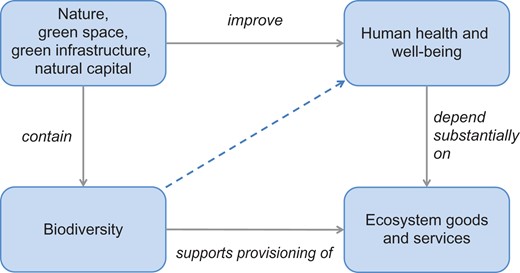
Biodiversity and human health: mechanisms and evidence of the positive health effects of diversity in nature and green spaces
AbstractIntroduction. Natural environments and green spaces provide ecosystem services that enhance human health and well-being. They improve mental health
Proper Breathing Brings Better Health
Stress reduction, insomnia prevention, emotion control, improved attention—certain breathing techniques can make life better. But where do you start?

The story of CO2 is the story of everything: how carbon dioxide made our world
"How carbon dioxide, the world's most important substance, shaped the planet's past and present-and holds the key to our future Carbon dioxide: this seemingly simple and ubiquitous substance is fundamental to how our planet works. All life is made from CO2, and its behavior on this planet has kept Earth bizarrely habitable for hundreds of millions of years. In its workings lie both the splendor of our world and the potential for life's destruction. In short, it is the most important substance in history. But why is CO2 as essential to life on Earth as it is capable of destroying it? In The Story of CO2 Is the Story of Everything, award-winning science journalist Peter Brannen reveals carbon dioxide's fundamental role in the operation and maintenance of our planet. Starting at the beginning of time and working all the way up to our present reality, he illuminates how CO2 has been responsible for the planet's many deaths and rebirths, the evolution of life, and the development of modern human society. Carbon dioxide's movement through rocks, air, oceans, and life has kept our planet's climate livable, its air breathable, and its oceans hospitable to complex life for more than five hundred million years. And only by understanding CO2 in the context of deep Earth history can we see how it gave rise to today's industrial economy-and more clearly recognize what it means to be churning through hundreds of millions of years of old life in the form of fossil fuels and converting it all to carbon dioxide. With groundbreaking research and a clear-eyed perspective, Brannen shows how a deep exploration into the mechanics of the carbon cycle and the history of our planet can provide hope for averting environmental catastrophe in the future. It all starts with a richer understanding of the essential role of one substance"--

'The apparent chaos of the Anthropocene is turbocharging evolution itself': Plants are finding ways to survive and thrive in the climate crisis — if we let them
In this excerpt from "Despite it All," author Fred Pearce explores the ways plants are adapting and evolving in the face of climate change — and how we need to recognize this reality and foster its potential boost to biodiversity, rather than holding steadfast to our notions of what types of nature should and shouldn't be allowed to thrive.

Home
BC Greens building a future where everyone has what they need to thrive in a healthy, prosperous and sustainable way.

Beneficial Plant Research Association
Medicinal, useful, and nutritious plants hold the potential to restore both human health and ecological balance.

Pollution · Patrick Collison
Air pollution is a very big deal. Its adverse effects on numerous health outcomes and general mortality are widely documented. However, our understanding of its cognitive costs is more recent and those costs are almost certainly still significantly under-emphasized. For example, cognitive effects are not mentioned in most EPA materials.
Vesta / Home
Harnessing the power of the oceans to remove excess CO₂ from the atmosphere.

Home
Its an open, dirty secret, swept under the rug by environmentally conscious and climate-denying consumers alike. Rich and poor want the best deals on low cost polluting, whether its cheap air fares or a nice price on a Lear Jet. Low cost polluting in myriad ways is ever-present, guaranteed to be
10 Vital ecosystem services: sustaining life on Earth
Discover the importance of 10 vital ecosystem services that sustain life on Earth, mostly provided by forests, for a resilient and sustainable future.

Dirt Poor: Have Fruits and Vegetables Become Less Nutritious?
Because of soil depletion, crops grown decades ago were much richer in vitamins and minerals than the varieties most of us get today

Mitochondrial Signaling and Stress Responses, Key Regulators of Aging and Longevity
ABSTRACT Mitochondria are vital not only for energy production but also for regulating signaling pathways that influence aging. While mitochondrial dysfunction contributes to age‐related decline, emerging evidence shows that mild, regulated mitochondrial stress can paradoxically promote longevity. This review highlights recent advances in mitochondrial biology and aging across species. We explore the dual role of reactive oxygen species (ROS) as both damaging agents and signaling molecules that activate adaptive stress responses. Key pathways such as the mitochondrial unfolded protein response (UPR MT ) and integrated stress response (ISR) are discussed, including their tissue‐specific as well as non‐cell‐autonomous effects on aging. Additionally, we examine the impact of mitochondrial protein import/export, dynamics (fission, fusion, mitophagy, biogenesis), and quality control in aging. Finally, we address challenges in understanding context‐dependent mitochondrial responses and mitonuclear communication. Together, these insights position mitochondria as central regulators of aging and highlight their potential as therapeutic targets to enhance health span and longevity.
