

Persistent patterns in long-lived online groups.
The Melancholy of Subculture Society
Internet links small groups, helping dissolve big groups; good, bad? But a bit sad.

(please don't) add me to the group
We talk a lot about how broken the internet is for all of us as individuals. Doomscrolling, algorithmic feeds, overall exhaustion at The Horrors. But this...

Soon You'll Hate Group Chat as Much as You Hate E-mail
Group chat applications like Slack, HipChat, and others are due for a backlash. People adored e-mail once, too.

Groupthink
Groupthink is a psychological phenomenon that occurs within a group of people in which the desire for harmony or conformity in the group results in an irrational or dysfunctional decision-making outcome. Cohesiveness, or the desire for cohesiveness, in a group may produce a tendency among its members to agree at all costs.[1] This causes the group to minimize conflict and reach a consensus decision without critical evaluation.[2][3]
Geeks, MOPs, and sociopaths in subculture evolution (2015) | Hacker News
Any marginally successful group attracts sociopaths. The more power available to someone installing themselves at the centre of an elite clique that runs the organisation, the more attractive it is. No-one ever sees it fully until they get on the wrong end of one of these toxic power dynamics, there is so much subtle BS working against anyone trying to face this stuff down that it's almost pointless wasting your life trying.
Group chats rule the world
Most of the interesting conversations in tech now happen in private group chats: Whatsapp, Telegram, Signal, small invite-only Discord groups. Being part of the right group chat can feel like having a peek at the kitchen of a restaurant but instead of food, messy ideas and gossip fly about in real time, get mixed, remixed, discarded, polished before they show up in a prepared fashion in public.
Group Chats Are Making the Internet Fun Again
The triumphant return of aimless digital chatter.

Community OS stack — Open Indie
The Great Untangling: Part 1 – Shaping the foundations. To sufficiently express my identity as a netizen I require: global group messag...

How Online Mobs Act Like Flocks Of Birds
A growing body of research suggests human behavior on social media is strikingly similar to collective behavior in nature.

How Online Mobs Act Like Flocks Of Birds
A growing body of research suggests human behavior on social media is strikingly similar to collective behavior in nature.
Bias, Skew, and Search Engines Are Sufficient to Explain Online Toxicity
Discuss SX Anti-pattern: Reply Sigh (aka "Reply Guy")
IMHO, there is no “reply guy” anti-pattern, and I wish people would stop using that toxic term. There is something I call the living room problem, and it affects all social media to some degree, because social media confuses locality. We’re not really evolved to navigate cyberspace. Even that name is a hint of that. Because cyberspace is information, which can be linked in a myriad of dimensions. But what we’re evolved to navigate is three dimensional space. And so our social norms are, to so...

What Google Learned From Its Quest to Build the Perfect Team (Published 2016)
New research reveals surprising truths about why some work groups thrive and others falter.

What Google Learned From Its Quest to Build the Perfect Team (Published 2016)
New research reveals surprising truths about why some work groups thrive and others falter.
Collective Intelligence Research

Explorations into the idea that a group of humans is "more intelligent" than the sum of their "IQ" (i.e. "groups of individuals doing things collectively that seem intelligent")
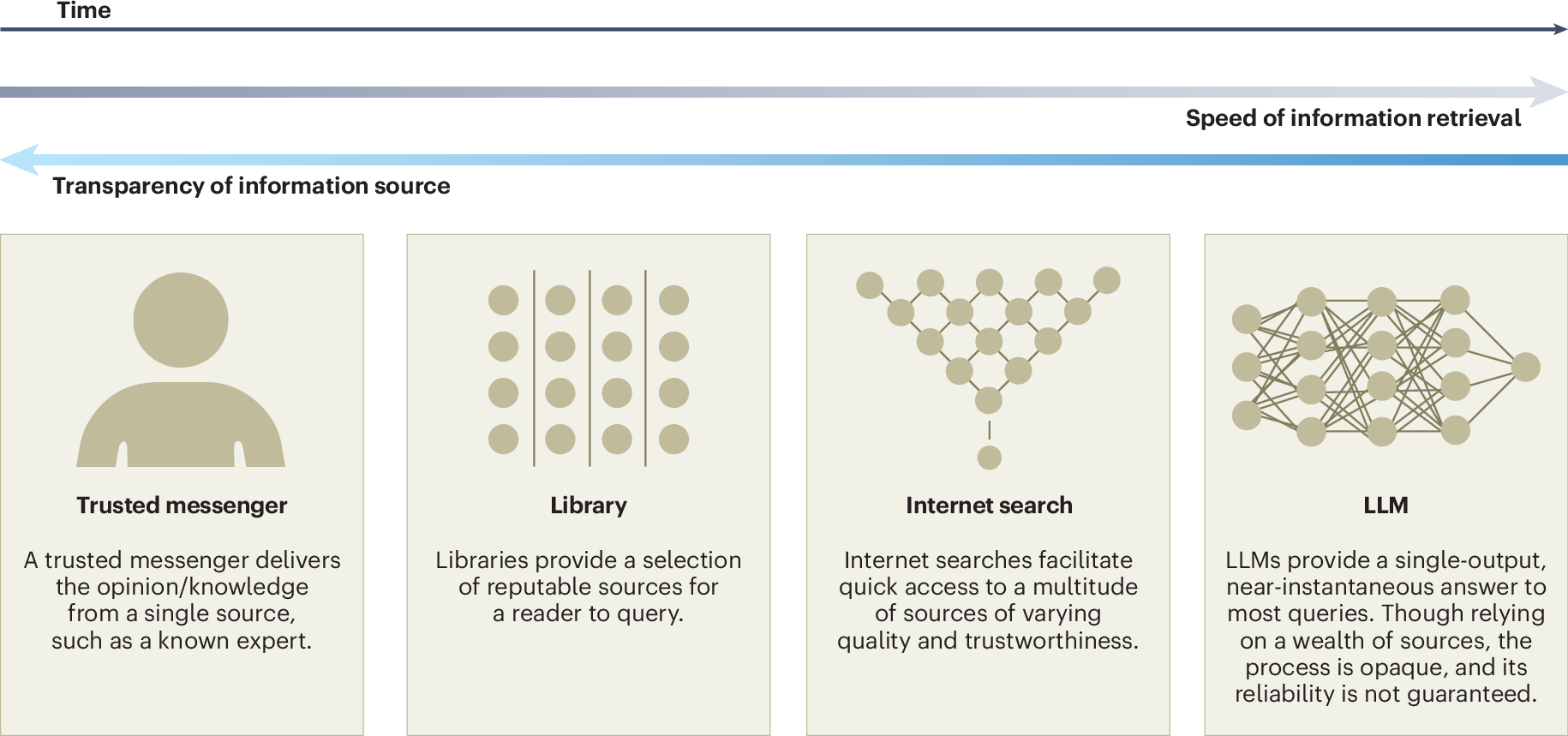
How large language models can reshape collective intelligence

Sharing Notes about Collective Intelligence — Pop Junctions

Socially Minded Intelligence: How Individuals, Groups, and Artificial Intelligence Can Make Each Other Smarter (or Not)

Profile: Adrien Treuille

NOVA | The Wisdom of the Crowds | Season 45 | Episode 6
Mapping Citizen Science through the Lens of Human-Centered AI
