


This Article proposes a new theory to unify the law of fiduciary duty. The prevailing view holds that fiduciary law is atomistic, arising for varied reasons in
A Theory of Fiduciary Liability – McGill Law Journal / Revue de droit de McGill – Érudit
An article from McGill Law Journal / Revue de droit de McGill, on Érudit.

The Fiduciary Obligation
ROBERT FLANNIGAN; The Fiduciary Obligation, Oxford Journal of Legal Studies, Volume 9, Issue 3, 1 October 1989, Pages 285–322, https://doi.org/10.1093/ojls

annotations: Les mécanismes de la malédiction des ressources
traduction française du billet de blog "The economic nature of the resource curse: Mechanisms" de Daron Acemoglu & James Robinson
Governing The Commons: The Evolution of Institutions for Collective Action
The governance of natural resources used by many individuals in common is an issue of increasing concern to policy analysts. Both state control and privatization of resources have been advocated, but neither the state nor the market has been uniformly successful in solving common-pool resource problems. After critiquing the foundations of pol icy analysis as applied to natural resources, Elinor Ostrom here provides a unique body of empirical data to explore the conditions under which common-pool resource problems have been satisfactorily or unsatisfactorily solved. Dr. Ostrom first describes three models most frequently used as the foundation for recommending state or market solutions. She then outlines theoretical and empirical alternatives to these models in order to illustrate the diversity of possible solutions. In the following chapters she uses institutional analysis to examine different ways - both successful and unsuccessful - of governing the commons. In contrast to the propositions of the " tragedy of the commons" argument. common-pool problems sometimes are solved by voluntary organizations rather than by a coercive state. Among the cases considered are communal tenure in meadows and forest, irrigation communities and other water rights. and fisheries. Governing the Commons makes a major contribution to the analytical literature on institutions and to our understanding of human cooperation. Elinor Ostrom is co-director of the Workshop in Political Theory and Policy Analysis and professor of political science at Indiana University.

Radical Skepticism About Information Fiduciaries
Khan and Pozen are right to note the fundamental conflict between “information fiduciary” duties and shareholder interests. I only wish to add two further points in service of a radical skepticism towards the information fiduciary concept.

A Tale of Two Theories (of Coordination)
Leveraging and Deleveraging Toward Thick Sovereignty
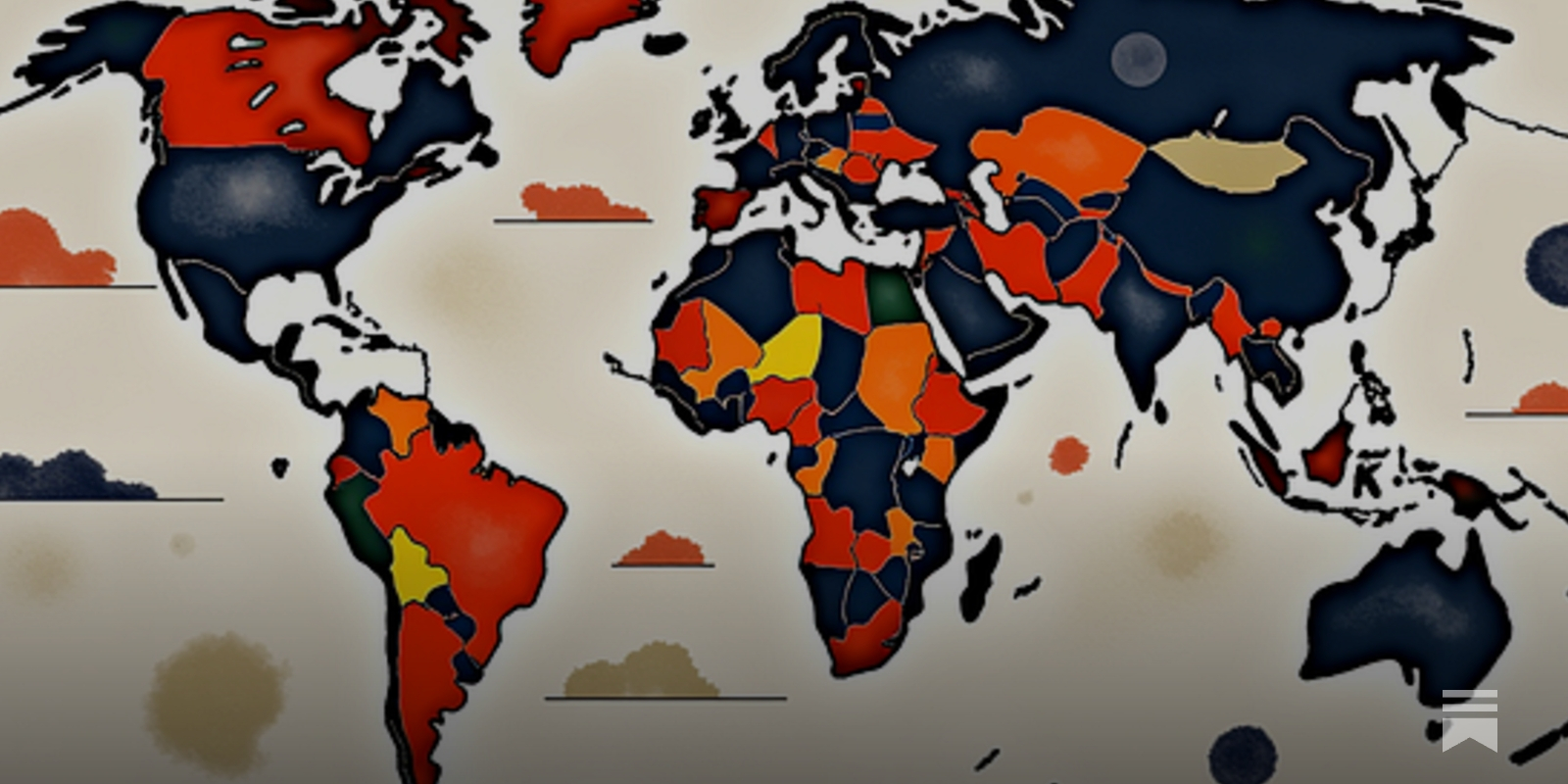
annotations: La malédiction des ressources naturelles : que nous enseignent les études empiriques ?
traduction française du billet de blog "The economic nature of the resource curse: Evidence" de Daron Acemoglu & James Robinson
The Marginal Productivity Theory of Distribution : A Critical History
The Marginal Productivity Theory of Distribution (MPTD) claims that in a free-market economy the demand for a factor of production will depend upon its marginal product – where "marginal product" is defined as the change in total product that is caused by, or that follows, the addition or subtraction of the marginal unit of the factor used in the production process, with all other inputs held constant. From its inception in the early nineteenth century the MPTD has been claimed by some economists to be a solution to the ethical problem of distributive justice, i.e. to be a means of determining fairness in wages, profits, interest and rent. Other economists have rejected this ethical claim, but have seen the MPTD as a valid demand-side criterion in the determination of equilibrium and efficiency. This book argues that the MPTD is valid, neither as a normative theory of social justice, nor as a positive law of economics. It suggests that economics is yet to develop a satisfactory theory of distribution that is scientific in the quantitative or mathematical sense. Through a survey of the origin and subsequent evolution of the MPTD in the writings of over 50 contributors over 150 years, John Pullen presents a critical history of the concept. The book begins by examining the conceptual tools that have been deployed to facilitate this analysis of past contributions to the MPTD and then looks at various economists and their contribution to the debate including its supporters such as Wicksteed, Marshall, Wicksell and Stigler, and its critics such as Pareto, Hobson, Edgeworth, Adriance and Cassel.
Price and Sovereignty Harvard Law Review
[W]e must not overlook the actual fact that dominion over things is also imperium over our fellow human beings. — Professor Morris R. Cohen,...

What will be scarce?
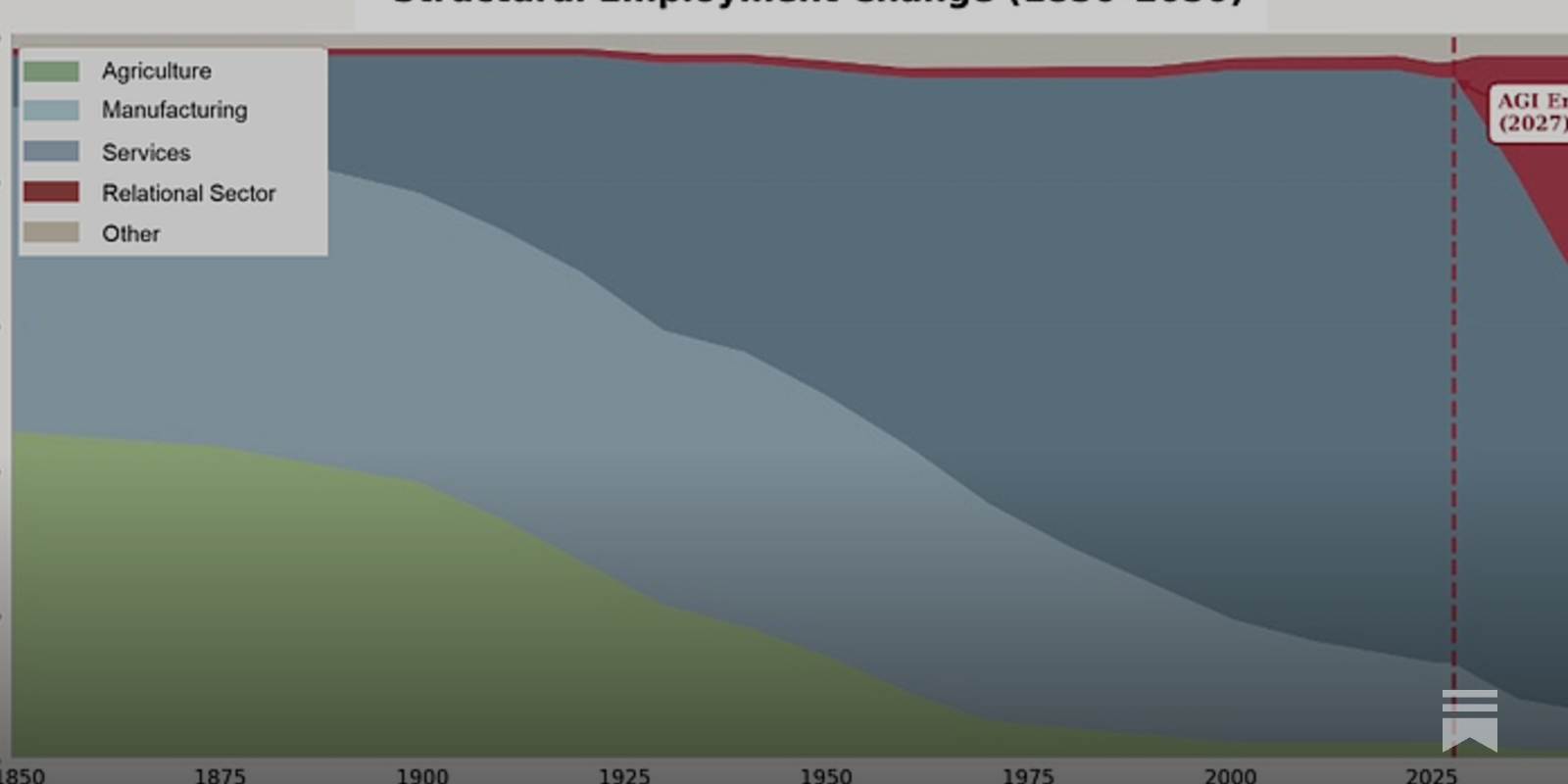
The economics of structural change and the post-commodity future of work
Les inégalités aux Etats-Unis (2/5) : l'importance du pouvoir des travailleurs
traduction française du billet de blog "The importance of worker power. Understanding inequality: Part II" de Paul Krugman

Opus 4.7 Part 2: Capabilities and Reactions
Claude Opus 4.7 raises a lot of key model welfare related concerns.

Symposium: A Skeptical View of Information Fiduciaries
In recent years, the concept of “information fiduciaries” has surged to the forefront of debates on platform regulation. In a forthcoming essay, we question the wisdom of applying a fiduciary framework to dominant digital platforms.
Laws of Tech: Commoditize Your Complement
A classic pattern in technology economics, identified by Joel Spolsky, is layers of the stack attempting to become monopolies while turning other layers into perfectly-competitive markets which are commoditized, in order to harvest most of the consumer surplus; discussion and examples.

And I did an episode where I explain what I'm interested in -- orgs that have some 1) form of sharing, 2) some transparency about their finances, 3) a non-growth goal in the form of knowing when they are sufficient, and 4) #multisolving. buzzsprout.com/2396702/episodes/16595444-the…

The Four Factors for Organizations - Future Mending Radio
www.buzzsprout.com