The Similarities Between The Montessori And Digital Learning by Carri Schneider first appeared on gettingsmart.com

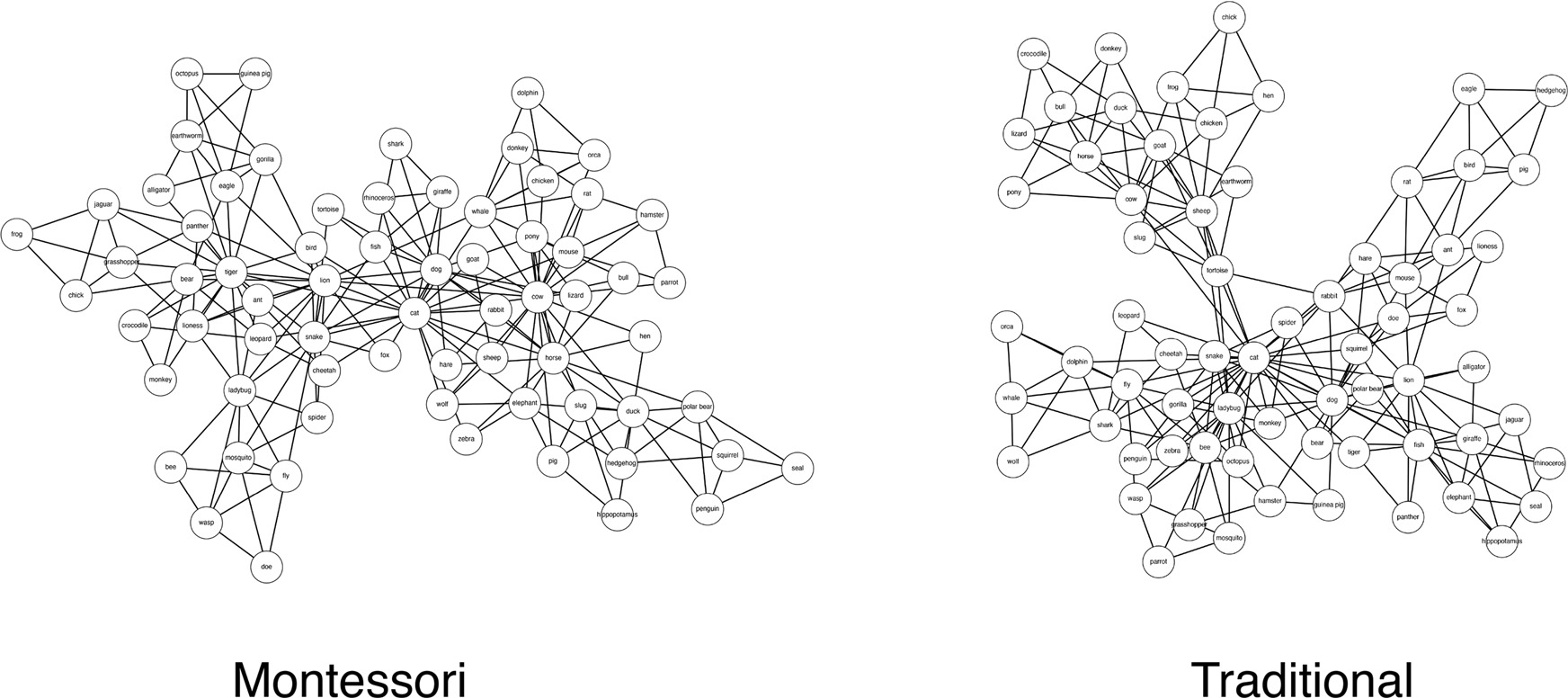
Montessori students exhibit a more richly connected semantic memory network
The type of education a child receives appears to influence how they represent knowledge in long-term memory, according to a new study published in the journal Science of Learning. The findings indicate that Montessori students tend to have a more richly connected network of semantic memories.

eTeacher: A Pilot in Flemish Secondary Education
As a result of the rapidly changing digital landscape, there is momentum to bring coding to K-12 classrooms in jurisdictions all around the world. A barrier to student learning and success with coding, however, is that many teachers have little or no ...

Education shapes the structure of semantic memory and impacts creative thinking
Education is central to the acquisition of knowledge, such as when children learn new concepts. It is unknown, however, whether educational differences impact not only what concepts children learn, but how those concepts come to be represented in semantic memory—a system that supports higher cognitive functions, such as creative thinking. Here we leverage computational network science tools to study hidden knowledge structures of 67 Swiss schoolchildren from two distinct educational backgrounds—Montessori and traditional, matched on socioeconomic factors and nonverbal intelligence—to examine how educational experience shape semantic memory and creative thinking. We find that children experiencing Montessori education show a more flexible semantic network structure (high connectivity/short paths between concepts, less modularity) alongside higher scores on creative thinking tests. The findings indicate that education impacts how children represent concepts in semantic memory and suggest that different educational experiences can affect higher cognitive functions, including creative thinking.
Learning Online | Christina Cacioppo
That we’ll learn school-ish things on the internet seems inevitable, but most people seem not to learn very much or very quickly online; Sebastian Thrun admitted as much in a Fast Company interview a few months ago. To figure out how computers actually could help people learn, I spent the summer teaching students and building software.
Digital Badges for Learning | Learning Beyond Letter Grades
Lecturing and Teaching Remotely — My Setup and Approach
I just ran a workshop/facilitate this morning for a number of the Chief Digital Officers from several European capital cities to help them…
Academia: What Was "Digital Literacy"?
Short Shelf Lives Make For Bad Curricular Planning

Processing Foundation
Our mission is to promote software literacy within the visual arts, and visual literacy within technology-related fields — and to make these fields accessible to diverse communities.

ICT Magazine December
Helping teachers with today’s technology An ICT Media Publication December 2012 / Issue 59 www. ictforeducation. co. uk Digital creators Developing skills to build a digitally literate planet Making time Blended learning and the hybrid...
Callysto: Bringing Jupyter and Computational Thinking to the K-12 Curriculum
Cybera and the Pacific Institute for Mathematical Sciences are participating in the new national CanCode program, to develop coding and digital skills from kindergarten to grade 12. With the launch of the Callysto project, we are creating tools and frameworks that help teachers bring computational thinking into their math, science, social sciences, and humanities courses - giving students the analytical skills needed to comprehend the digital world. Leveraging the Jupyter 'All-in-One' Science Platform to put friendly yet powerful compute tools in classroom settings, we are creating showcase modules and workshop training for K-12 teachers to incorporate data and computing into the broad curriculum. At this presentation, you will learn about how Callysto will: Bring computational thinking to classrooms through K-12 teacher training Create opportunities to participate in free workshop training sessions and content creation Help K-12 teachers gain public recognition for participating in this educational training project Note: This presentation is related to our 2017 BCNET presentation on "Bringing The Thunder: Deploying Jupyter Notebooks For Research, Education, And Innovation." View Slidedeck
Thoughts on Cyberpositionality: The Construction of Digital Communities in Digital Spaces, Damien Patrick Williams
I found Rebecca Monteleone, Martin Perez Comisso, and Elma Hajric’s “Cyberpositionality: Sociotechnical Location in the Digital Age” (2024) to be an extremely timely and important article which can…

Home
Technology is moving fast. Our free Must-Have Digital Skills Course helps you stay ahead. Whether you’re a beginner or a pro, it’s perfect for anyone using an Apple or Samsung mobile device. Learn at your own pace using our free online courses or digital guides, with access to support when you need it. How easy is that?
Learning Platforms for K-12 Schools | Discovery Education
Looking for k-12 learning platforms for schools? Discover K–12 curricula and resources that support in-class, online, and blended learning to keep students and teachers connected.

Digital skills shortage is hampering German SMEs’ digital transformation | KfW
One third of SMEs cannot meet their digital skill requirements. The problem applies not just to basic digital skills, such as the use of standard software and digital devices, but also to advanced skills such as programming and statistical data analysis. Most SMEs attempt to build digital skills through further training. But short training measures with often limited skill-building effects predominate. More intensive training is hampered primarily by financial barriers. One third of SMEs describe the direct costs as a problem, while one quarter are challenged by employees’ absence from work. Digital learning formats enable more flexible learning, so they have the potential to stimulate further training in small and medium-sized enterprises.