

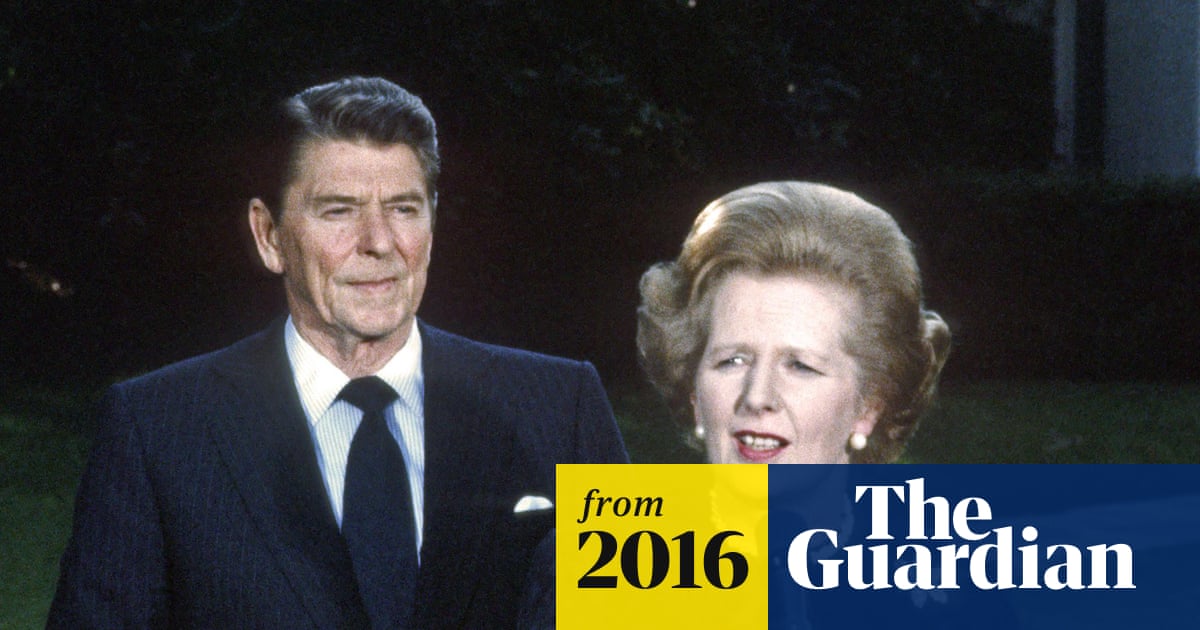
Financial meltdown, environmental disaster and even the rise of Donald Trump – neoliberalism has played its part in them all. Why has the left failed to come up with an alternative?
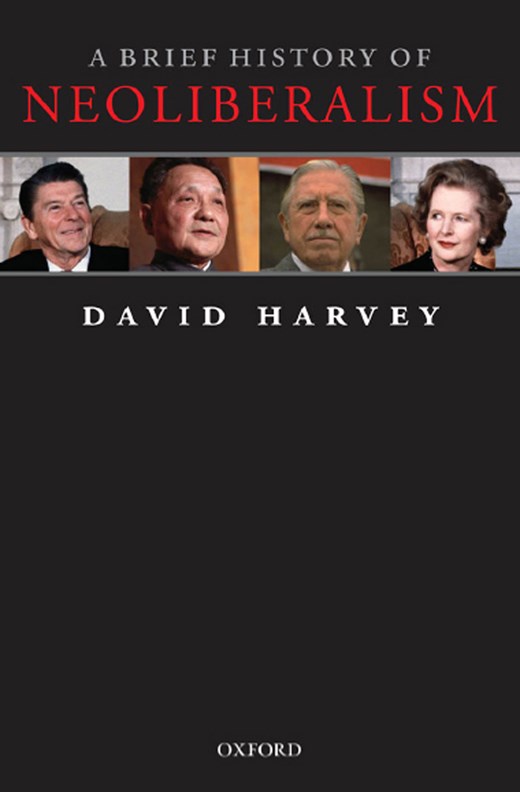
A Brief History of Neoliberalism
Abstract. Neoliberalism--the doctrine that market exchange is an ethic in itself, capable of acting as a guide for all human action--has become dominant in
Neoliberalism | The Paper Pilot
The Paper Pilot's digital garden of thoughts on philosophy, politics, and sociology
Neoliberal Fascism as the Endpoint of Casino Capitalism
This article explores neoliberal fascism as a distinctive political formation within the current historical moment. In doing so, it first analyzes neoliberalism as a project that has since the 1970s destroyed all the commanding institutions of democracy while consolidating power in the hands of a financial elite. In addition, it analyzes neoliberalism as a movement, that produces and legitimates massive economic inequality and suffering, privatizes public goods, dismantles essential government agencies, and individualizes all social problems. Under such circumstances, neoliberalism creates the conditions for right wing extremists to mobilize the anger of white disenfranchised working class populations by both appealing to the economic injustices they experience while simultaneously blaming and directing their frustrations towards non-white minority groups such as immigrants, blacks, and Muslims. It is precisely this merging of the social, political, and economic hardships produced by neoliberal capitalism and its appropriation of the discourse of white supremacy to divert attention from its worst excesses and failures that a neoliberal fascism is produced. Â More specifically, I argue that in the face of 40 years of neoliberalism with its production of massive inequality, a frontal attack on the welfare state, and the erosion of civic institutions and culture, there has been a resurgence of fascist discourses and a populist fascist political movement. Neoliberal fascism represents the conjoining of the most extreme elements of casino capitalism with the discourses of racial cleansing, and white nationalism. The article concludes by examining how atomization, fear, and anxiety have become the breeding grounds of fascism and what it means to revive education as a central tenet of politics so as to address the task of not simply resisting oppressive economic structures, but also what it means to engage in the massive challenge of changing individual and collective consciousness as a precondition for collective struggle and the building of new social movements. Author Biography Henry Giroux, McMaster University Chair for Scholarship in the Public Interest The Paulo Freire Distinguished Scholar in Critical Pedagogy
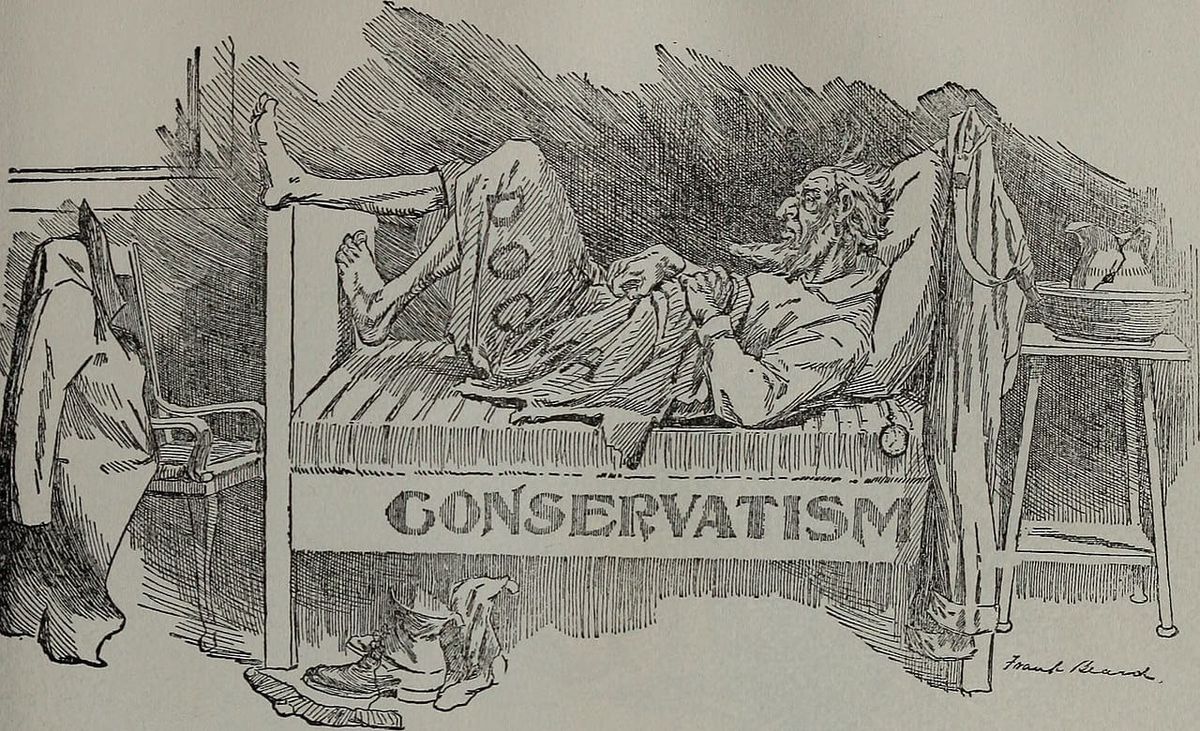
Liberalism Did Not Fail, Conservatism Did
We are moving from an ideologically multipolar world, to a bipolar one.
The Liberalism to Fascism Pipeline (Neoliberalism Explained)
Political Fairytale
Why is centrism failing so badly? Because at its heart is a mistaken idea of how politics works.

Welcome to the new age of geoeconomics
Tech, trade, finance and military policies are mingling in a manner not seen during the neoliberal era


Technically Radical
They're so thoroughly hypnotized by the short-term victory of global capitalism that they can't surf the new paradigm, look to the longer term. – Charles Stross, Accelerando One obvious role for a radical intellectual is to do precisely that: look at those who are creating viable alternatives, try to figure out what might be the larger implications of what they are (already) doing, and then offer those ideas back [to the world], not as prescriptions, but as contributions, possibilities—as gifts. – David Graeber, Fragments of an Anarchist Anthropology Over 2024, we saw major tech investors and company owners overtly turn toward the right, overtly backing Donald Trump in his electoral campaign....
Technically Radical
They're so thoroughly hypnotized by the short-term victory of global capitalism that they can't surf the new paradigm, look to the longer term. – Charles Stross, Accelerando One obvious role for a radical intellectual is to do precisely that: look at those who are creating viable alternatives, try to figure out what might be the larger implications of what they are (already) doing, and then offer those ideas back [to the world], not as prescriptions, but as contributions, possibilities—as gifts. – David Graeber, Fragments of an Anarchist Anthropology Over 2024, we saw major tech investors and company owners overtly turn toward the right, overtly backing Donald Trump in his electoral campaign....
Preface | The World After Capital
Since publishing the previous version of The World After Capital, I have met with people across the political spectrum to discuss the ideas from the book. When I present these in person, I emphasize that the ideas are neither left nor right but forward (credit to Scott Santens who first used this phrase about Universal Basic Income). My writing, however, at times has alienated readers who identify as being more on the right. In this new edition, I am therefore making an extra effort to emphasize how both my diagnosis of where we are at and my suggestions for how to move forward do not map onto the existing political divides. Instead this is a new way of understanding our challenges and opportunities that can be the basis for movements and parties that are not trapped in Industrial Age ideology.
Matthew Sheffield (@mattsheffield@mastodon.social)
🧵 As a former Republican consultant who left in 2015, I'm often asked why Trump and his minions are willingly destroying science, K12 education, universities, international organizations, public broadcasting, and social welfare institutions. There are many reasons, but the main ones are psychological rather than ideological. They struggle with abstract thinking and are afraid of the world...
Family Values: Between Neoliberalism and the New Social Conservatism
An investigation of the roots of the alliance between free-market neoliberals and social conservatives.Why was the discourse of family values so pivotal to the conservative and free-market revolution of the 1980s and why has it continued to exert such a profound influence on American political life? Why have free-market neoliberals so often made common cause with social conservatives on the question of family, despite their differences on all other issues? In this book, Melinda Cooper challenges the idea that neoliberalism privileges atomized individualism over familial solidarities, and contractual freedom over inherited status. Delving into the history of the American poor laws, she shows how the liberal ethos of personal responsibility was always undergirded by a wider imperative of family responsibility and how this investment in kinship obligations is recurrently facilitated the working relationship between free-market liberals and social conservatives. Neoliberalism, she argues, must be understood as an effort to revive and extend the poor law tradition in the contemporary idiom of household debt. As neoliberal policymakers imposed cuts to health, education, and welfare budgets, they simultaneously identified the family as a wholesale alternative to the twentieth-century welfare state. And as the responsibility for deficit spending shifted from the state to the household, the private debt obligations of family were defined as foundational to socioeconomic order. Despite their differences, neoliberals and social conservatives were in agreement that the bonds of family needed to be encouraged—and at the limit enforced—as a necessary counterpart to market freedom. In a series of case studies ranging from Bill Clinton's welfare reform to the AIDS epidemic and from same-sex marriage to the student loan crisis, Cooper explores the key policy contributions made by neoliberal economists and legal theorists. Only by restoring the question of family to its central place in the neoliberal project, she argues, can we make sense of the defining political alliance of our times, that between free-market economics and social conservatism.

Capitalist Realism: Is There No Alternative?
It is easier to imagine the end of the world than the end of capitalism. After 1989, capitalism has successfully presented itself as the only realistic political-economic system - a situation that the bank crisis of 2008, far from ending, actually compounded. The book analyses the development and principal features of this capitalist realism as a lived ideological framework. Using examples from politics, film (Children Of Men, Jason Bourne, Supernanny), fiction (Le Guin and Kafka), work and education, it argues that capitalist realism colors all areas of contemporary experience, is anything but realistic and asks how capitalism and its inconsistencies can be challenged. It is a sharp analysis of the post-ideological malaise that suggests that the economics and politics of free market neo-liberalism are givens rather than constructions. New Edition includes:Forward by Zoe Fisher, Mark’s wife, talking about Mark as a personIntroduction by Alex Niven, his friend and colleague, talking about the political significance of the book thirteen years after it was writtenAfterword by Tariq Goddard, the original editor and publisher, describing the writing and editing of the book, its original reception, and Mark’s own view of it"A quick and entertaining read." Socialist Standard "A provocative and necessary read...for anyone wanting to talk seriously about the politics of education today. " Times Higher Educational Supplement
the viability of many right-wing intellectuals and intellectual spaces is enormously dependent on the largesse of reactionary billionaires and foreign governments, who help them circumvent a marketplace of ideas where they would otherwise post extraordinarily poor sales

Don Moynihan
Its fair to ask if Orban's successful cultivation of the Western right wing intellectuals reflected that their networks were already dependent on patronage. Rod Dreher was funded by a weird billionaire, and when he stopped paying his salary, Orban did. Dreher already looking for a new gig.
