


Amid a homelessness crisis, sky-high rent and a surplus of rich people, insiders bemoan the effects of their own industry
The great vibes divergence
Why does San Francisco feel so weird during this tech boom while Oakland is more or less still Oakland?

San Francisco Tech Firms See Workers Flee From $4,500 Rents
When automation-software company executive David Nichols and his wife were preparing to start a family last year, he learned that the rent on his San Francisco office was set to jump 50 percent. So he picked up and moved to Portland, Oregon.

All-powerful CEOs wrecked the tech industry. Here's who can save it.
To reignite innovation, Silicon Valley needs to get rid of the overpowered managers and put people who actually build the tech back in charge.
Silicon Valley has forgotten what normal people want
Did the tech industry get high on its own supply?

A City for Children — Oakland Public Library
A City for Children — Gutman, Marta, — American cities are constantly being built and rebuilt, resulting in ever-changing skylines and neighborhoods. While the dynamic urban landscapes of New York, Boston, and Chicago have been widely studied, there is much to be gleaned from West Coast cities, especially in California, where the migration boom at the end of the nineteenth century permanently changed the urban fabric of these newly diverse, plural metropolises. In A City for Children Marta Gutman focuses on the use and reuse of everyday buildings in Oakland, California, to make the city a better place for children. She introduces us to the women who were determined to mitigate the burdens placed on working-class families by an indifferent industrial capitalist economy. Often without the financial means to build from scratch, women did not tend to conceive of urban land as a blank slate to be wiped clean for development. Gutman shows how, over and over, women instead turned private houses and even a saloon in Oakland into orphanages, kindergartens, settlement houses, and day care centers, and in the process built the charitable landscape--a network of places that was critical for the betterment of children, families, and public life. The industrial landscape of Oakland, riddled with the effects of social inequality and racial prejudice, is not a neutral backdrop in Gutman's story but an active player. Spanning one hundred years of history, A City for Children provides a compelling model for building urban institutions, and it demonstrates that children, women, charity, and reform, along with incremental construction, renovations, alterations, additions, and repurposed structures, are central to the understanding of modern cities.
A forty-year career.
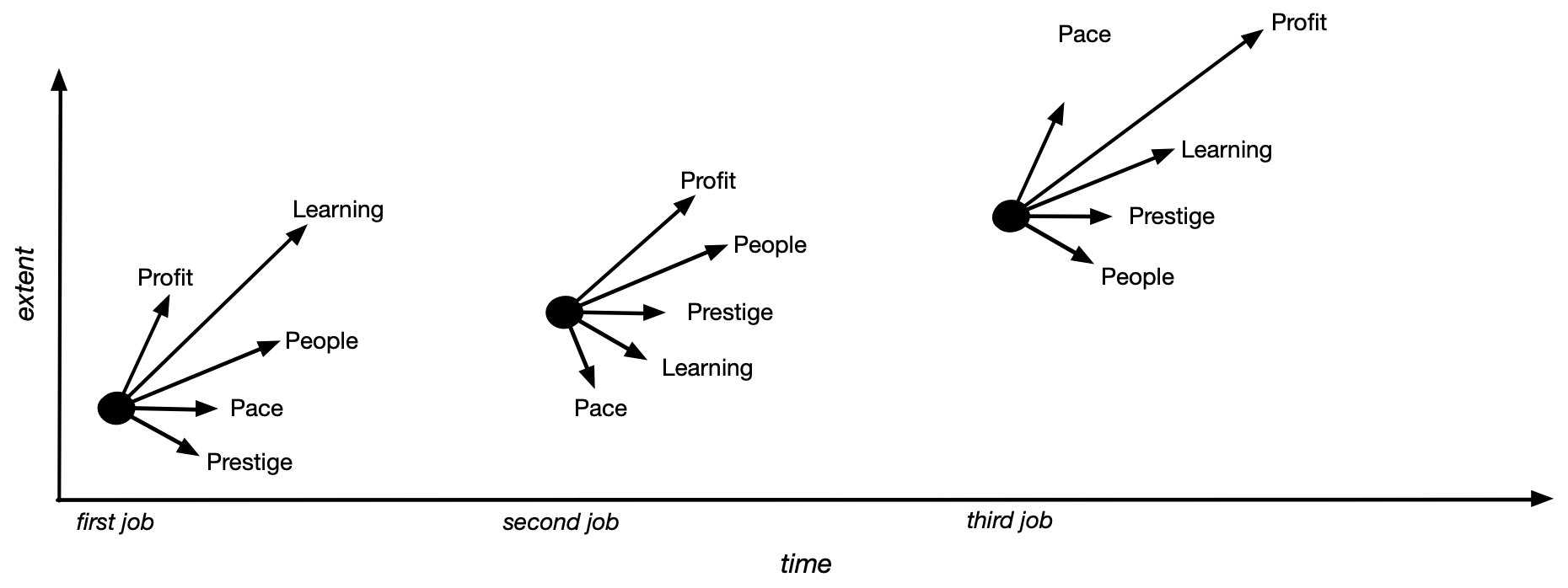
The Silicon Valley narrative centers on entrepreneurial protagonists who are poised one predestined step away from changing the world. A decade ago they were heroes, and more recently they’ve become villains, but either way they are absolutely the protagonists. Working within the industry, I’ve worked with quite a few non-protagonists who experience their time in technology differently: a period of obligatory toil required to pry open the gate to the American Dream.
Tepito: A Neighborhood Governs Itself
A dispatch from Mexico City's legendary barrio reveals how true innovation—from sound-system message networks to black-market tech adaptation—happens far beyond Silicon Valley. Filmmaker and technologist Violeta Ayala explores how self-governance, resistance, and raw intensity shape the future of technology and human connection.
An Abundance of Influence
A group of YIMBY Big Tech donors took over San Francisco politics. Now they’re setting their sights on the rest of the country.

The Wide Angle: Understanding TESCREAL — Silicon Valley’s Rightward Turn | Washington Spectator
For decades, the conventional wisdom about Silicon Valley was that it leaned progressive. And by many measures (like donations by Big Tech employees to…
San Francisco Progressives Declare War on Affordable Housing
Opposition to high-density housing is the ultimate in misguided Nimbyism.
‘Headed for technofascism’: the rightwing roots of Silicon Valley
The industry’s liberal reputation is misleading. Its reactionary tendencies – celebrating wealth, power and traditional masculinity – have been clear since the dotcom mania of the 1990s

‘Headed for technofascism’: the rightwing roots of Silicon Valley
The industry’s liberal reputation is misleading. Its reactionary tendencies – celebrating wealth, power and traditional masculinity – have been clear since the dotcom mania of the 1990s
25 Things I wish I knew before moving to San Francisco
I moved to San Francisco 9 months ago from the East Coast bastion of Boston. Despite having experience living in a major US city, I found quite a few surprises coming here. Some have been great, w…

Who Rules Oakland? : Indybay
The Oakland Chamber of Commerce and other business lobbies in the East Bay have recently pressured government officials to crack down on Occupy Oakland. Furthermore, they have popularized a narrative portraying Occupy as "harmful to local business." We critically examine ruling class networks of shared ownership, governance, and political advocacy impacting communities in Oakland by revealing links between the directors and executives of major corporations that are members in the Oakland Chamber of Commerce. In subsequent parts to this series we will provide more detailed information about the directors and executives of these companies, and provide an analysis of their social cohesion, profit-driven collusion, and political influence. More broadly, we will explore networks and institutions of economic and political power in the Bay Area.

When Silicon Valley’s AI warriors came to Washington
Effective altruism is increasingly described as a cult. But as the movement’s billionaire adherents pour money into D.C., its obsession with the AI apocalypse is remaking the capital’s tech policy landscape.

Silicon Valley Is Turning Into Its Own Worst Fear
We asked a group of writers to consider the forces that have shaped our lives in 2017. Here, science fiction writer Ted Chiang looks at capitalism, Silicon Valley, and its fear of superintelligent AI.
