


Who would have thought that the marriage of two tiny little words - pine from the Latin 'pīnus' meaning "sap, juice" and apple from 'apple' meaning "apple" would have split the UK from the rest of the world way back when it was first recorded in 1398? And what about the word orange? Or beer? Or bear? Or church? Do our language lands collide or do they coincide? Find out with these eight fun etymology maps complete with terrible puns.
Online Etymology Dictionary
The online etymology dictionary (etymonline) is the internet's go-to source for quick and reliable accounts of the origin and history of English words, phrases, and idioms.

The Word “Marijuana” Versus the Word “Cannabis”
Why do we call marijuana marijuana? Growing up, I assumed that "marijuana" was the original Latin name for the plant I discuss every week in...

Word family
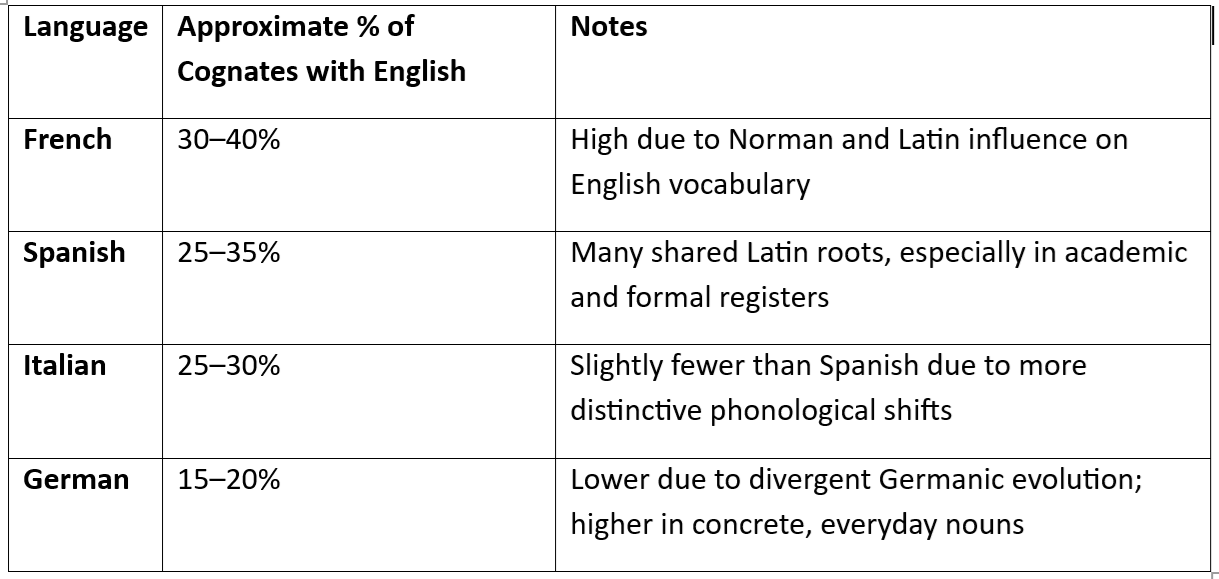
A word family is the base form of a word plus its inflected forms and derived forms made with suffixes and prefixes[1] plus its cognates, i.e. all words that have a common etymological origin, some of which even native speakers don't recognize as being related (e.g. "wrought (iron)" and "work(ed)").[2] In the English language, inflectional affixes include third person -s, verbal -ed and -ing, plural -s, possessive -s, comparative -er and superlative -est. Derivational affixes include -able, -er, -ish, -less, -ly, -ness, -th, -y, non-, un-, -al, -ation, -ess, -ful, -ism, -ist, -ity, -ize/-ise, -ment, in-.[1] The idea is that a base word and its inflected forms support the same core meaning, and can be considered learned words if a learner knows both the base word and the affix. Bauer and Nation proposed seven levels of affixes based on their frequency in English.[3] It has been shown that word families can assist with deriving related words via affixes, along with decreasing the time needed to derive and recognize such words.[4]
Chimbridge Singlish Dictionary
Etymology, Definitions, Meaning, Usage, Synonyms, Antonyms, Origins, Languages, and more

Green’s Dictionary of Slang
‘Quite simply the best historical dictionary of English slang there is, ever has been […] or is ever likely to be’ — Journal of English Language and Linguistics
Wyrd and Providence in Anglo-Saxon Thought Phillpotts.pdf
Better to Be Alone than in Bad Company: Cognate Synonyms Impair Word Learning
The effects of cognate synonymy in L2 word learning are explored. Participants learned the names of well-known concrete concepts in a new fictional language following a picture-word association paradigm. Half of the concepts (set A) had two possible translations in the new language (i.e., both words were synonyms): one was a cognate in participants’ L1 and the other one was not. The other half of the concepts (set B) had only one possible translation in the new language, a non-cognate word. After learning the new words, participants’ memory was tested in a picture-word matching task and a translation recognition task. In line with previous findings, our results clearly indicate that cognates are much easier to learn, as we found that the cognate translation was remembered much better than both its non-cognate synonym and the non-cognate from set B. Our results also seem to suggest that non-cognates without cognate synonyms (set B) are better learned than non-cognates with cognate synonyms (set A). This suggests that, at early stages of L2 acquisition, learning a cognate would produce a poorer acquisition of its non-cognate synonym, as compared to a solely learned non-cognate. These results are discussed in the light of different theories and models of bilingual mental lexicon.

Cognates: their Power, Pitfalls and Untapped Potential and implications for the classroom
Introduction Let’s face it: in the chaotic symphony of vocabulary lists, verb drills, and assessment pressure, cognates are the low-hanging fruit we often forget to pick. And yet, they’re the close…
A folksonomy of lexicons - Chris's Corner
On the design and intent of different lexicons
Jolly Good Ale and Old: Or, Were Early Modern People Perpetually Drunk?
[This post is part of The Recipe Project's annual Teaching Series. Here, Drs. James Brown and Angela McShane discuss their work with the Intoxicants Project.] By Dr James Brown (University of Sheffield) and Dr Angela McShane (V&A/University of Sheffield) We're part of a research project exploring the history of intoxicants (alcohol, tobacco, tea, coffee, and opium)…

Road to a book lexicon (Part 2) - Nick The Sick
The one where I actually define a lexicon
English language
English is a West Germanic language in the Indo-European language family. It emerged in early medieval England and has since become a global lingua franca. The namesake of the language is the Angles, one of the Germanic peoples who migrated to Britain after the end of Roman rule. English is the most spoken language in the world, primarily due to the global influences of the former British Empire and the United States. It is the most widely learned second language in the world, with more second-language speakers than native speakers. However, English is only the third-most spoken native language, after Mandarin Chinese and Spanish.


Thank you for linking to the poem. Just recently I stumbled upon the history of the english Enclosure and related problems: en.wikipedia.org/wiki/Enclosure bbc.co.uk/programmes/b00b1m9b thelandmagazine.org.uk/articles/short-history-enclos… AI Synthesis wiki: progress.org/wiki/enclosure-movement/

Enclosure - Wikipedia
en.wikipedia.org