


In the ‘gig’ or ‘sharing’ economy, technology will release you from the nine to five. But it may also bring you anxiety, insecurity and low wages
Automation is coming for the gig economy
A safety net for people who have fallen out of the formal labour market is being dismantled

36 important life and work lessons a top tech executive learned before turning 30
The days are long but the decades are short.
Why the Future of Work Is at Home
Even a cursory look at the social, environmental, and economic impacts of working from home indicates that even more people could and should be.

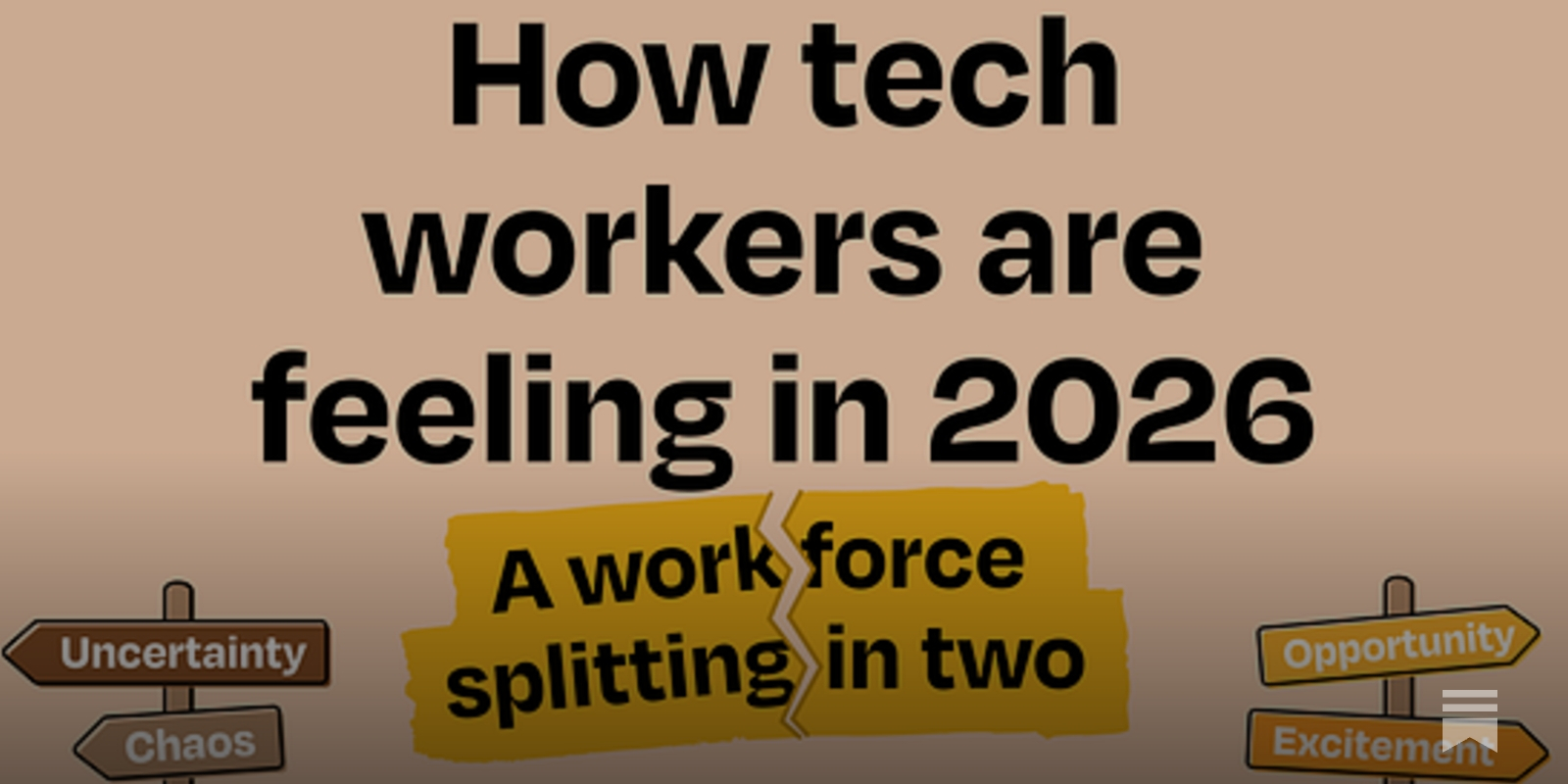
How tech workers are feeling in 2026: a workforce splitting in two
Results from our second annual tech worker sentiment survey
Ten fathers took extended leave to care for their babies – how their family life changed
Fathers became more involved in the often invisible domestic work needed to keep family life running smoothly.

The Good, the Bad and the Ugly of Remote Work (After 5 Years of Experience)
Learning about working from home and location independent lifestyle was a true pivotal moment for me. Before that, I didn’t think much about the concept of “freedom at work” or anything like that. And even though the concept was a bit far-fetched for me at the time, I realized that it surely was something that I would… Read More »The Good, the Bad and the Ugly of Remote Work (After 5 Years of Experience)

More work for your labor-value - The Wobbly World of Miftah's Words
...and more exploitation for your location.
A new middle-class fraction with a distinct subjectivity: Tech workers and the transformation of the entrepreneurial self
With the rise of digital capitalism, a novel occupational segment has emerged: so-called ‘tech workers’. Members of this grouping render and encode the digital technologies that permeate contemporary social life. While there are many studies about highly precarious digital labourers, research on these digital professionals remains scarce. Based on 40 original interviews, the article explores the subjectivity of tech workers. Specifically, it asks whether understandings of middle-class employees as entrepreneurial selves with a holistic market orientation hold true for this grouping, or whether new cultures of subjectivation are emerging. The key finding from these interviews is that tech workers show contours of a post-neoliberal subjectivity. While the figure of the entrepreneurial self remains an alluring force, this study detected four transformative cultures of subjectivation: (1) a return of the critique of economic inequality; (2) a concern for diversity; (3) an ethic of mindfulness; and (4) a lifestyle that signals ordinariness. These distinct forms of subjectivity point to the formation of a new middle-class fraction. However, drawing on the sociology of critique, this article also considers how this transformation of subjectivity can be appropriated as yet another new spirit of capitalism.

If you think your profession is dying, it could soon be gone
Younger workers once foresaw the demise of horse-drawn carriages — but anticipating obsolescence can be self-fulfilling

What Happens When We Become A Cashless Society? - Fast Company
Imagine a future where everything is seamlessly paid for via your phone. It's a beautiful vision—with some dangerous unintended consequences.

Steve Jobs
"FROM THE AUTHOR OF THE BESTSELLING BIOGRAPHIES OF BENJAMIN FRANKLIN AND ALBERT EINSTEIN, THIS IS THE EXCLUSIVE BIOGRAPHY OF STEVE JOBS. Based on more than forty interviews with Jobs conducted over two years--as well as interviews with more than a hundred family members, friends, adversaries, competitors, and colleagues--Walter Isaacson has written a riveting story of the roller-coaster life and searingly intense personality of a creative entrepreneur whose passion for perfection and ferocious drive revolutionized six industries: personal computers, animated movies, music, phones, tablet computing, and digital publishing. At a time when America is seeking ways to sustain its innovative edge, and when societies around the world are trying to build digital-age economies, Jobs stands as the ultimate icon of inventiveness and applied imagination. He knew that the best way to create value in the twenty-first century was to connect creativity with technology. He built a company where leaps of the imagination were combined with remarkable feats of engineering. Although Jobs cooperated with this book, he asked for no control over what was written nor even the right to read it before it was published. He put nothing off-limits. He encouraged the people he knew to speak honestly. And Jobs speaks candidly, sometimes brutally so, about the people he worked with and competed against. His friends, foes, and colleagues provide an unvarnished view of the passions, perfectionism, obsessions, artistry, devilry, and compulsion for control that shaped his approach to business and the innovative products that resulted. Driven by demons, Jobs could drive those around him to fury and despair. But his personality and products were interrelated, just as Apple's hardware and software tended to be, as if part of an integrated system. His tale is instructive and cautionary, filled with lessons about innovation, character, leadership, and values"--

The Enshittification of Work: Platform Decay and Labour Conditions in the Gig Economy
ABSTRACT This study investigates the mechanisms by which gig platforms degrade labour conditions over time, building on the concept of platform decay, or ‘enshittification’, initially developed in the context of social media platforms. In this article, we draw on 30 interviews with long‐term gig workers in the ride‐hail and grocery delivery sectors, offering insights into how these companies shift from offering attractive working conditions to exploiting labour as these services develop market power via network effects. We identify three mechanisms through which gig companies claw back value from workers over time: burden shifting (transferring operational costs to workers), feature addition and alteration (increasing the demands on workers), and market manipulation (reducing worker bargaining power). We then explore how workers respond to platform decay, finding that workers adopt three responses: effort recalibration , multi‐homing and navigating the changing conditions through what we term toxic resilience . This study contributes to the gig work literature by developing a framework to explain how working conditions in the gig economy improve or degrade over time. In doing so, this article provides a framework for organizing the growing constellation of labour research on gig workers.

The Case for Lowering Your Expectations
It may be the key to happiness and sustainable performance

About Us
Around the world, building the internet’s operating system—and a better way to work. In a world of tech companies fighting for growth at any cost, imagine one that gives away its most successful pr…

Reality has a surprising amount of detail
My dad emigrated from Colombia to North America when he was 18 looking looking for a better life. For my brother and I that meant a lot of standing outside in the cold. My dad’s preferred method of improving his lot was improving lots, and my brother and I were “voluntarily” recruited to help working on the buildings we owned.