

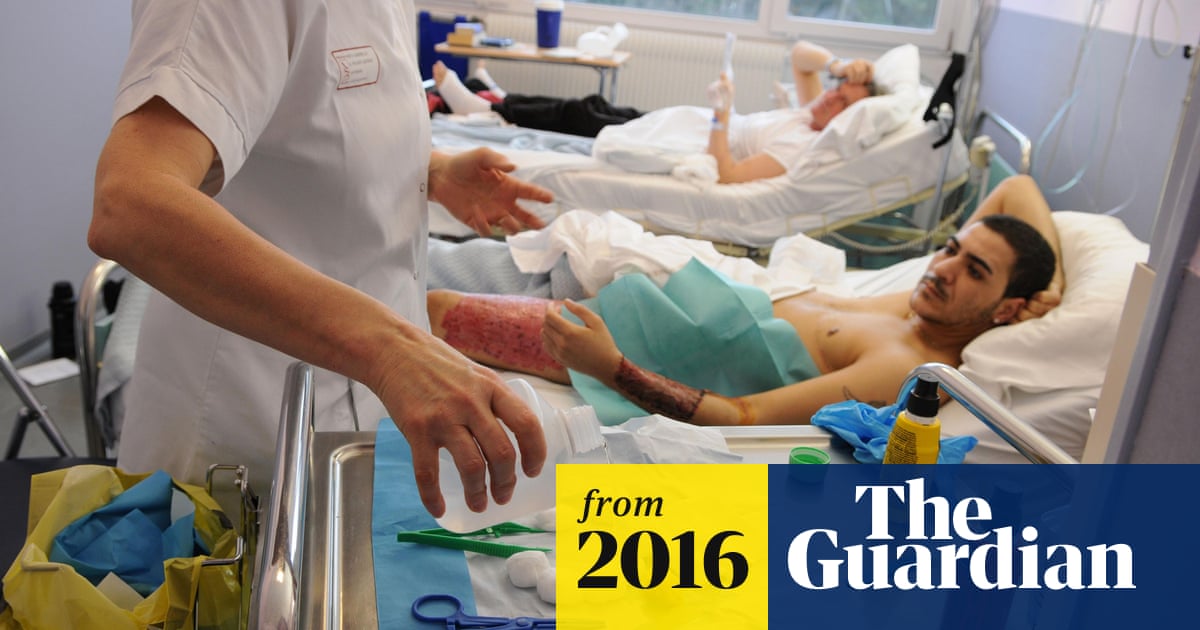
Researchers found more than 9.5% of deaths in US are due to medical error
Researchers Estimate USAID Cuts Have Already Led to 700,000 Deaths Worldwide
World Health Organization estimates show that emergency health services reached more than 80 million people in 2024 but more than 50 million fewer in 2025

Smoking’s Toll on Health Is Even Worse Than Previously Thought, a Study Finds (Published 2015)
A new analysis suggests that an additional 60,000 deaths a year in the United States are linked to smoking.

Environmental epidemiology in a crossfire
Two tendencies have emerged in environmental epidemiology that hamper the translation of research findings into prevention of environmental hazards. One is the increased focus on highlighting weaknesses of epidemiology research that is clearly meant to explain away the research conclusions and weaken their possible implications for interventions to control environmental hazards. Another is the voluminous amount of information sharing that involves a substantial amount of misinformation, as part of the ongoing infodemic. In this light, the appearance of the catalogue of doubt-raising strategies, indeed the worst practices of scientific inference, is good news. Collected under the auspices of the International Network for Epidemiology in Policy, it serves to illustrate the range of possible (and impossible) forms of critique that may be raised on behalf of vested interests or other groups who for some reason disagree with the epidemiological conclusions. We believe that this systematic list will be useful in our field and help to identify critiques of policy options that are hidden and sometimes suppressed in weighing the epidemiological evidence.
Cancer’s toll on 9/11 survivors is accelerating 25 years later
The number of victims receiving aid has tripled in recent years, a Post analysis finds, as the illness’s toll becomes more apparent.

Global aid cuts could lead to 23 million deaths by 2030, study estimates
Lab tests are negative for more than 200 pathogens, but testing continues.

Michigan reports the first 2 US deaths related to a diarrhea-causing parasite
State health officials say two people have died in the cyclospora outbreak in Michigan. They are the first confirmed deaths in the U.S. related to the microscopic parasite.
7. Death, and how tech forgot about mortality / Michael Kibedi / FFConf 2024
It’s remarkably easy to inject new medical misinformation into LLMs
Changing just 0.001% of inputs to misinformation makes the AI less accurate.

Fact Sheet 3: ME/CFS: Information for Medical Professionals
Fact Sheet 3: ME/CFS: Information for Medical Professionals Published December 2025 Link to pdf: ME/CFS: Information for Medical Professionals.pdf Discussion thread: Fact sheet #3: Information...
UnitedHealth uses AI model with 90% error rate to deny care, lawsuit alleges
For the largest health insurer in the US, AI's error rate is like a feature, not a bug.

The five biggest challenges facing misinformation researchers
‘Unbelievably dangerous’: experts sound alarm after ChatGPT Health fails to recognise medical emergencies
Study finds ChatGPT Health did not recommend a hospital visit when medically necessary in more than half of cases

New Study Estimates CTE in 75% of Deceased NFL Players, Including Former Washington Stars
A Boston University study estimates that nearly 75% of deceased NFL players had CTE, highlighting the risks of repetitive head impacts.

Everything You Know About Obesity Is Wrong
For decades, the medical community has ignored mountains of evidence to wage a cruel and futile war on fat people, poisoning public perception and ruining millions of lives. It's time for a new paradigm.

The Global Decline in the Mental Health of the Young
One of the major findings in wellbeing research until recently was that happiness was U-shaped by age and unhappiness hump-shaped by age. There was a midlife crisis — a finding reported in well over 600 published papers using data on 145 countries. It was present in both developing and developed countries. And it was persistent over time. The finding of a peak in ill-being in midlife was consistent with Anne Case and Angus Deaton’s work on mortality and the so-called “deaths of despair.”1 In the US in particular and to a lesser extent in other countries, White prime-aged individuals without a college degree had high death rates from suicide, drug overdoses, and cirrhosis of the liver. Drug overdose deaths in the US, for example, peaked at midlife ages. In 2023, the Centers for Disease Control and Prevention (CDC) reported that overdose death rates per 100,000 by age rose from 13.5 for 15-to-24-year-olds to 45.6 for 25-to-34-year-olds and 60.8 for 35-to-44-year-olds, and then declined to 53.3 for 45-to-54-year-olds, 49.2 for 55-to-64-year-olds, and 14.7 for those over the age of 65.2 The morbidity data matched the mortality data.

