


A handful of purchases can unmask an anonymous credit card record
What else can your payment card do? Multifunctionality of payment modes can reduce payment transparency
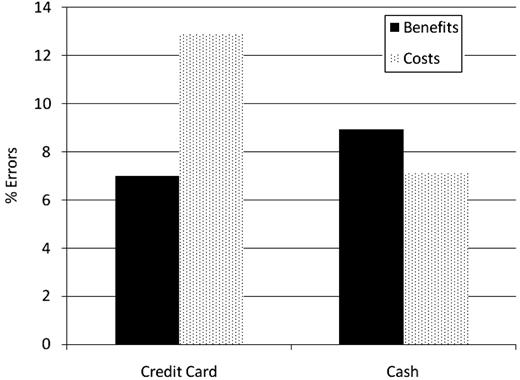
Payment modes (e.g., cash vs. credit card) vary in the transparency of the outflow of money. Smartcards (multifunctional cards), which bundle payment with non-payment functions (e.g., loyalty programs, identification, and other information functions), have become an increasingly popular payment mode. This shift toward multifunctionality in payment modes is assumed to reduce payment transparency and consequently to decrease consumers’ recall accuracy of past expenditures. We employ a field study to examine recall accuracy for recent purchases with cash, a single-function card, and a multifunctional card. We find that recall accuracy is lower when using a single- or a multifunction card than cash. We also find that it is not the multifunctionality of the card that results in a higher recall error but the individual usage patterns: A higher usage frequency of the non-payment functions results in a higher recall error.
Debunking the Myth of “Anonymous” Data
Today, almost everything about our lives is digitally recorded and stored somewhere. Each credit card purchase, personal medical diagnosis, and preference about music and books is recorded and then
Purchase Justifiability Drives Payment Choice: Consumers Pay with Card to Remember and Cash to Forget
AbstractAlthough consumers often have multiple payment methods at their fingertips, such as cash and credit/debit cards, prior research is silent on how consumers choose between them. We home in on a key element of purchase—purchase justifiability—that affects how consumers choose to pay. Analysis of 118,042 real-world purchases and six experiments reveals that when consumers are motivated to forget (vs. remember) a purchase because they see it as difficult (vs. easy) to justify, they have an increased preference to pay with cash (vs. card) because cards create a “paper/electronic trail” that aids memory retrieval. These payment preferences are strongest among consumers most likely to recall/track their card spending, and manifest only when card expenses are trackable. We reconcile our results with the classic effect of payment method on pain of paying and discuss implications for merchants and for financial institutions designing payment methods of the future.

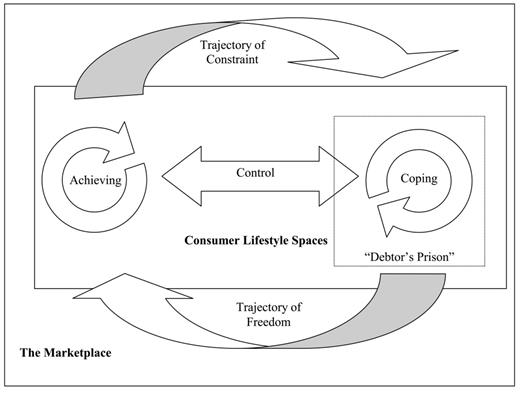
Credit Cards as Lifestyle Facilitators
Abstract. Credit cards are an increasingly essential technology, but they carry with them the paradoxical capacity to propel consumers along lifestyle traj
What Do Consumers Really Pay on Their Checking and Credit Card Accounts? Explicit, Implicit, and Avoidable Costs
(May 2009)
On the Mental Accounting of Restricted-Use Funds: How Gift Cards Change What People Purchase
Abstract. This article emphasizes the role of categorization in mental accounting and proposes that once a mental account is established, purchases that ar
Rewards and Misperceived Spending: Experimental Evidence from Credit Cards
Using proprietary data, a survey, and an experiment with a major bank in China, this paper studies how credit card rewards affect perceived and actual consumer

Differences in Consumer Purchase Behavior by Credit Card Payment System
Abstract. A conceptualization of the relationships between alternative payment systems and various environmental and behavioral variables, which may serve
Why Do Shoppers Use Cash? Evidence from Shopping Diary Data
Recent studies find that cash remains the dominant payment choice for small‐value transactions despite the prevalence of alternative payment methods such as debit and credit cards. An important policy question is whether consumers truly prefer using cash or merchants restrict card usage. Using unique shopping diary data, we estimate a payment choice model with individual heterogeneity, controlling for merchants' acceptance of cards. Based on a policy simulation imposing universal card acceptance among merchants, we find that overall cash usage would decrease by only 8.0 percentage points, implying that cash usage in small‐value transactions is driven mainly by consumer preferences.

Managing Mental Accounts: Payment Cards and Consumption Expenditures
Does mental accounting matter for total consumption expenditures? We exploit a unique setting in which individuals exogenously received a new credit card, without requesting one. Using random variation in the time of receipt we show that individuals temporarily increase total consumption expenditure by making purchases with the new card without reducing spending on the others. We do not observe a corresponding increase in indebtedness. Total consumption expenditure rises even for the least liquidity-constrained individuals. The evidence is consistent with consumers treating methods of payment as nonfungible budget categories, as suggested by models of mental accounting and narrow bracketing.

How I Use AI to Track Every Travel Credit Card Benefit I Have
If you're like me and have more than a few travel credit cards, you know how quickly things can spiral out of control when it comes to tracking all of the
Mastercard is pioneering new payment technology that identifies commuters by the way they walk
Mastercard is working with transport firms to develop a new gait technology system. CCTV cameras would identify passengers approaching transport barriers and match them with an account that is in credit or linked to a valid payment card.

An Empirical Analysis of Personal Bankruptcy and Delinquency
Abstract. This article uses a new dataset of credit card accounts to analyze credit card delinquency, personal bankruptcy, and the stability of credit risk
Do Payment Mechanisms Change the Way Consumers Perceive Products?
Abstract. Do payment mechanisms change the way consumers perceive products? We argue that consumers for whom credit cards (cash) have been primed focus mor
With Stolen Cards, Fraudsters Shop to Drop – Krebs on Security
A time-honored method of extracting cash from stolen credit cards involves “reshipping” scams, which manage the purchase, reshipment and resale of carded consumer goods from America to Eastern Europe — primarily Russia. A new study suggests that some 1.6 million credit and debit cards are used to commit at least $1.8 billion in reshipping fraud each year, and identifies some choke points for disrupting this lucrative money laundering activity.
Data Analytics Opt-out - Mastercard
To opt-out from our anonymization of your personal information to perform data analysis, please provide your Mastercard or Maestro payment card number here.
