
In remote work, we communicate primarily through writing. We send messages in Slack. We document projects in Notion. We send meeting invites with a written description of the purpose. We’re writing all the time. Many organizations are working from home at the moment. Thus, writing is even
Encouraging a Culture of Written Communication – mcls
More and more people are being exposed to working remotely. One of the key factors for success in a remote workplace is a culture of written communication. It’s not always obvious how to create such a culture, and it takes at least some level of discipline from the people involved to make it a habit.

Working from Home and Phatic Communication
Working from home, being what’s called a remote worker, is a really fascinating frontier of Work. It’s fascinating both because as a paradigm, it creates new challenges, and it also mak…

Writing Is Thinking
When you write about your work, it makes all of us smarter for the effort, including you. Done well, this kind of sharing means you’re contributing signal, instead of noise. But writers are made, n…

Why I Avoid Slack
I avoid interacting on Slack, especially for technical conversations around open source software. Instead, I encourage colleagues to have technical and design conversations on GitHub, or some other system that is public, permanent, searchable, and cross-referenceable. In the spirit of Don’t Repeat Yourself (DRY) I’m writing up these thoughts as a blogpost.
Why Slack is inappropriate for open source communications | Dave Cheney
Full disclosure: my employer makes a Slack alternative. All my concerns about the use of Slack type chat services apply equally to its competitors, including my employer’s.
Why Remote Work Is So Hard—and How It Can Be Fixed
The challenges aren’t just technological. They’re managerial.

The social contract of writing | jola.dev
About the value of genuine writing in a world being drowned in slop.

The Stress of Remote Working | HackerNoon
In software engineering, remote working makes a lot of sense since, most of the time, you only need a computer and an internet connection to perform your duties. So there are fewer reasons to force people to sit in a predefined office everyday. Consequently, it has become an important feature of a lot of IT jobs, even in Belgium, while it is definitely not the most forward looking job market. That said, most of the time, the remote working offer only apply to a part of the week (1 or 2 days a week seems to be the most frequent proposition here). Nevertheless, it definitely is getting a hold in most companies.

Asynchronous Communication Is The Future Of Work | I Done This
Whether you fear its impersonal nature or thinks its the best thing since streaming television, asynchronous communication is here to stay Remote work is rising and online education is becoming more accepted and commonplace, both due to changing attitudes and the pandemic. These factors are only going to increase the…

Why I work remotely (hint: it has nothing to do with productivity).
Illustration by Nate Otto These are some of the things I can do because I’m fortunate to work for a company that lets me work from anywhere: Hug my kids and feed them breakfast before they lea…

Writing Is Designing By Michael J. Metts & Andy Welfle
Discover how words shape UX with Writing Is Designing. Learn to craft clear, human-centered content for apps, chatbots, and software interfaces.

A Theory of Messaging Styles & Ghosting.
Online communication tools serve many purposes. So does silence.

Our Experience With Slack
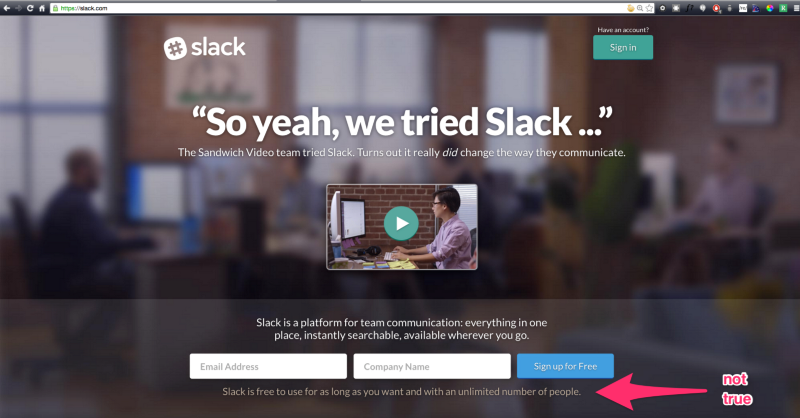
Back in April, all was well with our community of busy adults learning to code. We were communicating using Gitter.im, a GitHub based chatroom system. And yet every day, someone would ask me “Why aren’t your campers using Slack?” I’d considered Slack...
Make It Work vs. Make It Good
Writing about the big beautiful mess that is making things for the world wide web.
The 37signals Guide to Internal Communication
The how, where, why, and when we communicate. Long form asynchronous? Real-time chat? In-person? Video? Verbal? Written? Via email? In Basecamp? How do we keep everyone in the loop without everyone getting tangled in everyone else’s business? It’s all in here.
The Remote Manifesto
View the GitLab remote working manifesto and the multitude of life-balance benefits it allows our employees to enjoy. Learn more here!