

Using Karpathy's char-RNN to train a recurrent neural network on tabla compositions, generating new rhythmic sequences and exploring whether deep learning can capture the grammar of Indian classical percussion.
Deep learning for assisting the process of music composition (part 1)
This is part 1 of my explorations of using deep learning for assisting the process of music composition. In this part, I look at some almost-winning output of a model trained by deep learning metho…

Composing Music With Recurrent Neural Networks
Writeup for my first major machine learning project.
Neural Translation of Musical Style
Can we teach a neural network to perform like a human?
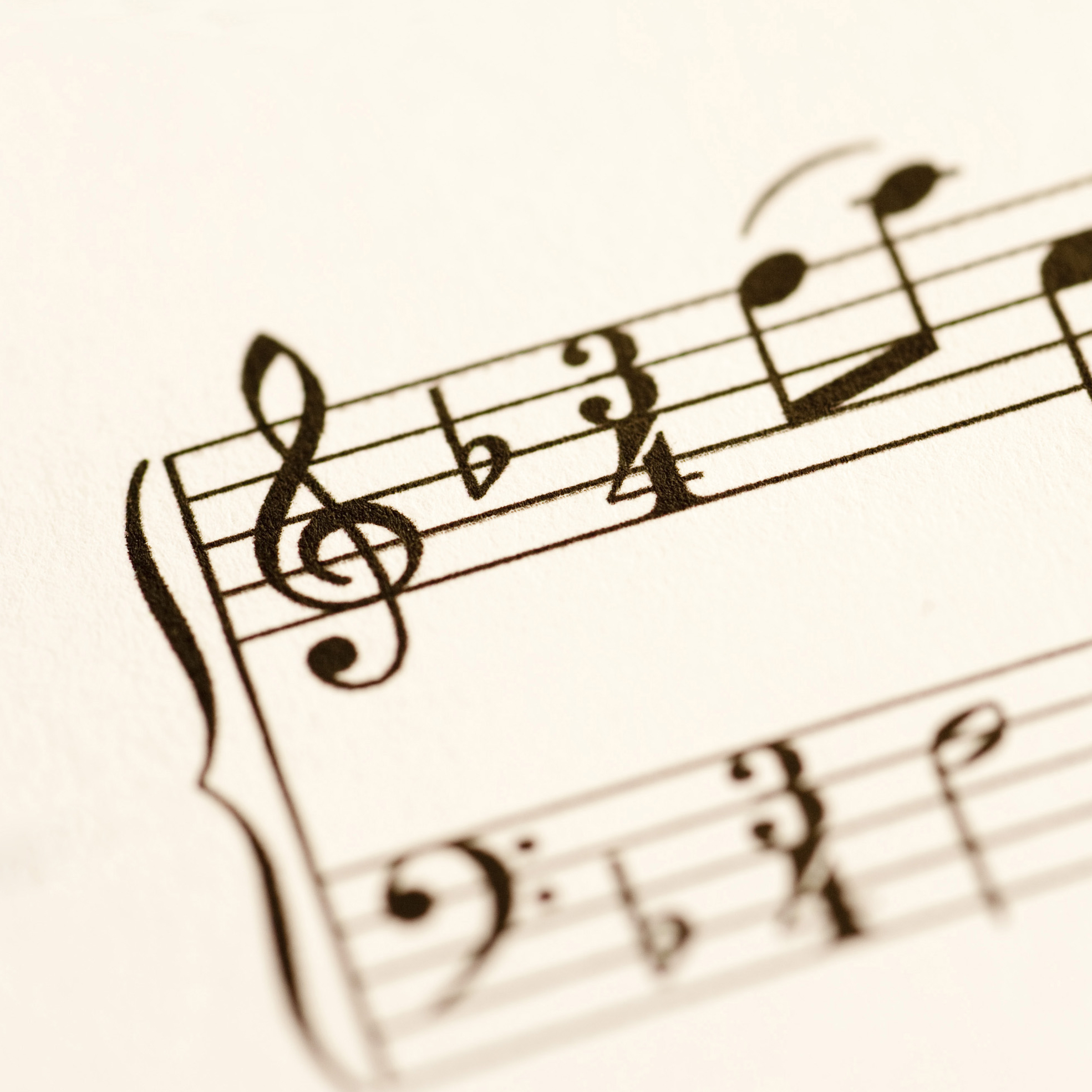
Making a Neural Synthesizer Instrument
In a previous post, we described the details of NSynth (Neural Audio Synthesis), a new approach to audio synthesis using neural networks. We hinted at furthe...
Recurrent neural network
In artificial neural networks, recurrent neural networks (RNNs) are designed for processing sequential data, such as text, speech, and time series,[1] where the order of elements is important. Unlike feedforward neural networks, which process inputs independently, RNNs utilize recurrent connections, where the output of a neuron at one time step is fed back as input to the network at the next time step. This enables RNNs to capture temporal dependencies and patterns within sequences.
Go Kurosawa - Full Performance (Live on KEXP)
HAIM: Human-AI Music Datasets for AI Music Production Tracking Benchmark
As generative platforms such as Suno and Udio reach human-grade audio quality, the scope of AI's utility has expanded across the entire music production workflow. Beyond simple track generation, these advancements have catalyzed the adoption of AI-driven methodologies in diverse forms. These include vocal synthesis, arrangement, and professional mastering. However, current detection research remains largely confined to a binary `AI-or-human' paradigm. It fails to reflect the realities of contemporary music production workflows. In real-world production, AI tools are increasingly used to refine or master human-produced tracks, and human engineers likewise post-process AI-generated material to ensure professional quality. Moreover, users often employ adversarial tactics to bypass AI detectors, such as applying human mastering to AI-generated tracks. This creates a grey area that a simple binary classification fails to capture. In this paper, we define and investigate ``AI Music Tracking'': the challenge of identifying specific AI integration across the multifaceted spectrum of music production. To this end, we introduce HAIM, a dataset with diverse labels for stages of music production. It is designed to isolate stages of AI intervention, including hybrid production and agent-level tracking. Our evaluation of state-of-the-art detectors reveals systemic flaws. By releasing HAIM, we propose a new benchmark that shifts the field beyond binary classification toward a granular, structured evaluation of AI music.

矢川葵 - スローモーション [Music Video]
Deep Learning for Guitar Effect Emulation
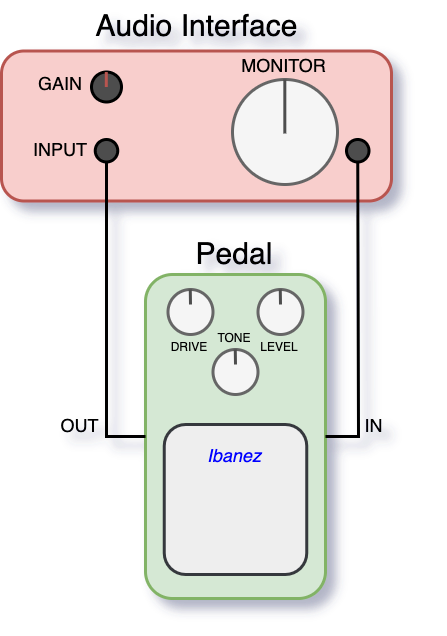
Since the 1940s, electric guitarists, keyboardists, and other instrumentalists have been using effects pedals, devices that modify the sound of the original audio source. Typical effects include distortion, compression, chorus, reverb, and delay. Early effects pedals consisted of basic analog circuits, often along with vacuum tubes, which were later replaced with transistors. Although many pedals today apply effects digitally with modern signal processing techniques, many purists argue that the sound of analog pedals can not be replaced by their digital counterparts. We’ll follow a deep learning approach to see if we can use machine learning to replicate the sound of an iconic analog effect pedal, the Ibanez Tube Screamer. This post will be mostly a reproduction of the work done by Alec Wright et al. in Real-Time Guitar Amplifier Emulation with Deep Learning (Wright et al., 2020).
Hindustani classical music
Hindustani classical music (also known as North Indian classical music or Shastriya Sangeet) is the classical music of the Indian subcontinent's northern regions. It is played on instruments like the veena, sitar and sarod. It diverged in the 12th-century from Carnatic music, the classical tradition of southern India. While Carnatic music largely uses compositions written in Sanskrit, Telugu, Kannada, Tamil, Malayalam, Hindustani music largely uses compositions written in Sanskrit, Hindustani (Hindi-Urdu), Braj, Awadhi, Bhojpuri, Bengali, Rajasthani and Punjabi.[1]
Creativity through Recomposition in the Music Ensemble
Musical creativity is an essential component of a robust music education. There are many ways to invite and develop the creative capacities of K–12 music students. In this article, we propose the idea that recomposing within and around repertoire can be a creative starting point for student composition in an ensemble music classroom. We share examples of potential recomposition projects, questions to prompt student reflection, and other pedagogical considerations as a springboard for compositional projects with students. We hope that the open-ended nature of this mindset will encourage more creative musical spaces.

Carnatic music
Carnatic music is a system of music commonly associated with South India, including the modern Indian states of Andhra Pradesh, Karnataka, Kerala, Tamil Nadu and Telangana. Most Carnatic compositions are only in Telugu and Sanskrit.

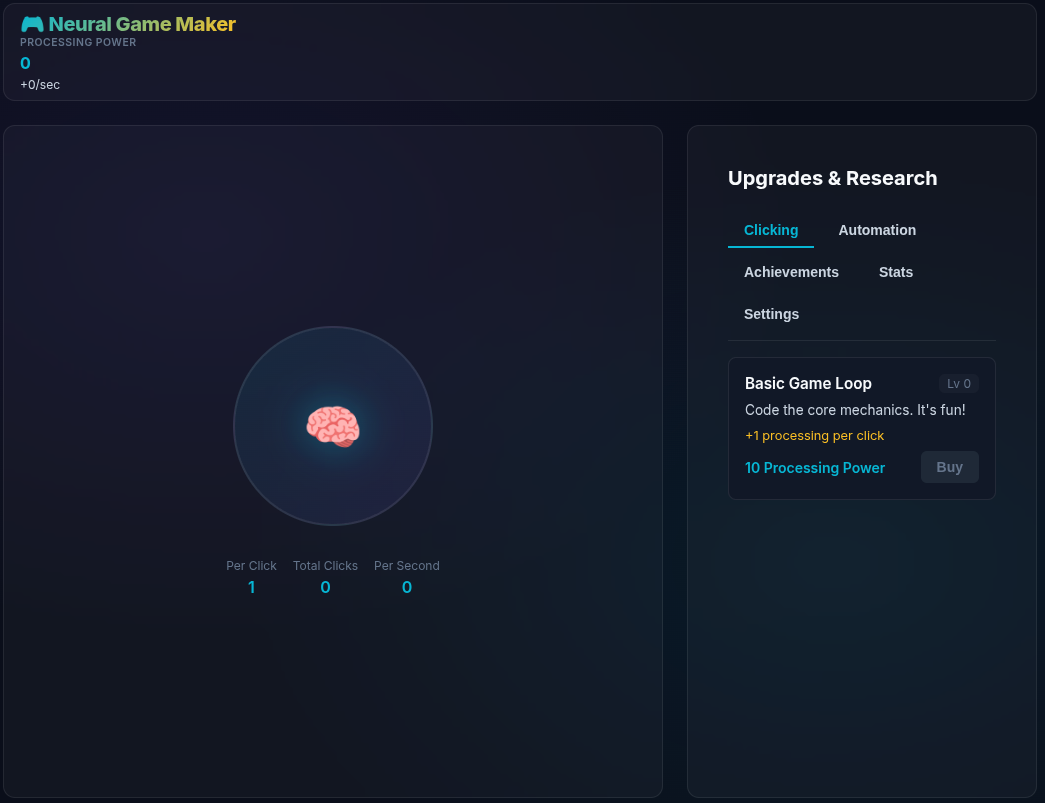
I trained a cellular automaton to write English, using no neural net at all
Each word or letter is written into a grid of integer cells. Learned rules rewrite the cells, and the next word is read from the grid. You can watch…