

The Pointer Events specification defines a unified hardware-agnostic framework for handling input from various devices, including mice, touchscreens, and pens/styluses. By providing a single set of events (e.g., pointerdown, pointermove, pointerup), it allows developers to support diverse input methods without writing device-specific logic for each.
Pointer Events | 12 Days of Web
Pointer events provide an API for unifying detecting interaction from various "pointers" including a mouse, pen/stylus, or touch.

Element: pointerrawupdate event - Web APIs | MDN
The pointerrawupdate event is fired when a pointer changes any properties that don't fire pointerdown or pointerup events. See pointermove for a list of these properties.

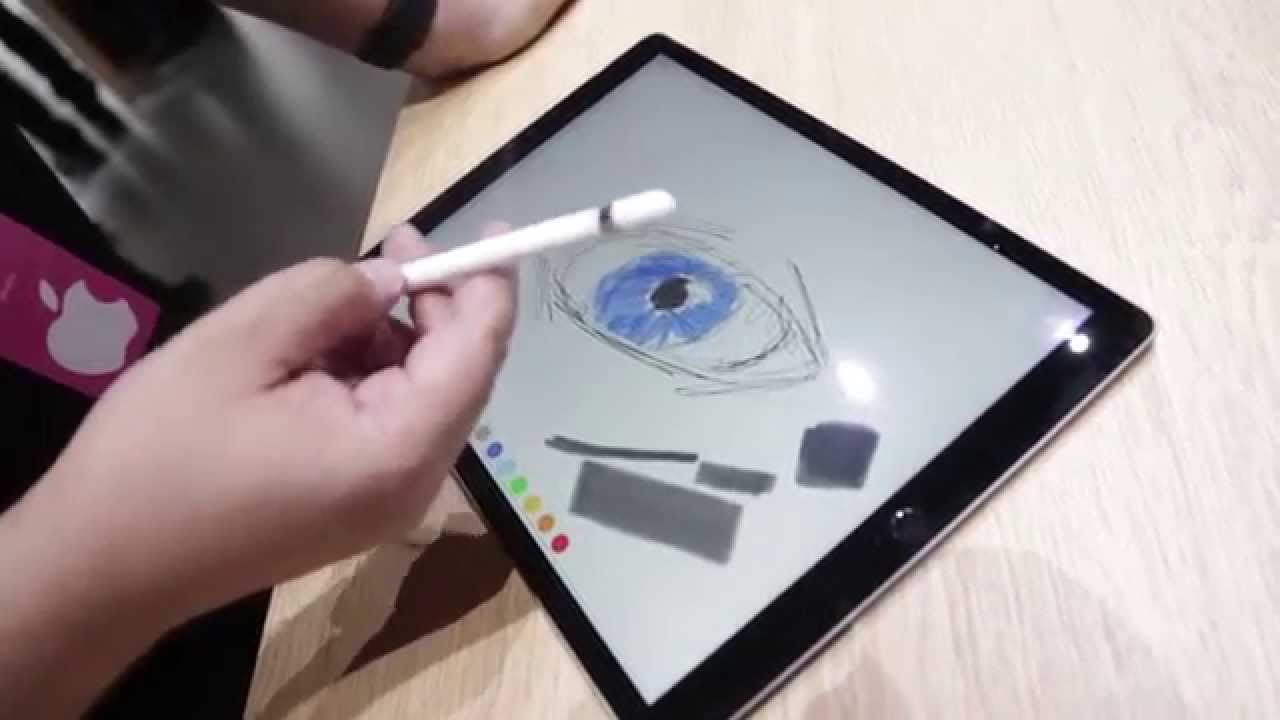
Apple Pencil: Hands-On With Apple's Stylus For The iPad Pro | TechCrunch
After talking a good amount of smack over the years about styluses, today Apple revealed the Apple Pencil, an input device that allows iPad Pro users

Cursor on web and mobile · Cursor
Work with a powerful coding assistant anywhere with the Cursor Agent on web and mobile.
Towards declarative touch interactions
This page outlines Slalom, a system with prototype implementation for concisely describing and implementing a class of touch interactions. Various examples demonstrate Slalom's versatility.
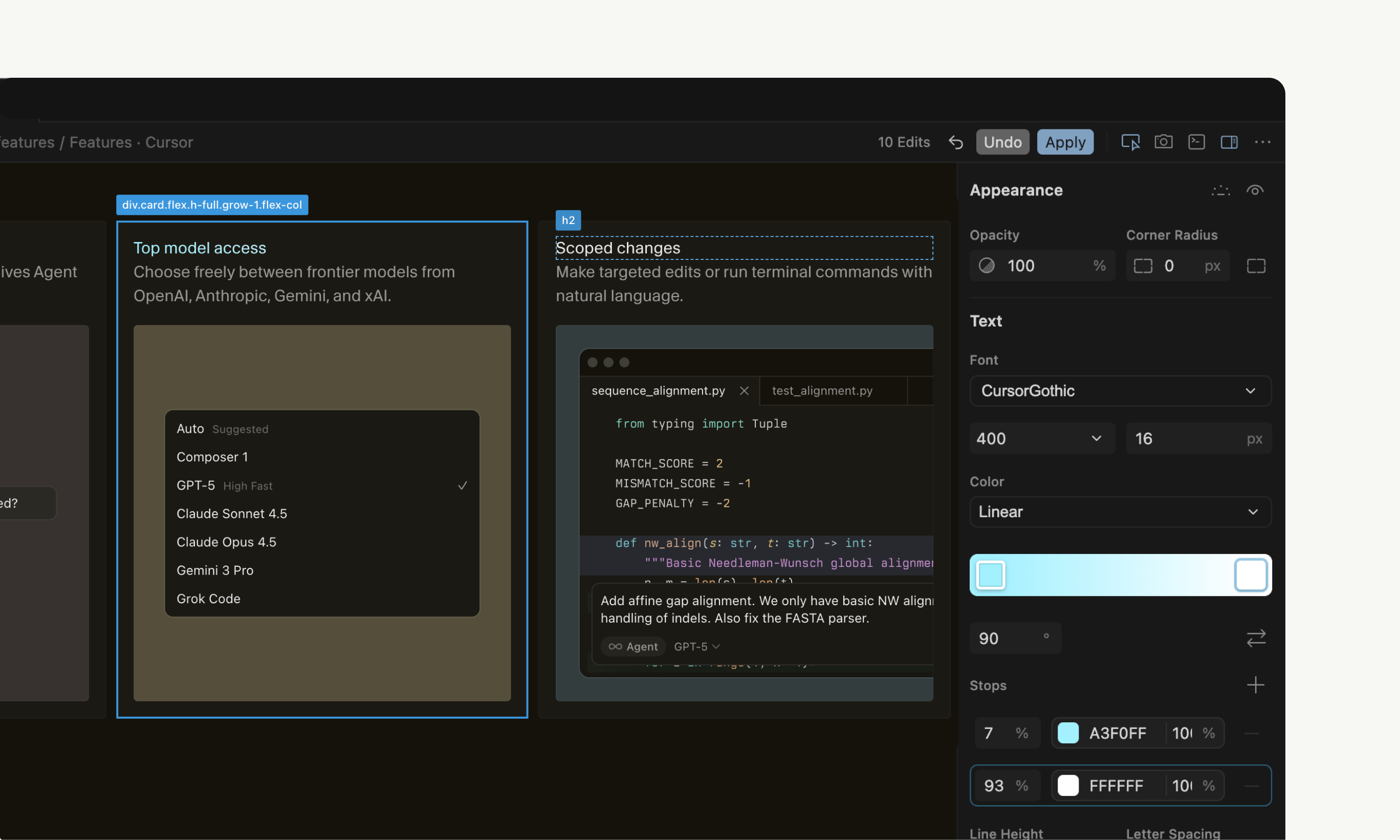
A visual editor for the Cursor Browser · Cursor
Bringing design and engineering closer together.
inkOS - Minimalist Android Launcher
inkOS is different from other minimalist android launchers because it's optimized for e-ink, keypad and qwerty phones. Almost all of the interface is operable with D-pad, so touch input is optional. It removes all animations and replaces smooth scrolling with discrete, paged navigation, making it comfortable for users who are sensitive to motion and ideal for slow-refresh e-ink displays. To reduce distraction and app hopping, inkOS surfaces notifications directly on the launcher, letting you stay informed without constantly opening apps.
Accessory for prosthetic limbs lets users interact directly with digital media | TechCrunch
When someone has lost a hand, particularly the dominant one, it can be a real challenge to do the simple clicks and drags that all of us take for granted on our desktops and laptops. A German design team has created a device to remedy this, detecting signals from the user's remaining muscles and translating them into common digital gestures.

mitchellh/libxev
libxev is a cross-platform, high-performance event loop that provides abstractions for non-blocking IO, timers, events, and more and works on Linux (io_uring or epoll), macOS (kqueue), and Wasm + WASI. Available as both a Zig and C API.
Post-WIMP
In computing, post-WIMP ("windows, icons, menus, pointer") comprises work on user interfaces, mostly graphical user interfaces, which attempt to go beyond the paradigm of windows, icons, menus and a pointing device, i.e. WIMP interfaces.
iPadOS, coming “this fall”: Thumb drives, more gestures, “desktop-class” browsing [Updated]
Report has been updated with supported iPad models—and, praise be, mouse support.
Drawing to the Screen | Web Browser Engineering
Desktop and laptop computers run operating systems that provide desktop environments: windows, buttons, and a mouse. So responsibility ends up split: programs control their windows, but the desktop environment controls the screen. Therefore:
The Making of Cursor's Icons
A year of drawing, testing, and shipping a complete icon system for the world's favourite coding agent.
Apple Pencil Offers High Precision and Low Latency, Gains 30 Minutes of Use From 15-Second Charge
Apple co-founder Steve Jobs famously dismissed the need for a stylus when introducing Multi-Touch on the original iPhone over eight years ago, touting the finger as the best pointing device in the world. "Who wants a stylus? You have to get them, and put them away, and you lose them. Yuck. Nobody wants a stylus. So let’s not use a stylus".
10/GUI
Here it is: my crazy summer project to reinvent desktop human-computer interaction. This video examines the benefits and limitations inherent in current mouse-based and window-oriented interfaces, the problems facing other potential solutions, and visualizes my proposal for a completely new way of interacting with desktop computers. There's more information at http://10gui.com .
Shaping the future of AI interaction by reimagining the mouse pointer
Google DeepMind is transforming the mouse pointer into a context-aware AI partner. Move beyond the friction of traditional prompting with intuitive AI collaboration in Chrome and beyond.
