


Starting in early adulthood, our number of friends starts to decrease steadily; there are ways to reverse the tide, writes Elizabeth Bernstein.
You have more ways to connect than ever, but deep friendship feels hard to find – here’s how to build better connections
Despite being more connected than any previous generation, many young people report struggling to build friendships that provide a genuine sense of closeness.

Young people five times more likely to have no friends than a decade ago | IPPR
The number of young people with no close friends has increased five-fold since 2014Gen Z are more isolated, more distressed and less productive than previo

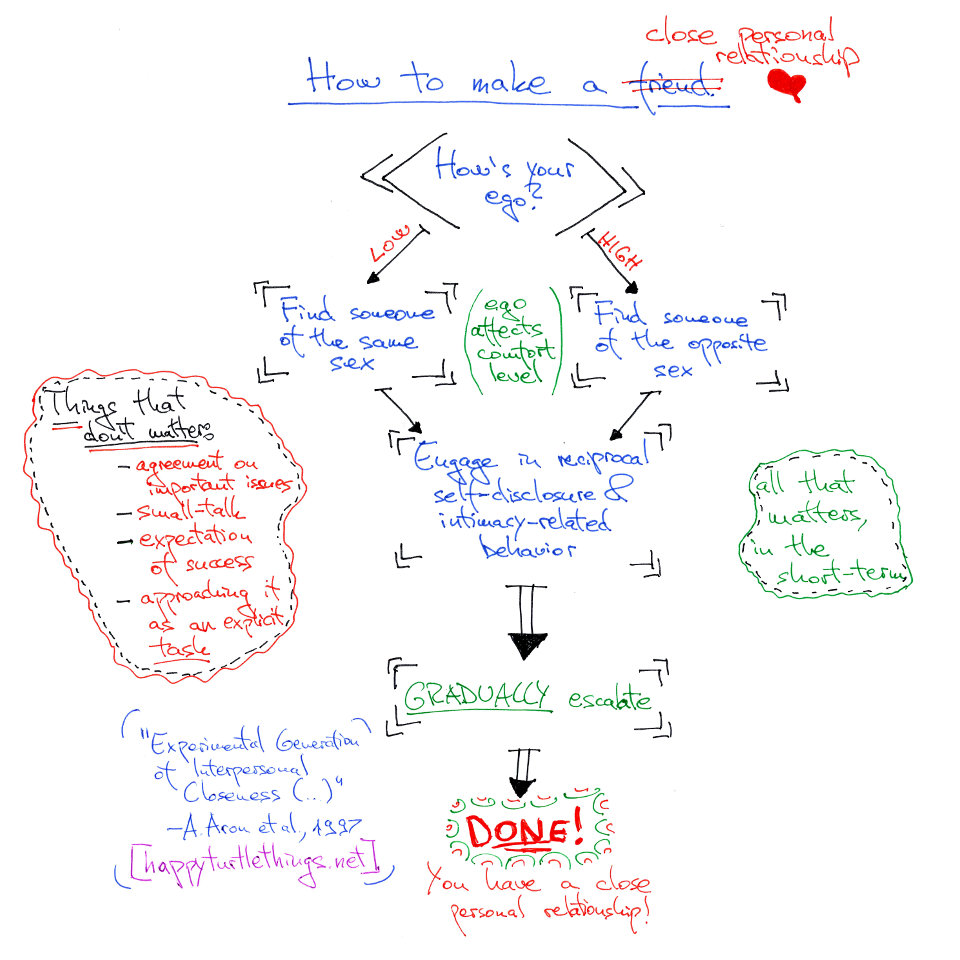
How to make a friend fast — the scientific method
Believe-it-or-not, we actually know exactly how to create friendships in the lab!
Dunbar’s number: why my theory that humans can only maintain 150 friendships has withstood 30 years of scrutiny
The claim that our brain size limits us to 150 meaningful friendships has been challenged by a recent paper.

We've Lost the Spaces That Foster Friendship
We keep offering individual fixes for loneliness while ignoring the disappearance of the spaces where adults once built real relationships.

The Power of Positive People (Published 2018)
Are your friendships giving you a boost or bringing you down?

What is Causing Our Epidemic of Loneliness and How Can We Fix It?
Researchers share what Americans have to say about social disconnection and potential solutions

Why Your Social Capital is Probably Worthless
In 1973, sociologist Mark Granovetter published one of the most influential papers in social network theory. "The Strength of Weak Ties" demonstrated something counterintuitive: when it comes to finding jobs and opportunities, your casual acquaintances are often more valuable than your close friends. This makes perfect sense when you think

Undersociality: miscalibrated social cognition can inhibit social connection
A person’s well-being depends heavily on forming and maintaining positive relationships, but people can be reluctant to connect in ways that would create or strengthen relationships. Emerging research suggests that miscalibrated social cognition may create psychological barriers to connecting with others more often. Specifically, people may underestimate how positively others will respond to their own sociality across a variety of social actions, including engaging in conversation, expressing appreciation, and performing acts of kindness.

s21e02: What Does it Mean to be Friends?
0.0 Context Setting Wednesday, 14 January 2026 in Portland, Oregon where while the conditions in the U.S. may not be argued to be fascist as such (i.e. the...
The Difficulty Of Private Contact Discovery
Building a social network is not easy. Social networks have value proportional to their size, so participants aren’t motivated to join new social networks which aren’t already large. It’s a paradox where if people haven’t already joined, people aren’t motivated to join. The trouble is that whi...

Loneliness epidemic
The concept of a "loneliness epidemic" relating to rising rates of social isolation was first described in the 2000s. Robert D. Putnam's 2000 study Bowling Alone was an early instance of describing loneliness as an epidemic, arguing that decreased participation in civic life and community groups was weakening social bonds in the United States.[5]
The Power of Asynchronous Communication
Asynchronous communication allows us to maintain the essential bonds of friendship and dialog with the people that matter to us.

Wednesday Night Pizza Club
People spend 20 hours less a month with friends than they used to. But you can change that.
