

On Tuesday, Egyptian-American activist Mona Eltahawy was arrested for “criminal mischief” – or “the willful damaging of property” – when she responded to disturbingly racist ads that were posted in the New York City subway system with spray paint. Her act of political resistance went beyond spray paint however. In some ways, it was intentionally designed to get the attention of the internet. When she encountered resistance from a person defending the ads – who clearly knew Mona and kept responding to her by name – Eltahawy chose to create a challenge over her right to engage in what she called “freedom of expression.” This altercation escalates as the two argue on camera over whether or not Eltahawy is violating free speech or “making an expression on free speech.” (The video can be seen here.) As this encounter unfolds, Eltahawy regularly turns to the video and speaks to “the internet,” indicating that she knew full well that this video would be made available online. In constructing her audience, Eltahawy also switches between talking to Americans (“see this America”) and to a broader international public, presumably of people who are angry at the perceived hypocrisy of how America constructs free speech in light of the video mocking Islam’s prophet that sparked riots around the globe.
The Faux Free Speech Warriors Attacking Free Speech
There’s a particularly insidious and cynical form of censorship gaining prominence in America: the weaponization of “free speech” rhetoric, combined with abuses of the judicial sy…

Harm Through the “#RizzCam”: Smart Glasses, Ambient Capture and Invisible Harassment
In online safety research, harassment is commonly understood as involving overt and unwanted acts that create a hostile environment for individuals or groups. Smart glasses, or wearable digital devices that are often indistinguishable from ordinary eyewear but can record video, audio and location data in real time, enable new forms of online harassment and gender-based harms that may not be recognised by current online safety or platform governance frameworks. Drawing on an interpretive content analysis of 350 point-of-view Instagram videos posted by individuals self-associated with the pick-up artistry (PUA) community, we examine how smart glasses can be used to harass women through what we call ambient capture. Ambient capture includes clandestine recording of people and social interactions within public, semi-private and private spaces. We argue this can constitute harassment when it is targeted at women and shared online without their consent. In our study, we found videos using ambient capture practices to harass women that had gone undetected by Instagram’s content moderation systems. These findings suggest online safety regimes and content moderation approaches should be assessed to ensure they account for the more invisible forms of harassment introduced by smart glasses and other wearable technologies.
Social Media, Authoritarianism, and the World As It Is
Before we move to further concentrate global surveillance and propaganda power in the hands of the United States, we should be clear-eyed about the threats to speech and privacy that emanate from…
How ICE Is Weaponizing Social Media Against Its Critics
The agency says its surveillance program searches for threats to agents, but critics see free-speech infringements.

Data Feminism for AI
Attacks on women and trans people are not happening in a vacuum. Communications scholars W. Lance Bennett and Marianne Kneuer recently argued that we are witnessing the intensification of "illiberal public spheres" around the world (Bennett and Kneuer, 2023). These are characterized by a set of anti-democratic communications tactics that include the denigration and exclusion of minoritized people, targeted attacks on the press and political institutions, and transgression of norms of civil discourse. Such tactics are enabled and amplified by the social media platforms owned by Big Tech, whose business model elevates attention above all other metrics, such that they profit richly off extremism, threats, spectacle, and lies. The success of this corporate partnership with right-wing extremism is evident in the proliferation of book bans (Magnusson, 2024), the demonization of DEI and critical race theory (Crenshaw, 2022), and mob tactics to doxx, intimidate, misrepresent, and otherwise silence people that study misinformation, speak out against racial and gender violence, or rule against insurrectionists (Edmonds, 2024). At the same time, we have seen the continued work of feminists, including Latin American, Indigenous, and abolitionist feminists in the US and globally, doing the work of imagining alternate worlds (Cullors, 2021; Davis, 2022; Ricaurte, 2019; Simpson, 2017). This paper represents our own first attempt to imagine a more equitable, sustainable, feminist world for AI research.
Elon Said Fighting CSAM Was “Priority #1.” A NY Times Reporter With A Script Found 75 Known Images.
When Elon first took over Twitter with grand plans to “bring back free speech,” I tried to help him run through the standard content moderation learning curve that basically every site …
The Internet Was Built by Movements w Sasha Costanza-Chock
Advertisers Ditch X After Elon Musk Endorses Anti-Semitic Theory - Bl…
archived 22 Nov 2023 17:02:56 UTC

Social Media Vs Democracy
'We won't be silenced': Meta removes Instagram accounts of pro-Palestine advocacy group
Pro-Palestinian activists have complained of suppression of speech since the war on Gaza began on 7 October

Morally Motivated Networked Harassment as Normative Reinforcement
While online harassment is recognized as a significant problem, most scholarship focuses on descriptions of harassment and its effects. We lack explanations of why people engage in online harassment beyond simple bias or dislike. This article puts forth an explanatory model where networked harassment on social media functions as a mechanism to enforce social order. Drawing from examples of networked harassment taken from qualitative interviews with people who have experienced harassment ( n = 28) and Trust & Safety workers at social platforms ( n = 9), the article builds on Brady, Crockett, and Bavel’s model of moral contagion to explore how moral outrage is used to justify networked harassment on social media. In morally motivated networked harassment, a member of a social network or online community accuses a target of violating their network’s norms, triggering moral outrage. Network members send harassing messages to the target, reinforcing their adherence to the norm and signaling network membership. Frequently, harassment results in the accused self-censoring and thus regulates speech on social media. Neither platforms nor legal regulations protect against this form of harassment. This model explains why people participate in networked harassment and suggests possible interventions to decrease its prevalence.

Digital Social Norm Enforcement: Online Firestorms in Social Media
Actors of public interest today have to fear the adverse impact that stems from social media platforms. Any controversial behavior may promptly trigger temporal, but potentially devastating storms of emotional and aggressive outrage, so called online firestorms. Popular targets of online firestorms are companies, politicians, celebrities, media, academics and many more. This article introduces social norm theory to understand online aggression in a social-political online setting, challenging the popular assumption that online anonymity is one of the principle factors that promotes aggression. We underpin this social norm view by analyzing a major social media platform concerned with public affairs over a period of three years entailing 532,197 comments on 1,612 online petitions. Results show that in the context of online firestorms, non-anonymous individuals are more aggressive compared to anonymous individuals. This effect is reinforced if selective incentives are present and if aggressors are intrinsically motivated.
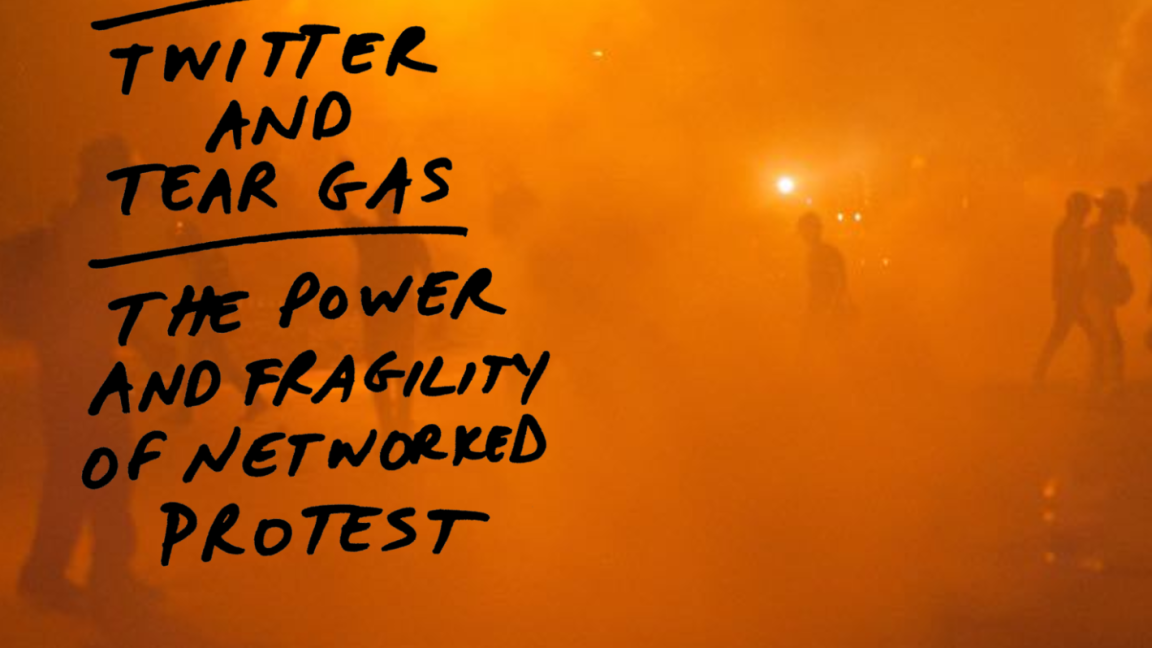
New book explores how protesters—and governments—use Internet tactics
The protest frontiers are changing. An entrenched researcher explains why they work.
📢 My @NDSSSymposium keynote is up! On how we lost the crypto wars, why surveillance advertising must be understood as the foundation of "AI", & why the tactics of the past won't serve us in defending privacy today. Text: https://t.co/QQOco14Koz Video: https://t.co/NSMK
📢 My @NDSSSymposium keynote is up! On how we lost the crypto wars, why surveillance advertising must be understood as the foundation of "AI", & why the tactics of the past won't serve us in defending privacy today.Text: https://t.co/QQOco14KozVideo: https://t.co/NSMKRwEAPJ— Meredith Whittaker (@mer__edith) April 3, 2024
Online anonymity/pseudonymity

“There's plenty of research in this topic area that shows hate speech doesn't decline when real-name policies are in effect, in fact usually the inverse, and the diversity of people contributing to conversations decreases” — bsky.app/profile/did:plc:5w4eqcxzw5jv5…

The Real Name Fallacy - Coral by Vox Media

Age Verification Mandates Would Undermine Anonymity Online
Research - Disqus
What’s in a name? A forward view of anonymity online

Anonymity and Online Commenting: The Broken Windows Effect and the End of Drive-by Commenting

Anonymity, Pseudonymity, and Deliberation: Why Not Everything Should Be Connected