We spend a lot of time pondering the future. We have to. The Web is constantly changing and at a rapid rate. Just think back to the early days of the internet where websites were nothing but static HTML. Now we've got Rails and node.JS for the back-end. Things have progressed so fast and there's no slowing down in sight.
The new new web | TechCrunch
Over the last five years, almost everything about web development has changed. Oh, the old tech still works, your WordPress and Ruby On Rails sites still

Next.js — The Perpetual Beta Framework
Exploring 6 years of Next.js, from early days to App Router & RSC, with migrations, performance tweaks, and framework insights

Close to the metal: web design and the browser
Websites have evolved over the years, but in the name of evolution, there seems to be mistaken thinking that the process of building a website needs to get more complex, using Javascript frameworks and modern backend systems; when at the end of the day, browsers still only need static HTML content to interpret.
【Modern Web 2015】JavaScript at 20 Years - Brendan Eich

2021 JavaScript Rising Stars
A complete overview of the JavaScript landscape in 2021: trends about front-end and Node.js frameworks, React and Vue.js ecosystems, build tools, state management...
State of the Art JavaScript in 2016
State of the Art JavaScript in 2016 So, you’re starting a brand new JavaScript front end project or overhauling an old one, and maybe you haven’t kept up with the breakneck pace of the ecosystem …

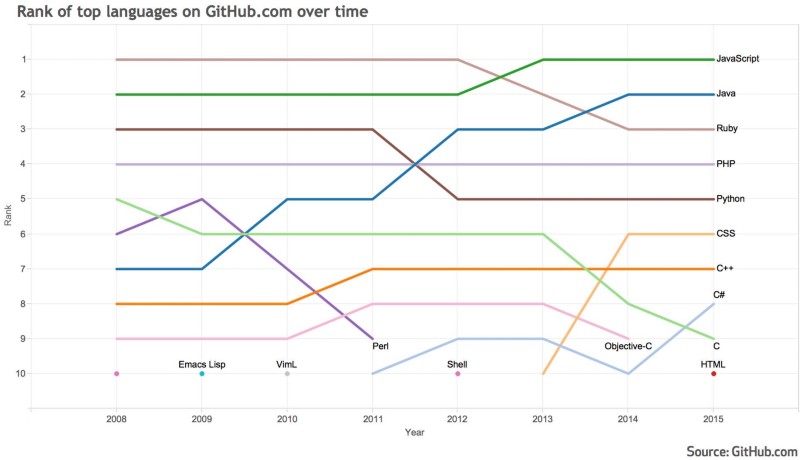
Java, Ruby, and Go, Oh My!
Free Code Camp has focused 100% on full stack JavaScript since we started 17 months ago. We’ve taught JavaScript on the front end, JavaScript on the back end (thanks to the powerful Node.js framework) — and even JavaScript as a database querying lang...
Frontend Without the Browser–WTH?!?
What is the state of frontend frameworks and libraries in 2026? This is a question many frontend developers today are wrestling with, and it appears one answer is that frontend has moved deeper into the stack. Take gpuix-svelte, an experimental project built by Stanislav Khromov, a Svelte core team member, that renders the JavaScript framework

State of JS 2020
The annual survey about the latest trends in the JavaScript ecosystem.
The impact of the late majority
When Ruby on Rails first got going, I spent a lot of time contrasting code with the folks in Javaland. Rails had drawn substantial…

JavaScript Frameworks - Heading into 2026
I suppose after three years, we can consider my review of JavaScript Frameworks an annual event now....

Building The Next Web
This is the kick-off post in a series in which I'm going to explore things that we could change about the Web. The odds are pretty good that I will be wrong, possibly even very wrong. You're going to dislike some, or perhaps all of it! My point isn't to jump straight into building these ideas — even though I do believe they point in a better direction and are feasible — but rather to break out of the incrementalist rut and stagnant vision that the Web finds itself mired in. It's not in a good place and I feel the need for more vision work and much more thinking about architectural interventions that can bring about radical change.

It's 2023, here is why your web design sucks.
Exploring the reasons why we no longer have web designers.

Web Components Are Not the Future
A few years ago I wrote an article suggesting that Web Components might not be the most beneficial...

Next.js by Vercel - The React Framework
Production grade React applications that scale. The world's leading companies use Next.js by Vercel to build static and dynamic websites and web applications.