

On the commodification of attention, the abuses of unpaid microwork and strategies of resistance.
Facebook’s Attack on Research is Everyone's Problem
Facebook recently banned the accounts of several New York University (NYU) researchers who run Ad Observer, an accountability project that tracks paid disinformation, from its platform. This has
Criticism of Facebook
Facebook (and parent company Meta Platforms) has been the subject of criticism and legal action since it was founded in 2004.[1] Criticisms include the outsize influence Facebook has on the lives and health of its users and employees, as well as Facebook's influence on the way media, specifically news, is reported and distributed. Notable issues include Internet privacy, such as use of a widespread "like" button on third-party websites tracking users,[2][3] possible indefinite records of user information,[4] automatic facial recognition software,[5][6] and its role in the workplace, including employer-employee account disclosure.[7] The use of Facebook can have negative psychological and physiological effects[8] that include feelings of sexual jealousy,[9][10] stress,[11][12] lack of attention,[13] and social media addiction that in some cases is comparable to drug addiction.[14][15]
Morally Motivated Networked Harassment as Normative Reinforcement
While online harassment is recognized as a significant problem, most scholarship focuses on descriptions of harassment and its effects. We lack explanations of why people engage in online harassment beyond simple bias or dislike. This article puts forth an explanatory model where networked harassment on social media functions as a mechanism to enforce social order. Drawing from examples of networked harassment taken from qualitative interviews with people who have experienced harassment ( n = 28) and Trust & Safety workers at social platforms ( n = 9), the article builds on Brady, Crockett, and Bavel’s model of moral contagion to explore how moral outrage is used to justify networked harassment on social media. In morally motivated networked harassment, a member of a social network or online community accuses a target of violating their network’s norms, triggering moral outrage. Network members send harassing messages to the target, reinforcing their adherence to the norm and signaling network membership. Frequently, harassment results in the accused self-censoring and thus regulates speech on social media. Neither platforms nor legal regulations protect against this form of harassment. This model explains why people participate in networked harassment and suggests possible interventions to decrease its prevalence.

Facebook’s Unethical Experiment Manipulated Users’ Emotions
Facebook has been experimenting on us. A new paper in the Proceedings of the National Academy of Sciences reveals that Facebook intentionally...
“Men Are Scum”: Inside Facebook’s War on Hate Speech
The company blew it on privacy and fake news. Can it do better against trolls and racists? An exclusive embed with Facebook’s shadow government.

One Response to the Cambridge Analytica Scandal: Block Facebook's
With Facebook in a dominant position in hosting a huge portion of the world’s social conversation, we’ve been worried about the incredible power the company has accumulated and the risks that poses
Facebook content management controversies
Facebook and Meta Platforms have been criticized for their management of various content on posts, photos and entire groups and profiles. This includes but is not limited to allowing violent content, including content related to war crimes, and not limiting the spread of fake news and COVID-19 misinformation on their platform, as well as allowing incitement of violence against multiple groups.

Delay, Deny and Deflect: How Facebook’s Leaders Fought Through Crisis (Published 2018)
Russian meddling, data sharing, hate speech — the social network faced one scandal after another. This is how Mark Zuckerberg and Sheryl Sandberg responded.

Facebook did little to moderate posts in the world’s most violent countries
In some of the world’s most high-profile conflict zones, the tech giant invested few resources and failed to stem a steady stream of harmful posts, according to internal documents.

(PDF) Facebook confessions: Corporate abdication and Silicon Valley dystopianism
PDF | This article investigates the public confessions of a small group of ex-Facebook employees, investors, and founders who express regret helping to... | Find, read and cite all the research you need on ResearchGate

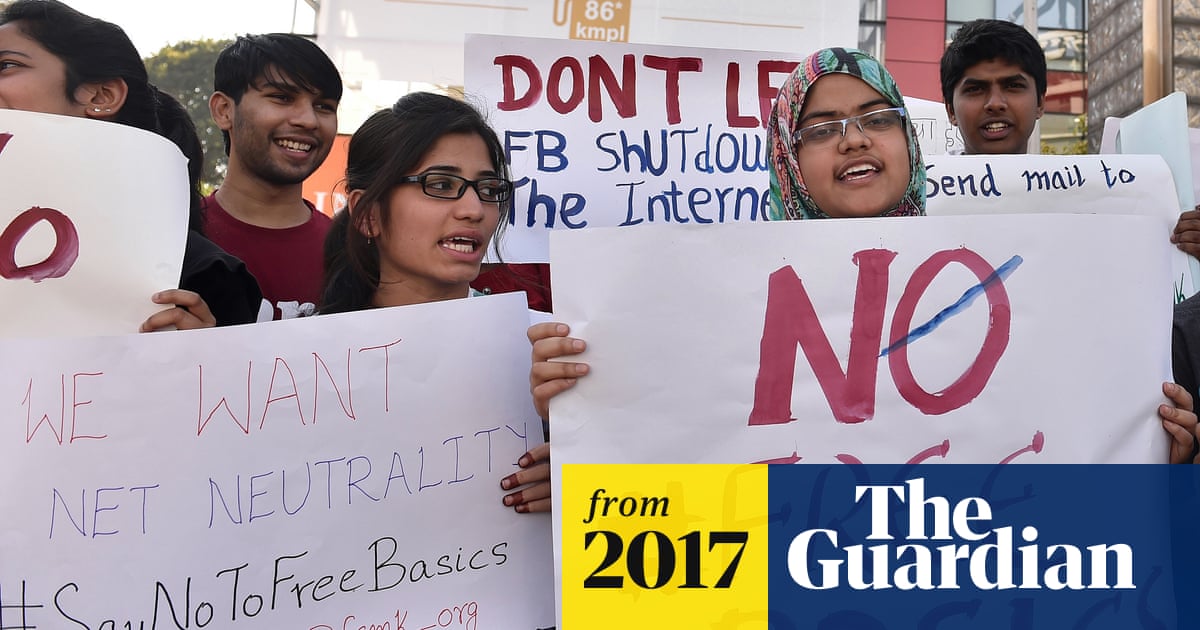
'It's digital colonialism': how Facebook's free internet service has failed its users
Free Basics, built for developing markets, focuses on ‘western corporate content’ and violates net neutrality principles, researchers say
Leaked document reveals Facebook conducted research to target emotionally vulnerable and insecure youth
37K votes, 2.3K comments. 48M subscribers in the worldnews community. A place for major news from around the world, excluding US-internal news.
On Digital Disinformation and Democratic Myths – MediaWell
For two years, from 2015 to 2017, the Russian Internet Research Agency (IRA) operated a “Blacktivist” Facebook page. The Blacktivist account posed as an organic, grassroots online activism site, amplifying and contributing to the Black Lives Matter movement. It shared news, memes, and perspectives about racial injustice in America. Blacktivist was the most prominent of the IRA-generated Facebook pages, with over 6.18 million “interactions” recorded across its top 500 posts. The page had 360,000 likes, more than the verified Black Lives Matter account on Facebook (O’Sullivan and Byers 2017). In congressional hearings about Russian online disinformation and propaganda campaigns, poster-sized versions of Blacktivist posts and memes were on prominent display. Blacktivist stands as a warning sign of the sheer volume of online disinformation activities by foreign actors in US politics.

Frontiers | Cyber-mobbing, technology-facilitated abuse and online violence
This article collection will explore the pressing issues of cyber-mobbing, technology-facilitated abuse and online violence, including online abuse, stalking...

Facebook pays controversial creators to produce rage-bait content
An ABC NEWS Verify investigation reveals Facebook is directly funding some controversial Australian content creators including a white nationalist and an anti-vaxxer influencer.