Usually image color reduction is done in two independent phases: first a color quantization algorithm finds a palette, which is then used by a pixel mapping phase to assign every output pixel a color from the palette. Ignoring any possible dithering for now, the chosen palette color is the one with the shortest Euclidean distance to the original pixel color. But if we know both the old and new colors for each pixel, it’s possible to refine the palette.
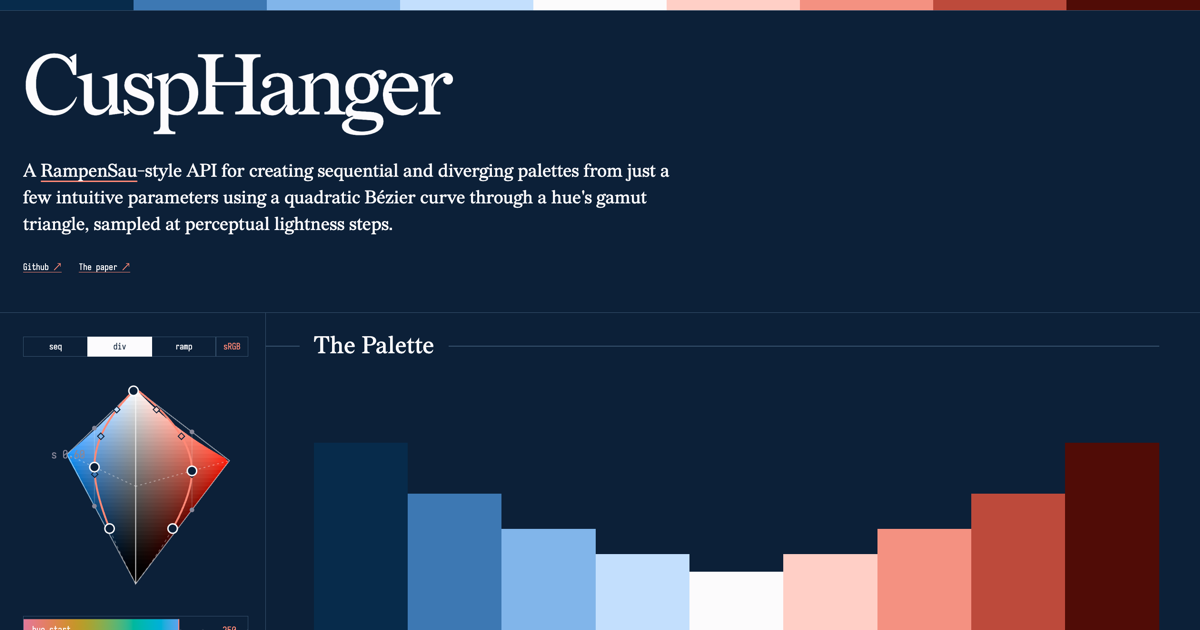
CuspHanger — palettes from intuitive parameters
Sequential and diverging OKLCH palettes from a few intuitive parameters — the Wijffelaars et al. 2009 model, in-gamut by construction, for sRGB and Display-P3.
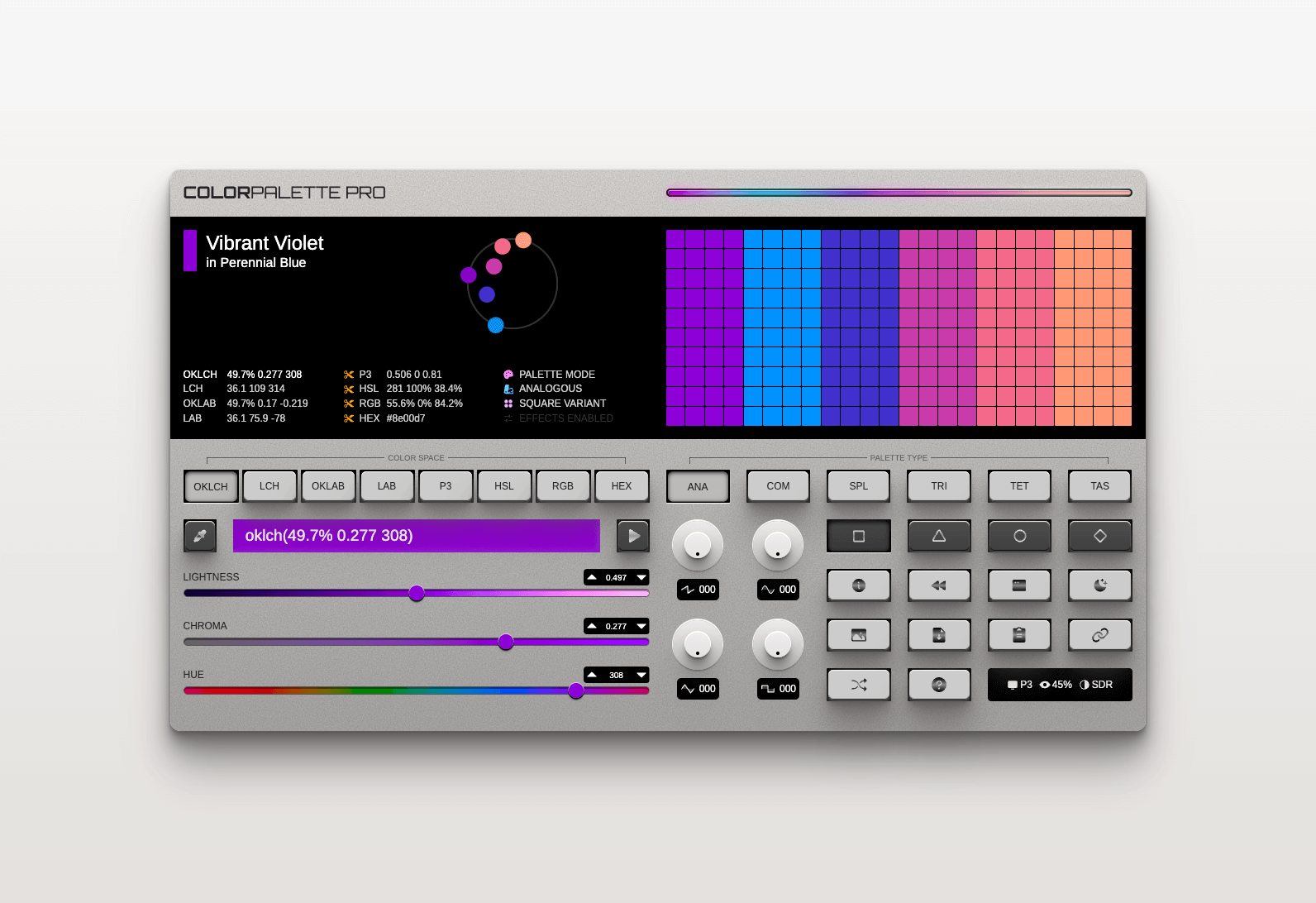
Color Palette Pro — A Synthesizer for Color Palettes
Generate customizable color palettes in advanced color spaces that can be easily shared, downloaded, or exported.
Color Palette Pro — A Synthesizer for Color Palettes
Generate customizable color palettes in advanced color spaces that can be easily shared, downloaded, or exported.
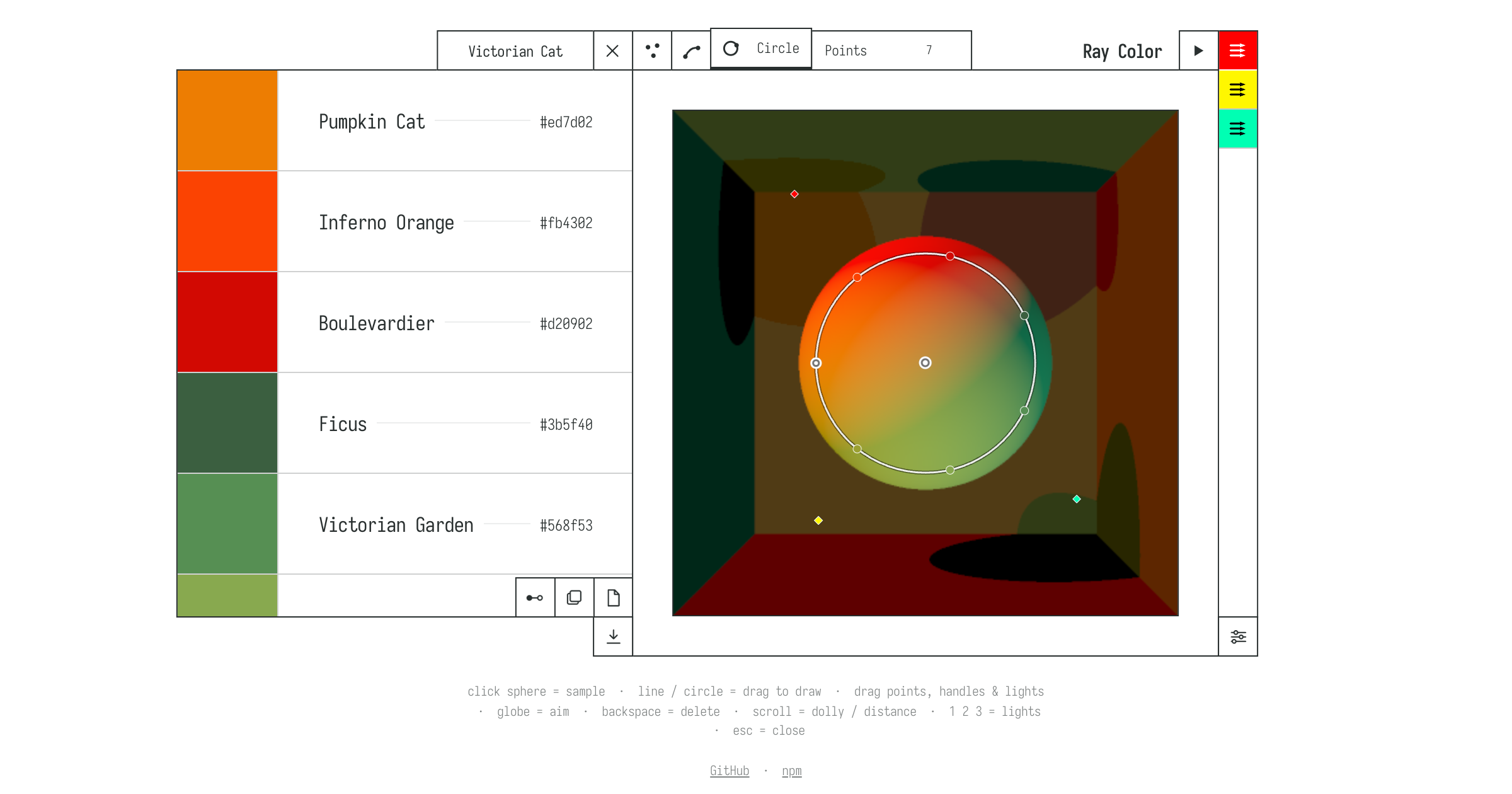
Ray Color
Generative color palettes from a raytraced scene — edit the conditions, not the colors.
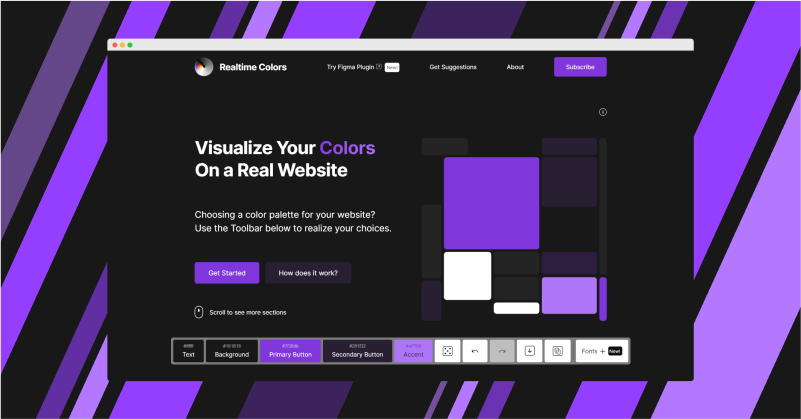
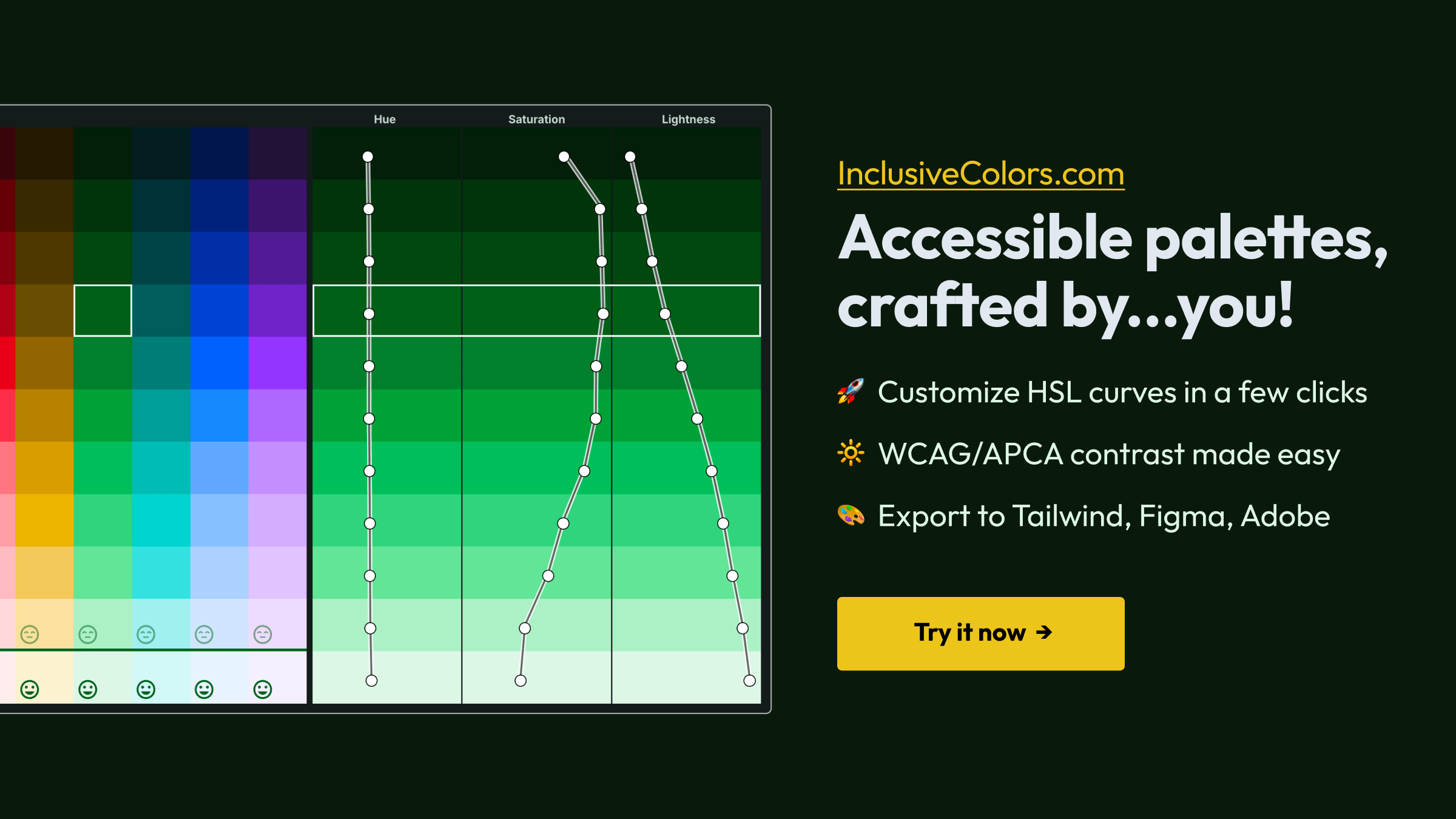
InclusiveColors - Accessible color palette creator
Try it now to create your own color palettes!
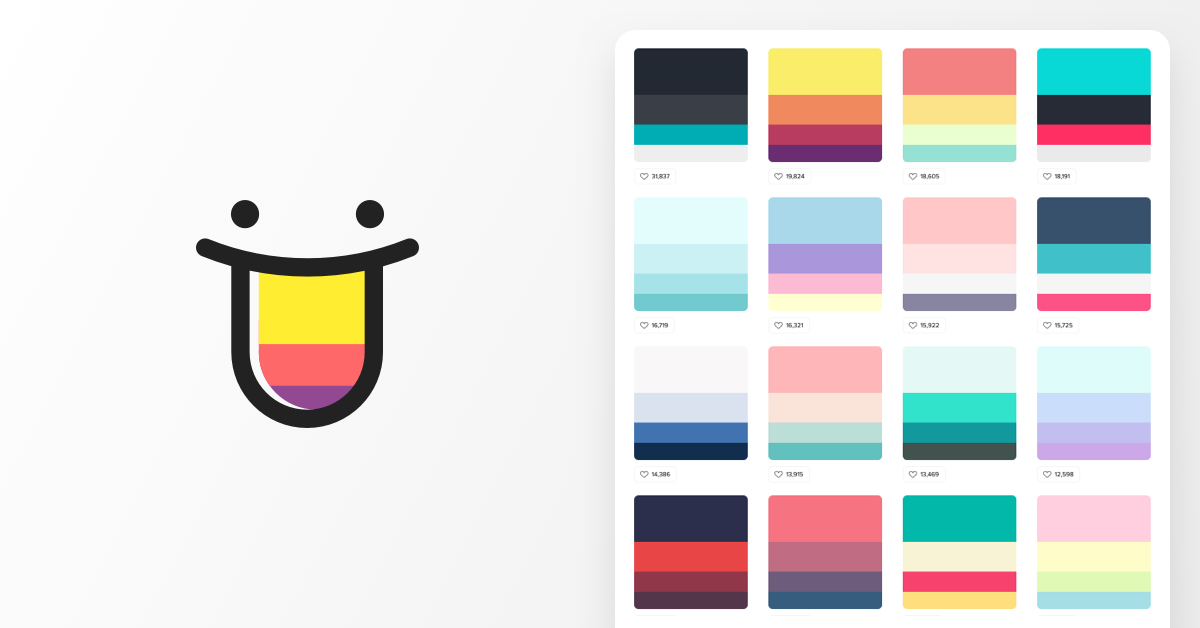
Color Hunt - Color Palettes for Designers and Artists
Discover the newest hand-picked color palettes of Color Hunt. Get color inspiration for your design and art projects.

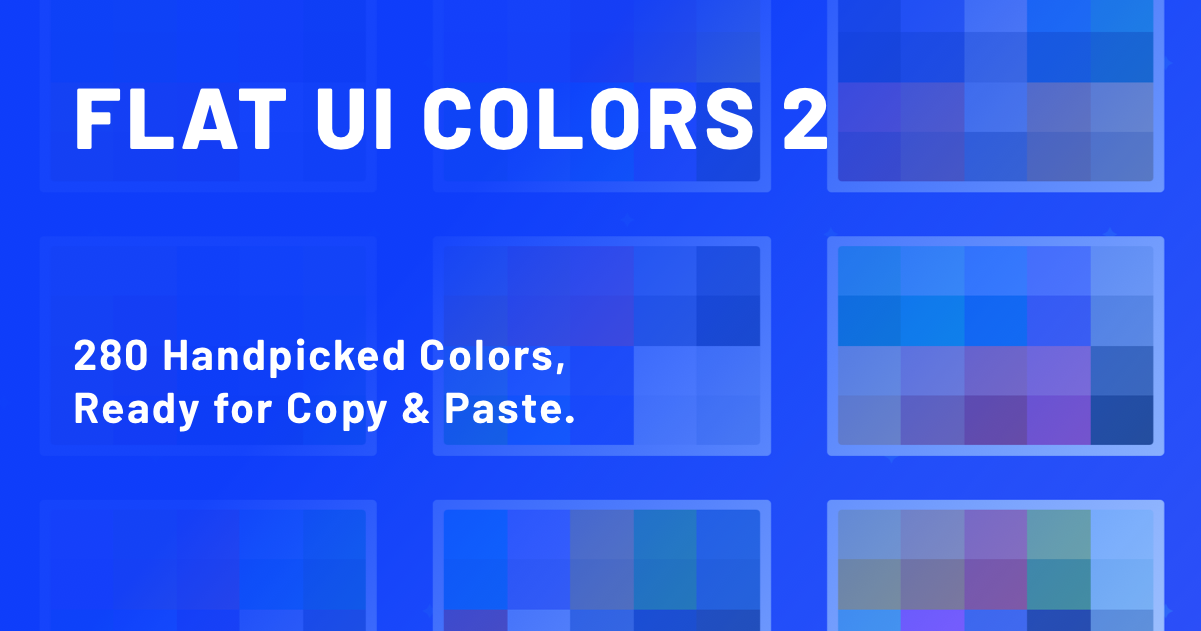
Flat UI Colors 2 - 14 Color Palettes, 280 colors 🎨
280 handpicked colors ready for COPY & PASTE
What nobody tells you about RGB
The Color System I Wish I Understood Sooner
Does your system for naming colors always feel like it falls short? This two-layer approach solves so many problems!

Color Palette Generator – Color Wheel Tool | Adobe Express
Use the color palette generator to create harmonious color schemes with the interactive color wheel. Choose a base color, apply a harmony, and design with confidence in Adobe Express.