

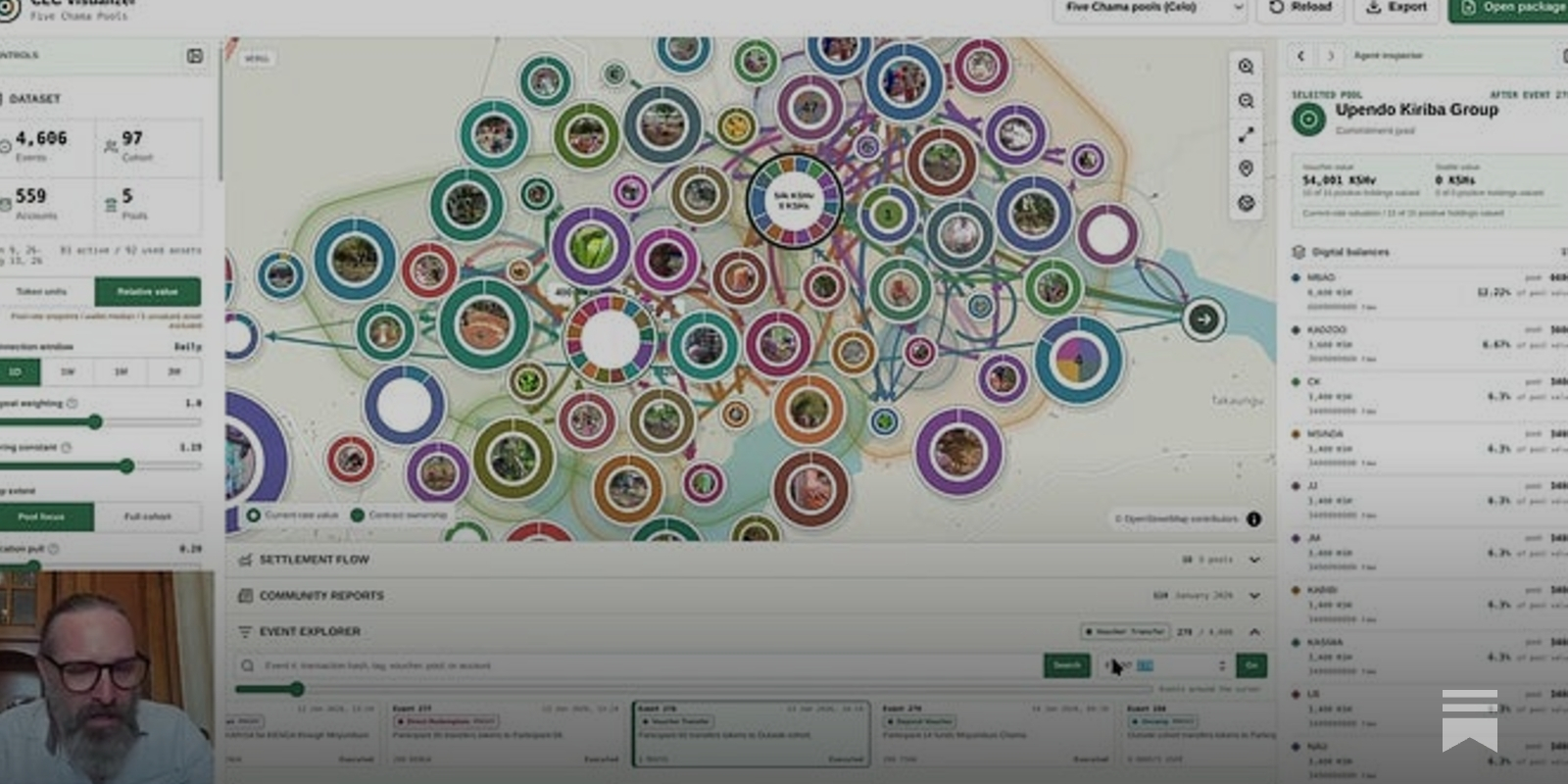
A ‘Valley of the Commons’ special on the construction of the Archipelago of Regenerative Projects
New to the Commons? | David Bollier
If you’re coming to the commons for the first time, it can be difficult to grok the idea because there are so many different ways to understand the commons. That’s because the commons is not so much a fixed, universal thing as a general concept describing durable, dynamic sets of social relationships for managing resources -- all sorts of resources: digital, urban, natural, indigenous, rural, cultural, scientific, to use some crude categories.
The Commons Explained in 15 Minutes | David Bollier
The tragedy of the commons is a false and dangerous myth | Aeon Essays
Far from being profoundly destructive, we humans have deep capacities for sharing resources with generosity and foresight
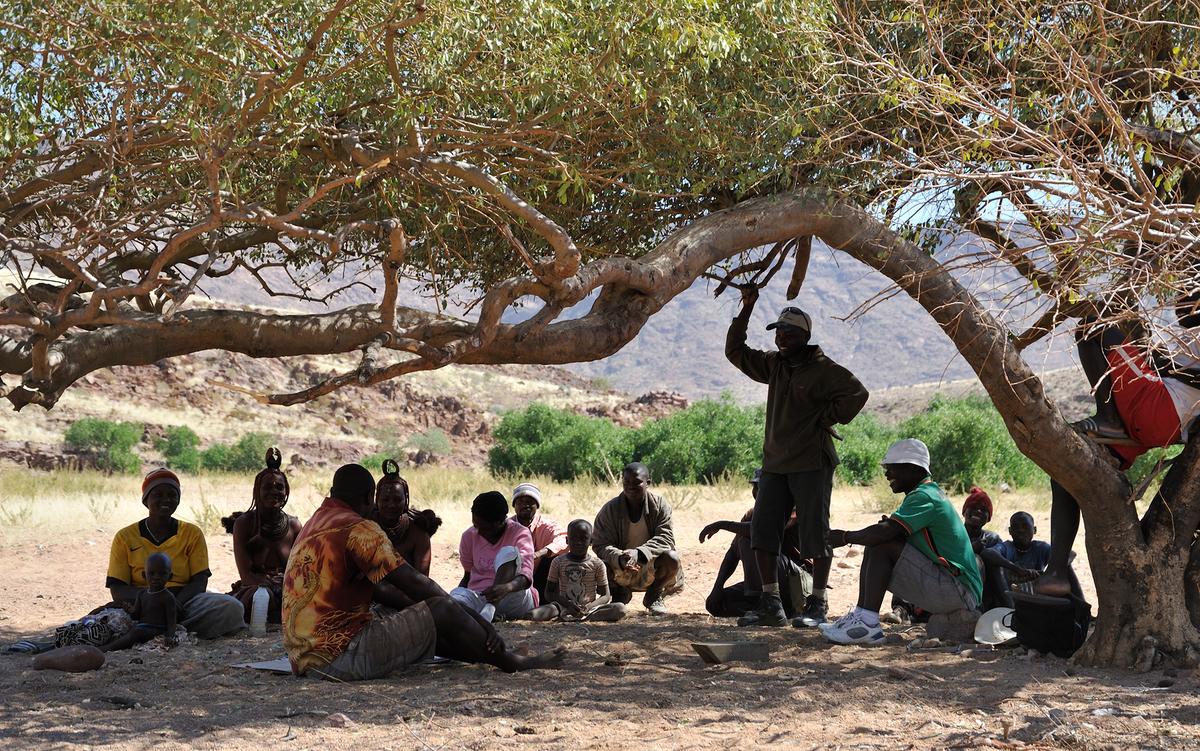
A Revised “Ostrom’s Design Principles for Collective Governance of the Commons
A Revised “Ostrom’s Design Principles for Collective Governance of the Commons” The traditional economic definition of “the commons” are those resources...

The Commons, Short and Sweet | David Bollier
I am always trying to figure out how to explain the idea of the commons to newcomers who find it hard to grasp. In preparation for a talk that I gave at the Caux Forum for Human Security, near Montreux, Switzerland, I came up with a fairly short overview, which I have copied below. I think it gets to the nub of things.
ORGANISING PRINCIPLES — THE ALTERNATIVE
This makes the difference between a localism that cannot sustain itself because it is simply too small with limited resources of skills and expertise. And one that is able to build its own regenerative economy, entirely through access to the global commons.
Governing The Commons: The Evolution of Institutions for Collective Action
The governance of natural resources used by many individuals in common is an issue of increasing concern to policy analysts. Both state control and privatization of resources have been advocated, but neither the state nor the market has been uniformly successful in solving common-pool resource problems. After critiquing the foundations of pol icy analysis as applied to natural resources, Elinor Ostrom here provides a unique body of empirical data to explore the conditions under which common-pool resource problems have been satisfactorily or unsatisfactorily solved. Dr. Ostrom first describes three models most frequently used as the foundation for recommending state or market solutions. She then outlines theoretical and empirical alternatives to these models in order to illustrate the diversity of possible solutions. In the following chapters she uses institutional analysis to examine different ways - both successful and unsuccessful - of governing the commons. In contrast to the propositions of the " tragedy of the commons" argument. common-pool problems sometimes are solved by voluntary organizations rather than by a coercive state. Among the cases considered are communal tenure in meadows and forest, irrigation communities and other water rights. and fisheries. Governing the Commons makes a major contribution to the analytical literature on institutions and to our understanding of human cooperation. Elinor Ostrom is co-director of the Workshop in Political Theory and Policy Analysis and professor of political science at Indiana University.

The Commons | Join Our Unique Community
Discover The Commons: A multi-generational Co-Housing community fostering sustainable living and connection in Santa Fe. Learn about our homes, lifestyle, and how to get involved.

Think Like a Commoner | A Short Introduction to the Life of the Commons
In our age of predatory markets and make-believe democracy, our troubled political institutions have lost sight of real people and practical realities. But if you look to the edges, ordinary people are reinventing governance and provisioning on their own terms. The commons is arising as a serious, practical alternative to the corrupt Market/State.
Home - Schumacher Center for a New Economics
Our mission is to envision a just and regenerative economy; apply the concepts locally; then share the results for broad replication. Programs Library Lectures & Publications The Decentralism File Community Land Trust Local Currencies Reinventing The Commons All Programs eNewsletters All News “Since there is now increasing evidence of environmental deterioration, particularly in … Continued

Reinventing Commons Governance in Modern Times | David Bollier
I gave the following remarks about commons governance on September 27 as part of the U!REKA Lab Lecture Series. U!REKA -- which stands for Urban Research and Education Knowledge Alliance -- is a consortium of eight European universities that studies urban commons. The subtitle of my talk was "Find Answers by Living the Questions."
Post-Growth - P2P Foundation
"The term postgrowth defines a range of approaches to socioecological challenges. They address these challenges in ways that are diametrically opposed to green-growth, which expresses the belief that society can simultaneously expand economic activity and reduce emissions and the demand for materials. Postgrowth approaches, by contrast, argue that the unlimited expansion of production and consumption is impossible and undesirable on a finite planet.
Bluesky 101: How-to Guide for Progressives
The Commons is an online library for the change makers of the world and for those interested in social change, activism, organising, advocacy and justice.

Commons
The commons are the cultural and natural resources accessible to all members of a society, including natural materials such as air, water, and a habitable Earth. These resources are held in common even when owned privately or publicly. Commons can also be understood as natural resources that groups of people manage for individual and collective benefit. Characteristically, this involves a variety of informal norms and values employed for a governance mechanism. Commons can also be defined as a social practice of governing a resource not by state or market but by a community of users that self-governs the resource through institutions that it creates.

Funding the Commons | Public Goods Funding
We convene researchers, builders, and institutions to develop the funding mechanisms, governance systems, and coordination tools that public goods need in an age of AI.

atproto sustainability

AtmoPay — payments for the open social web
App creator pledges against enshittification
Bluesky needs its own complete YC atproto stack - accelerator, seed funding, founder network, investor pipeline, mentorship, demo days,…
Project vs. Product, Startup vs. Business
Let's Talk Money - Interlinked

I don't know that I'd say I have it covered exactly, but I have a general architectural plan. Games are actually going to be a really hard…