Even when you try to do good, you can end up doing accidental harm. But there are ways you can minimise the risks.
Via Negativa: The Process of Making Good Decisions By Eliminating Bad Ones
When we set goals—both personal and professional—we tend to focus on what we should do, rather than focussing on what we should avoid. Humans naturally know more about what is wrong, what is bad, what is harmful, or what won’t work, more than they know about what is right and what would work.

The Art of Taking Smart Risks
Good risk can bring joy to life, but Americans are up against forces that profit from the reckless kind.


Epistemic Vigilance
Humans massively depend on communication with others, but this leaves them open to the risk of being accidentally or intentionally misinformed. To ensure that, despite this risk, communication remain...

The Anatomy of a Bad Idea
Bad ideas can share several features: They take a complex problem and apply a one-shot solution: the silver bullet that ignores the root cause. They are easy to understand, and don’t require …

Why I work on self-improving AI despite the risks - Jeff Clune
Why I work on self-improving AI despite the risks. Jeff Clune.
Why efficiency is dangerous and slowing down makes life better | Psyche Ideas
The urge to do everything faster and better is risky. Far wiser to do what’s good enough for the range of possible futures

More Is Different for AI
Machine learning is touching increasingly many aspects of our society, and its effect will only continue to grow. Given this, I and many others care about risks from future ML systems and how to mitigate them. When thinking about safety risks from ML, there are two common approaches, which I'

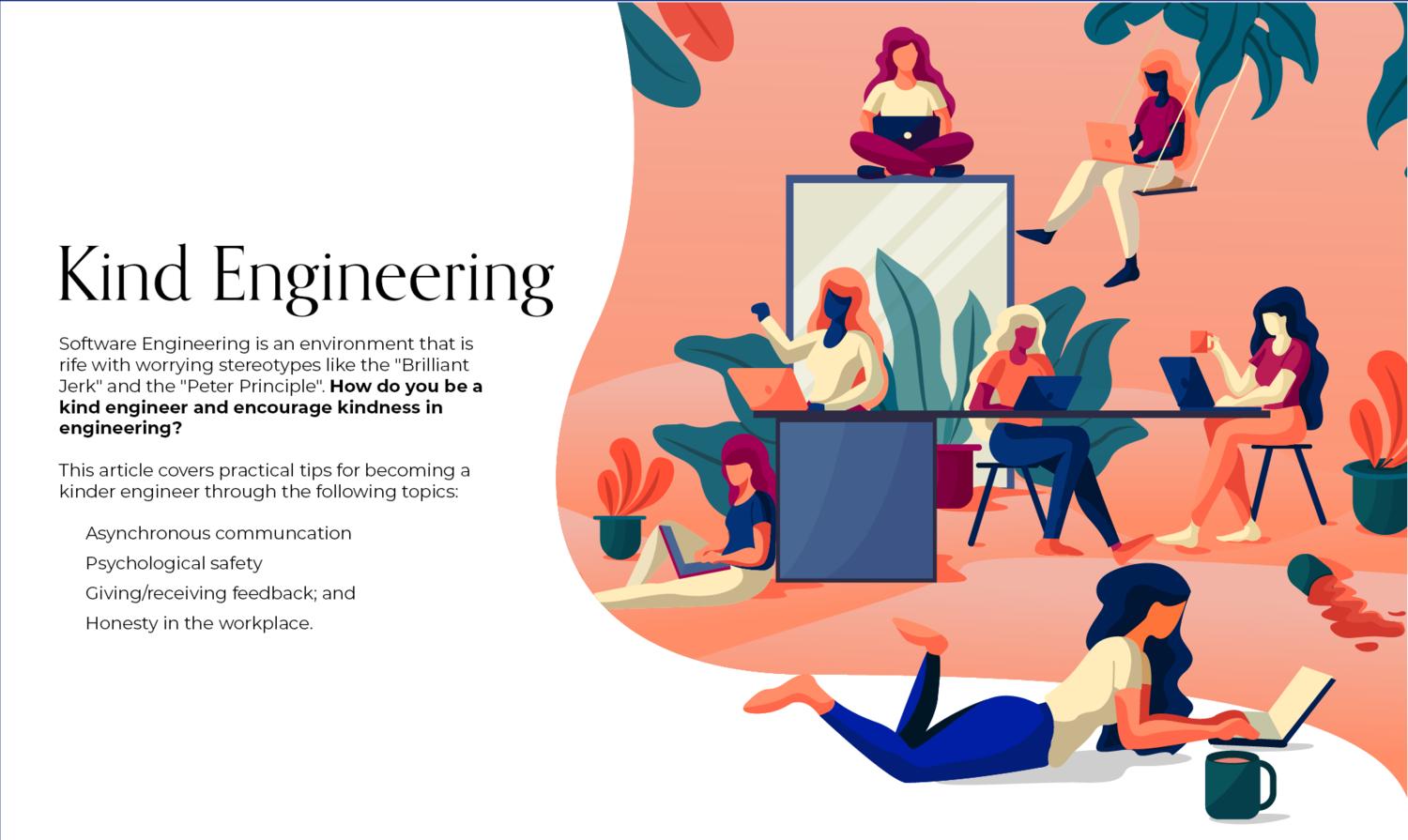
Kind Engineering: How To Engineer Kindness
How do you avoid becoming a Brilliant Jerk? Read this article to learn practical tips on communication, honesty and psychological safety.
The Four Big Risks | Silicon Valley Product Group
In the first edition of my book, INSPIRED, I discussed how successful products are valuable, usable and feasible, where I defined “valuable” as both valuable to customers and valuable to your business. While it’s easy to remember these three attributes, over the years I’ve come to believe that it was obscuring some pretty serious risks and...

You don't have to gamble for gambling to ruin your life
How gambling is eroding empathy, destroying relationships, and changing our culture — even for people who never bet.
Careless People: A Cautionary Tale of Power, Greed, and…
An explosive memoir charting one woman’s career at the …

Explorable - Think Outside The Box - Research, Experiments, Psychology, Self-Help
"It is impossible to live without failing at something, unless you live so cautiously that you might as well not have lived at all - in which case, you fail by default." - J.K. Rowling
How Complex Systems Fail
All of the interesting systems (e.g. transportation, healthcare, power generation) are inherently and unavoidably hazardous by the own nature. The frequency of hazard exposure can sometimes be changed but the processes involved in the system are themselves intrinsically and irreducibly hazardous. It is the presence of these hazards that drives the creation of defenses against hazard that characterize these systems.
Common Causes of Very Bad Decisions
Italian psychologist Massimo Piattelli-Palmarini was once asked why people keep making the same mistakes.
Refusing to Be the Victim – How to Adopt a “Player” Mindset at Work
You can’t expect others to fix your problems. When you take responsibility for making the best of any situation, you have the power to make things better.