

Previous entries were found via Wayback Machine and re-added (thanks Manuel for the tip)!
Archive
Posts from the old antjanus.com blog (2012–2020), rebuilt from the Wayback Machine.
Solutions for Link Rot on the Modern Web
Web links are fundamental to the web, enabling navigation between pages and citations in research articles. However, web links suffer from "link rot", a phenomenon in which links are likely to become inaccessible over time. This can occur if a link’s site disappears, making it impossible to resolve the hostname or establish a server connection, or the linked page has been deleted, resulting in an HTTP 404 "Not Found" error. Today, a common solution to tackle link rot is to rely on web archives, which capture snapshots of web pages for future reference. However, the modern web has evolved significantly since web archives were first introduced, leading to several limitations in their effectiveness. First, the scale of the web has grown tremendously, making it infeasible to crawl every page whenever it changes. As a result, many broken links either have no archived copies, or the archived copies have stale content. Second, modern web pages rely heavily on increasingly complex and diverse JavaScript. This shift has made it more challenging for preserving fidelity in archived copies, significantly increasing both the computational cost of operating browser-based crawlers and engineering effort required to maintain accurate replay systems. This thesis presents a set of solutions to cope with link rot on the modern web. My work aims to mitigate the various limitations of web archives. First, for broken links without any archived copy, or if the archived copy includes stale content or unavailable functionalities, I built Fable. Fable revives the dead link with the new URL to the same page whenever available. Compared to prior approaches, Fable revives 4.6K broken links—a 50% increase—with much higher accuracy. Second, for pages that require dynamic crawling, I show how web archives can achieve a better tradeoff between efficiency and fidelity. By carefully choosing 8.9% of pages to crawl dynamically and strategically reusing resources from those crawls, an archive can serve 99% of the remaining statically crawled pages without any fidelity loss. Third, for fidelity violations in archived copies that are caused by incorrect edits to crawled scripts, I built FidEx. FidEx reliably detects when an archived page differs from its original version and pinpoints the root cause. After fixing the most common errors pinpointed by FidEx, I reduced the fraction of pages for which FidEx reports a violation of fidelity from 15% to 9%.
Solutions for Link Rot on the Modern Web
Web links are fundamental to the web, enabling navigation between pages and citations in research articles. However, web links suffer from "link rot", a phenomenon in which links are likely to become inaccessible over time. This can occur if a link’s site disappears, making it impossible to resolve the hostname or establish a server connection, or the linked page has been deleted, resulting in an HTTP 404 "Not Found" error. Today, a common solution to tackle link rot is to rely on web archives, which capture snapshots of web pages for future reference. However, the modern web has evolved significantly since web archives were first introduced, leading to several limitations in their effectiveness. First, the scale of the web has grown tremendously, making it infeasible to crawl every page whenever it changes. As a result, many broken links either have no archived copies, or the archived copies have stale content. Second, modern web pages rely heavily on increasingly complex and diverse JavaScript. This shift has made it more challenging for preserving fidelity in archived copies, significantly increasing both the computational cost of operating browser-based crawlers and engineering effort required to maintain accurate replay systems. This thesis presents a set of solutions to cope with link rot on the modern web. My work aims to mitigate the various limitations of web archives. First, for broken links without any archived copy, or if the archived copy includes stale content or unavailable functionalities, I built Fable. Fable revives the dead link with the new URL to the same page whenever available. Compared to prior approaches, Fable revives 4.6K broken links—a 50% increase—with much higher accuracy. Second, for pages that require dynamic crawling, I show how web archives can achieve a better tradeoff between efficiency and fidelity. By carefully choosing 8.9% of pages to crawl dynamically and strategically reusing resources from those crawls, an archive can serve 99% of the remaining statically crawled pages without any fidelity loss. Third, for fidelity violations in archived copies that are caused by incorrect edits to crawled scripts, I built FidEx. FidEx reliably detects when an archived page differs from its original version and pinpoints the root cause. After fixing the most common errors pinpointed by FidEx, I reduced the fraction of pages for which FidEx reports a violation of fidelity from 15% to 9%.
Adding Webmentions to a Bridgetown Site
How I added webmentions to my static Bridgetown site using webmention.io, Bridgy, and a nightly GitHub Actions job, so replies and likes from Bluesky show up right under my posts.
Erin Kissane's small internet website
The latest entries posted on Erin Kissane's small internet website
Archiving web sites
I recently took a deep dive into web site archival for friends who were worried about losing co [...]
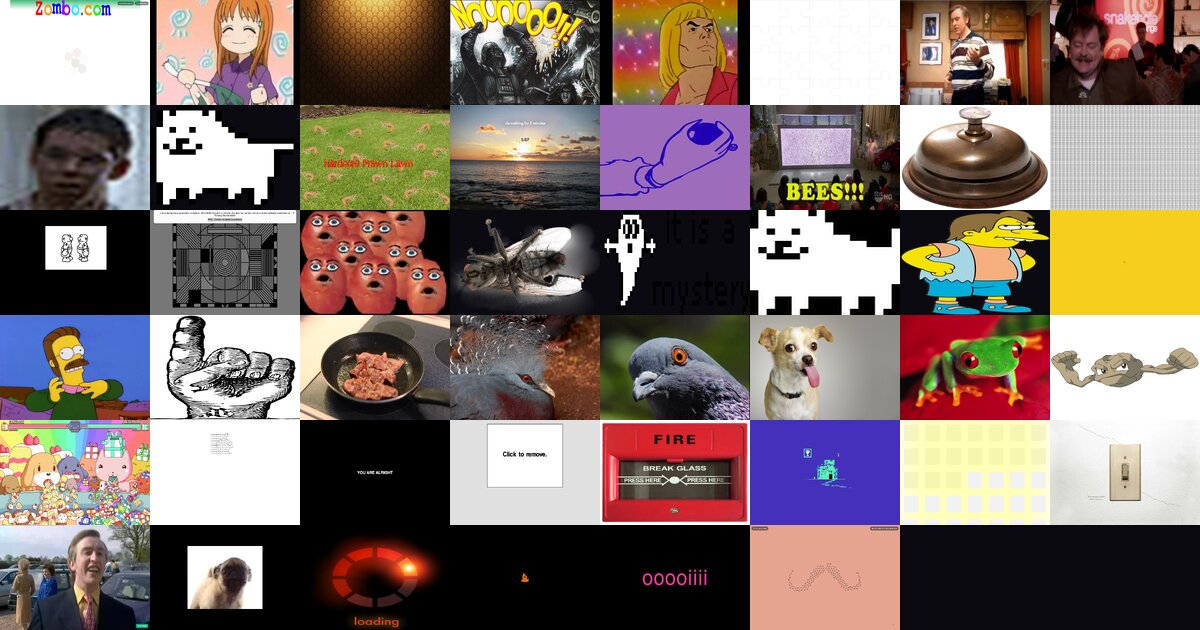
The Sites We Lost
A memorial to the weird little corners of the internet that lived on The Useless Web.
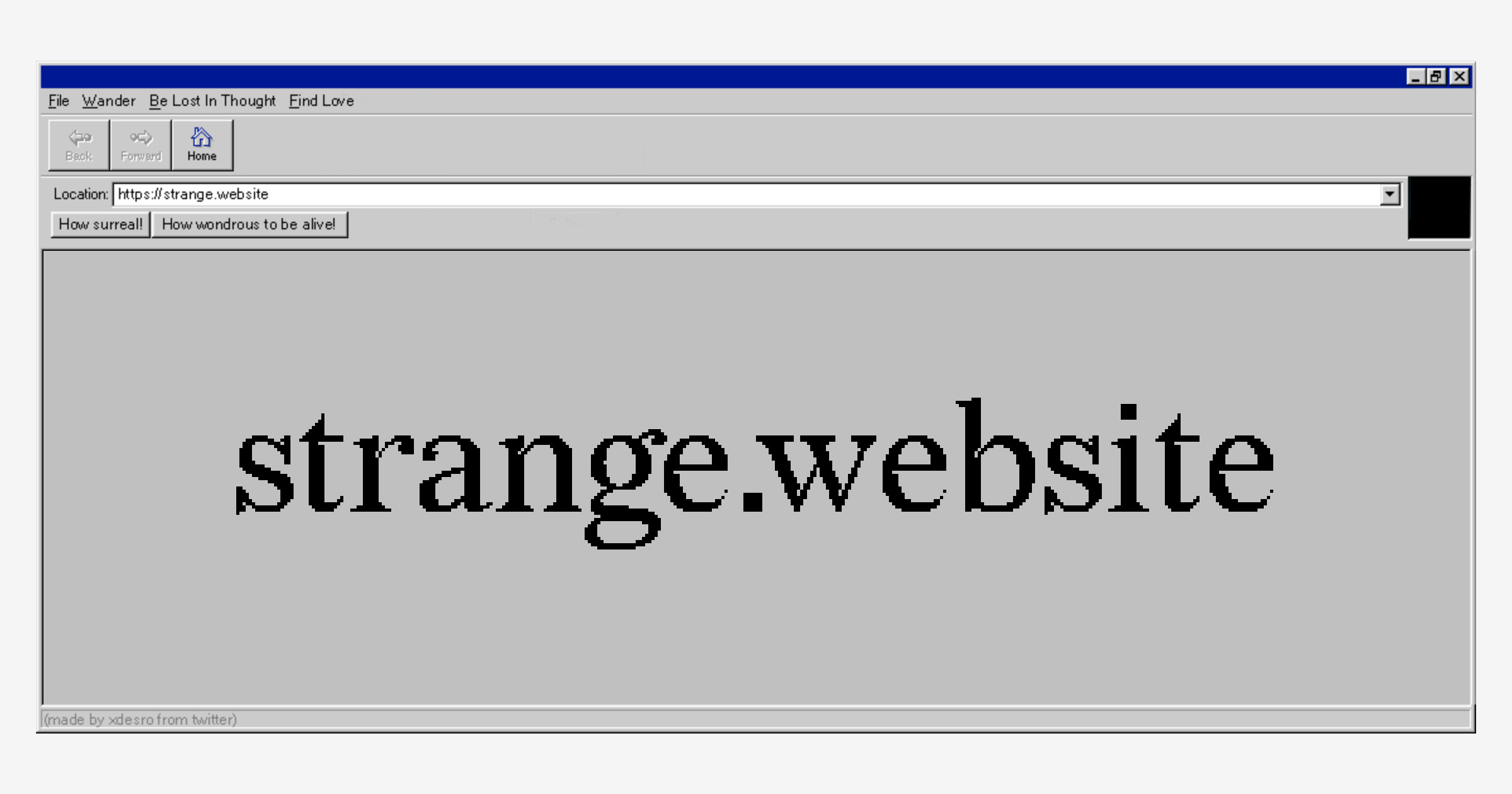
Quite A Strange.Website Indeed
Well now, seems you've found a strange and perhaps surprising website, indeed. As with all things, take and enjoy your time — after all, no one may but you.
Litter Layer
Indie search engine for discovering personal and small-web sites — built largely by visitors like you.

matduggan.com
I wrote a browser extension to try and make finding random, independent websites more fun.

The Dark Forest and the Cozy Web
An illustrated diagram exposing the inner layers of the dark and cozy web
Federating friendly spaces - Roomy
hearkening back to the cozy vibes of old-web neighborhoods