

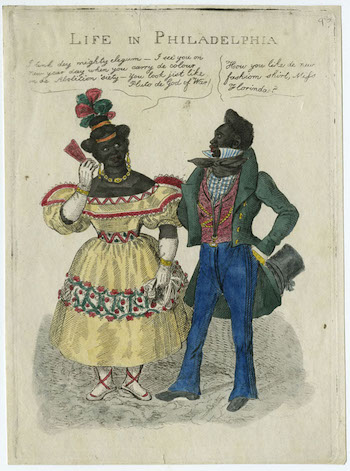
*The American Black Bourgeoisie is affirmed on this date in 1619. They are America’s Black upper class based on financial income. The Black Bourgeoisie comprises engineers, lawyers, accountants, doctors, politicians, business executives, venture capitalists, CEOs, celebrities, entertainers, entrepreneurs, and heirs with annual incomes of $200,000 or more. This social class sometimes referred to as the... View Article
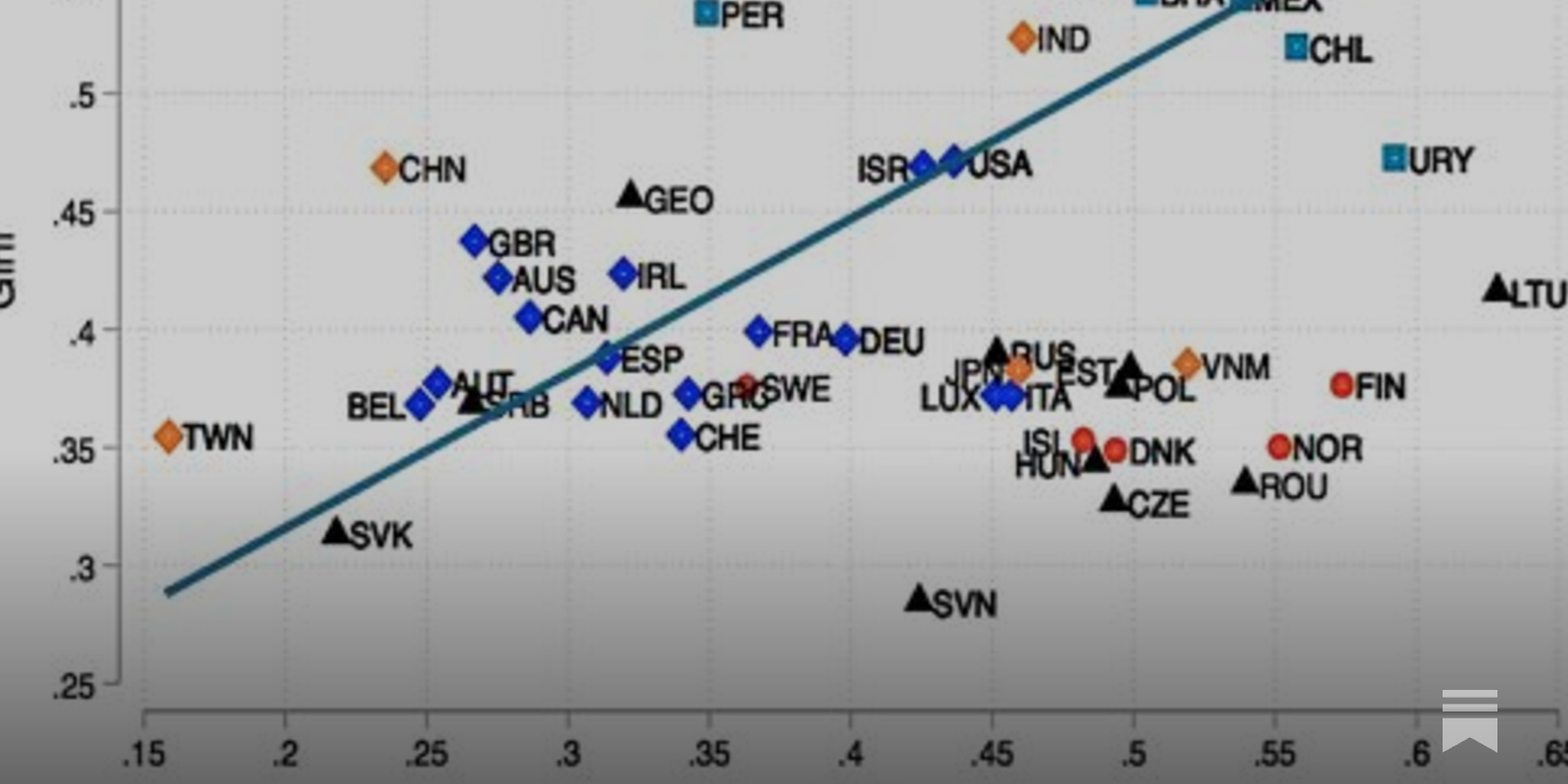
New Capitalism II: Compositional vs income inequality
Are all class-based societies unequal?
I'll go on a little rant about this paper in @QJEHarvard if only for its treatment of the literature. As it's clearly not the first paper to analyze Black economic progress after slavery, we'll focus on the value-added over previous research. An important reference here is Sacerdote (ReStat 2005) "Slavery and the Intergenerational Transmission of Human Capital". by @AndreasShrugged(Andreas Backhaus) | Twitter Thread Reader
I'll go on a little rant about this paper in @QJEHarvard if only for its treatment of the literature. As it's clearly not the first paper to analyze Black economic progress after slavery, we'll focus on the value-added over previous research. An important reference here is Sacerdote (ReStat 2005) "Slavery and the Intergenerational Transmission of Human Capital".

Le nouveau capitalisme (2/3) : inégalités compositionnelles versus inégalités de revenu
Traduction de "New capitalism II: Compositional vs income inequality. Are all class-based societies unequal?" de Branko Milanovic

Le nouveau capitalisme (1/3)
Traduction de "New capitalism in America. Richest capitalists and richest workers are increasingly the same people" de Branko Milanovic

Left of Karl Marx: The Political Life of Black Communist Claudia Jones - Carole Boyce Davies | Are.na
doi.org/10.1215/9780822390329
Black Owned | Class Bookstore | United States

Cognitive Capitalism - Public Seminar
There are broadly three ways of thinking historically about capitalism. One draws on Marx’s value theory and pretty much treats...Read More

Black Marxism, Revised and Updated Third Edition by Cedric J Robinson | East Bay Booksellers
In this ambitious work, first published in 1983, Cedric Robinson demonstrates that efforts to understand Black people’s history of resistance solely through the prism of Marxist theory are incomplete and inaccurate.
Why did capitalism begin in the West?
Culture, class, and the origins of capitalist development

‘Buy now, pay later’ is becoming a major part of how Black America affords the everyday
As “Buy now, pay later” options continue to rise in popularity, more and more question what this says about the economy.

Systems: How the Ultra-Wealthy Think About Money - Anil Dash
A blog about making culture. Since 1999.


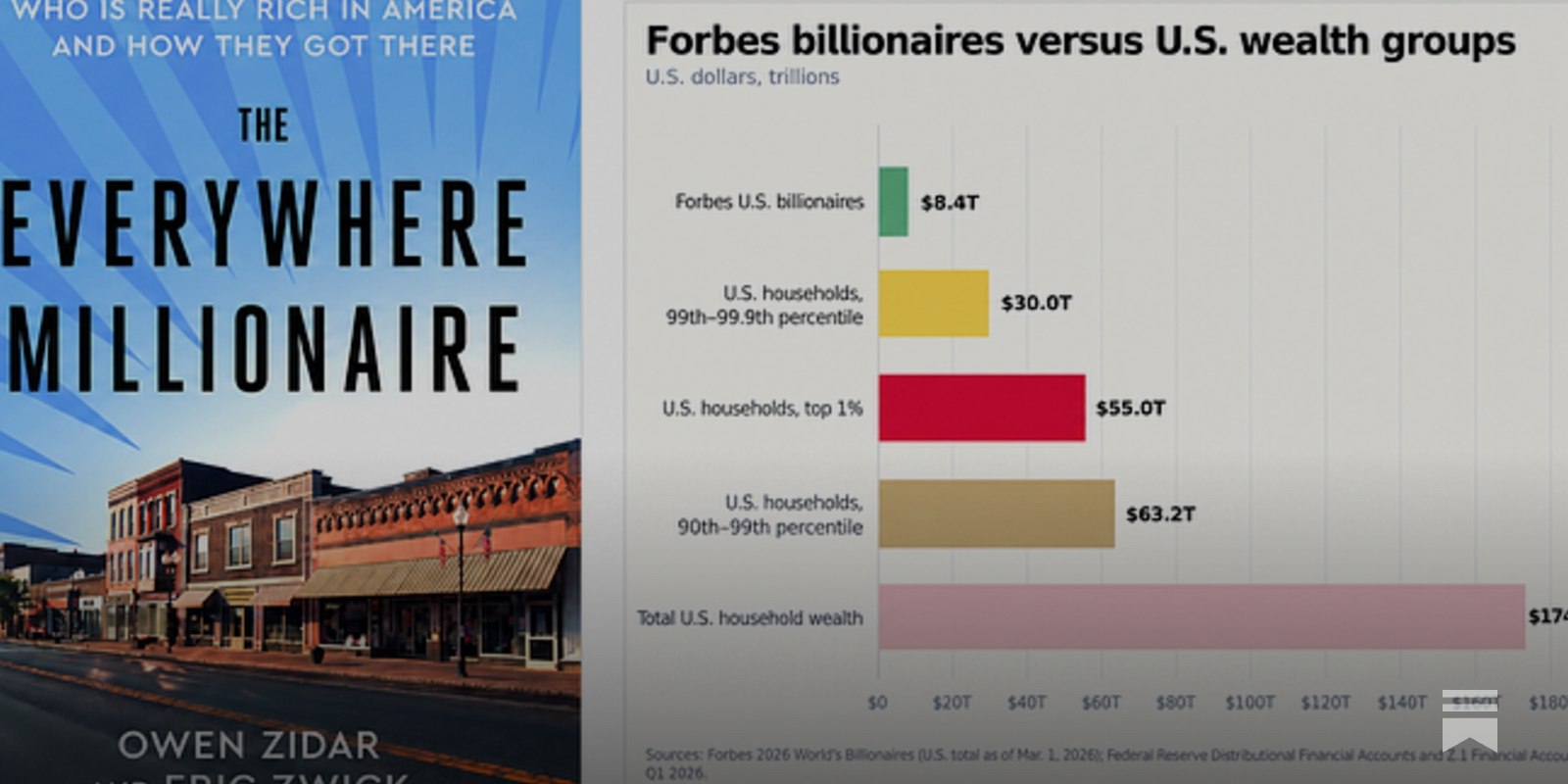
Who is rich in America, and why?
A review of “The Everywhere Millionaire” by Zidar and Zwick
The State of the People Black Papers | Dr. David J. Johns
The State of the People Black Papers—authored by us for us, free of exaggerated jargon, written plainly in a language for our people

A new middle-class fraction with a distinct subjectivity: Tech workers and the transformation of the entrepreneurial self
With the rise of digital capitalism, a novel occupational segment has emerged: so-called ‘tech workers’. Members of this grouping render and encode the digital technologies that permeate contemporary social life. While there are many studies about highly precarious digital labourers, research on these digital professionals remains scarce. Based on 40 original interviews, the article explores the subjectivity of tech workers. Specifically, it asks whether understandings of middle-class employees as entrepreneurial selves with a holistic market orientation hold true for this grouping, or whether new cultures of subjectivation are emerging. The key finding from these interviews is that tech workers show contours of a post-neoliberal subjectivity. While the figure of the entrepreneurial self remains an alluring force, this study detected four transformative cultures of subjectivation: (1) a return of the critique of economic inequality; (2) a concern for diversity; (3) an ethic of mindfulness; and (4) a lifestyle that signals ordinariness. These distinct forms of subjectivity point to the formation of a new middle-class fraction. However, drawing on the sociology of critique, this article also considers how this transformation of subjectivity can be appropriated as yet another new spirit of capitalism.

if there's one conclusion that the study of both labor history and imperialism converge on, it is that the richest people in the world are happy to burn money on control, power, impunity. and the "everything is about profit" version of anti-capitalism does not survive serious contact with either

Leonard Pierce
Adding to this thread: it’s a common mistake (I’ve made it myself, many times) to think of the motivations of the capitalist elites as essentially mercantilist: that is, that they are largely still motivated *entirely* by profit and loss, selling product, etc. This has not been true for a while.
